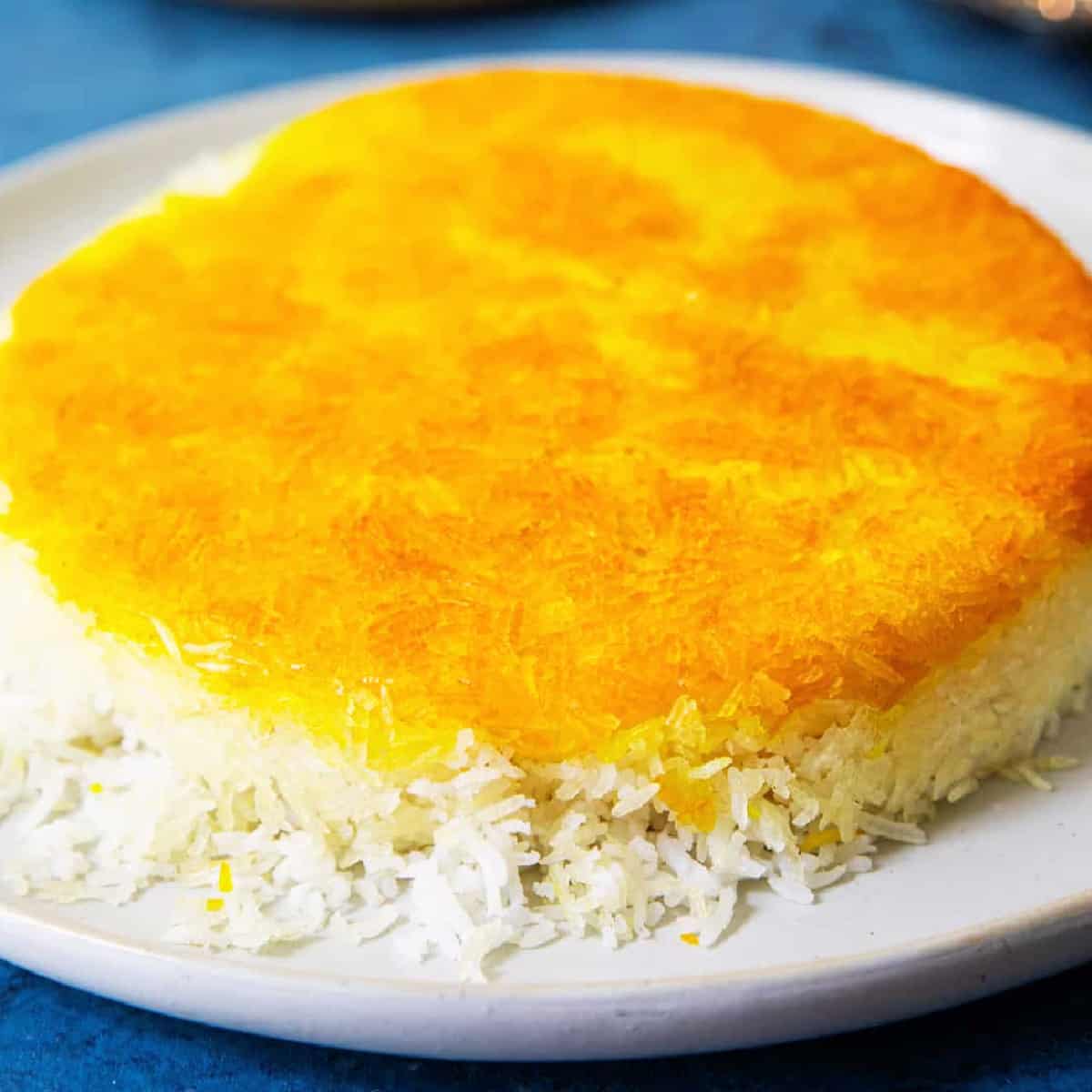
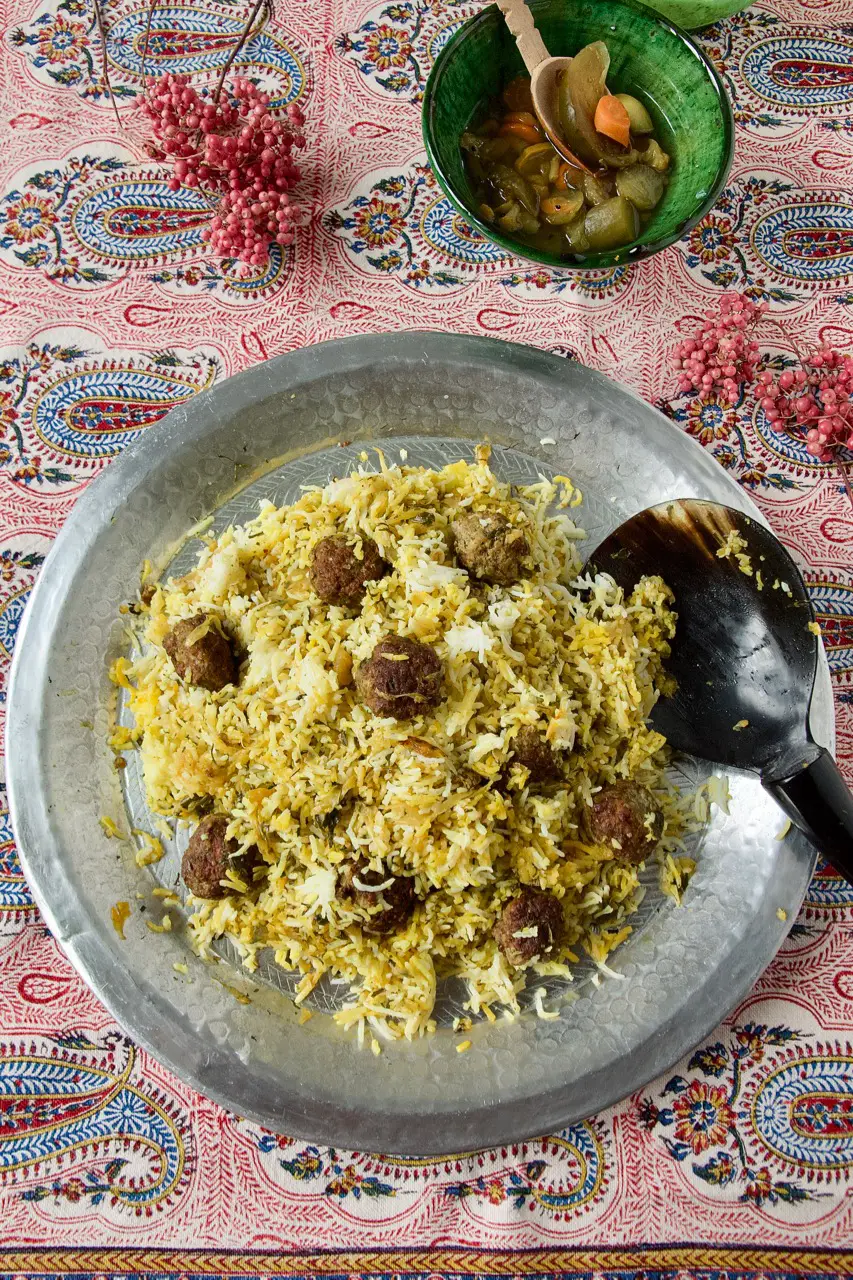
The crown jewel of Persian rice — a golden, impossibly crispy crust of saffron-scented rice that shatters like glass. Flipping the pot to reveal a perfect tahdig is a moment of triumph.
Nutrition & Info
Allergen Warnings
Equipment Needed
Presentation Guide
Vessel: inverted onto large flat plate
Garnishes: saffron rice on top
Accompaniments: stew (khoresh), yogurt
Instructions
-
1
Rinse the basmati rice in several changes of cold water until the water runs mostly clear, then soak in cold water with one tablespoon of salt for at least one hour to allow the grains to absorb moisture evenly.
-
2
Bring a large pot of generously salted water to a rolling boil. Drain the soaked rice, add it to the boiling water, and parboil for exactly six to seven minutes until the grains are tender on the outside but still firm in the centre.
-
3
Drain the parboiled rice immediately in a fine-mesh sieve and rinse briefly with lukewarm water to stop the cooking process and wash away excess surface starch that would make the rice gummy.
-
4
In a small bowl, combine one heaped cup of the parboiled rice with the steeped saffron water and the yogurt, mixing gently until every grain is stained a deep golden colour by the saffron.
-
5
Place a non-stick pot over medium heat and add the oil and butter, swirling until the butter melts. Spread the saffron-yogurt rice mixture evenly across the bottom of the pot to form the tahdig crust layer.
-
6
Mound the remaining plain rice on top in a pyramid shape, using the handle of a wooden spoon to poke five or six steam holes through the rice down to the bottom layer.
-
7
Wrap the pot lid tightly in a clean kitchen towel to absorb condensation, place it firmly on the pot, and cook on medium heat for eight minutes, then reduce to the lowest heat for forty minutes.
-
8
Remove the pot from heat and place it on a cold, damp towel for two minutes to release the crust from the bottom. Invert the pot onto a large platter and tap firmly to release the golden, crispy tahdig in one piece.
Did You Know?
The fight for tahdig at Iranian tables is legendary — the crispy bottom is so prized that families argue over the biggest piece.
Chef's Notes
Equipment Tips
- non-stick pot with lid
- dish towel
- large plate for flipping
Garnishing
saffron rice on top
Accompaniments
stew (khoresh), yogurt
The Story Behind ته دیگ
### The Story
Tahdig -- from the Persian words tah (bottom) and dig (pot) -- is the golden, crispy rice crust that forms at the bottom of the pot during Persian rice cooking. Its origins are inseparable from the history of rice cultivation in Iran's Caspian Sea region, where Persians developed their distinctive two-stage rice cooking method: parboiling, draining, then steaming over gentle heat with oil or butter. What began as a happy accident -- the crunchy remnants at the pot's bottom -- evolved into a deliberate art form. Tahdig appears on the royal menus of Iran's Qajar Dynasty (1789-1925), and an urban legend describes servants arguing over who would claim the coveted crispy layer.
### On the Calendar
Tahdig accompanies any Persian rice meal year-round. It is especially prized at formal dinners and celebrations, where the dramatic inversion of the pot to reveal a perfect golden crust is a moment of suspense and triumph.
### Then & Now
Beyond the classic saffron rice tahdig, Persian cooks create tahdig from thinly sliced potatoes, lavash bread, or even lettuce leaves placed at the pot's bottom before the rice is added. Each variation produces a different texture and flavor. The ability to produce a perfect, unbroken tahdig is considered the ultimate test of a Persian cook's skill. Social media has introduced tahdig to international audiences, and the dramatic pot-flip has become a viral cooking moment.
### Legacy
Tahdig transforms an everyday act -- cooking rice -- into a pursuit of perfection, embodying the Persian culinary philosophy that even the humblest element of a meal deserves artistry.
Comments (0)
Log in to leave a comment.
No comments yet. Be the first to share your thoughts!