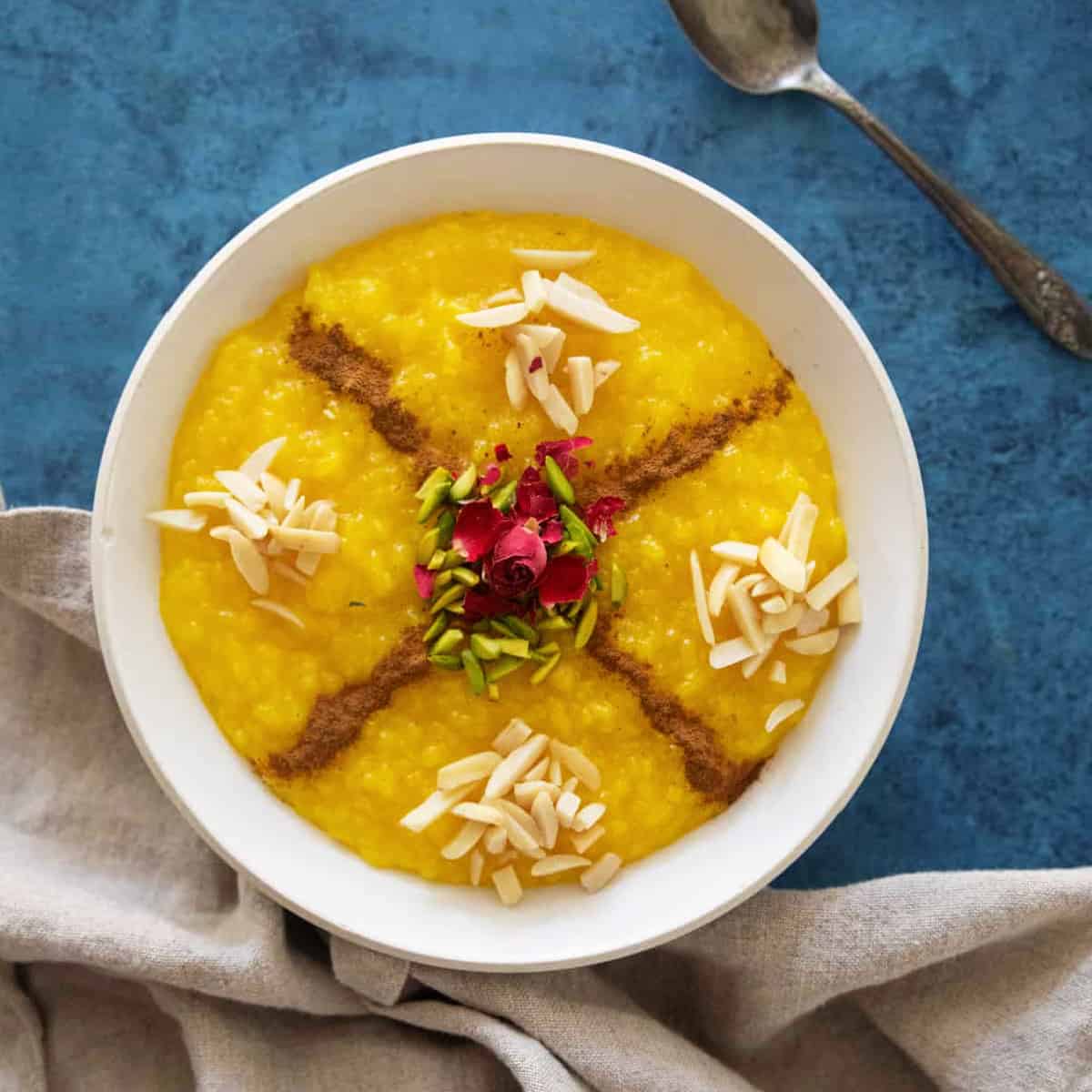
A luminous golden rice pudding perfumed with saffron, rose water, and cinnamon, decorated with almonds and pistachios. This sacred dessert is prepared as a votive offering.
Nutrition & Info
Allergen Warnings
Equipment Needed
Presentation Guide
Vessel: individual small bowls
Garnishes: cinnamon, slivered almonds, pistachios
Accompaniments: none
Instructions
-
1
Wash the rice in several changes of cold water until the water runs clear, then soak in fresh cold water for at least two hours to soften the grains, which will help them break down more easily during cooking.
-
2
Drain the soaked rice and add it to a large heavy-bottomed pot with eight cups of fresh water. Bring to a boil over medium-high heat, then reduce to a gentle simmer and cook for forty-five minutes, stirring occasionally.
-
3
The rice should be completely soft and broken apart, with the mixture resembling a thick, starchy porridge. If it seems too thick, add half a cup of warm water and stir to loosen it.
-
4
Add the sugar to the pot and stir continuously for five minutes until it dissolves completely, then add the steeped saffron water, rose water, and ground cardamom, stirring until the pudding turns a bright golden colour.
-
5
Add the butter and continue cooking on the lowest heat for another twenty to thirty minutes, stirring frequently to prevent the bottom from scorching. The pudding should be thick enough to coat the back of a spoon.
-
6
Pour the sholeh zard into individual shallow bowls or a large serving dish, smoothing the top with the back of a wet spoon. Allow it to cool to room temperature before decorating.
-
7
Decorate the surface with toasted slivered almonds, chopped pistachios, and elegant lines or patterns of ground cinnamon. Serve at room temperature or chilled, as part of a celebration or offering.
Did You Know?
Sholeh zard is made for Nazri — a tradition of cooking as a religious offering for the community.
Chef's Notes
Equipment Tips
- heavy pot
- wooden spoon
- serving bowls
Garnishing
cinnamon, slivered almonds, pistachios
Accompaniments
none
The Story Behind شله زرد
### The Story
Sholeh zard is a saffron-infused rice pudding whose name translates to "yellow flame," describing its vivid golden color derived from generous amounts of Iranian saffron, the world's most precious spice. The dessert belongs to the ancient Persian tradition of rice-based sweets that developed after rice cultivation was established in the Caspian region. Sholeh zard is deeply tied to religious and spiritual practices: it is traditionally prepared as a nazri (votive offering), made in large quantities and distributed to neighbors, the poor, and passersby when a prayer has been answered or during times of mourning. The pudding is flavored with rose water and cardamom, and decorated with cinnamon, slivered almonds, and pistachios.
### On the Calendar
Sholeh zard is prepared during Ramadan, Muharram (the Islamic month of mourning), and whenever a family makes a spiritual vow (nazr). It is also served during holidays and at funeral gatherings.
### Then & Now
The recipe has remained virtually unchanged: rice is slowly cooked with sugar, saffron, rose water, and butter until it reaches a creamy porridge consistency, then poured into flat dishes and decorated with intricate patterns of cinnamon and nuts. The communal aspect of preparation and distribution remains central -- making sholeh zard is an act of devotion, not merely cooking. Modern versions sometimes reduce the sugar but maintain the essential saffron-rose water flavor profile.
### Legacy
Sholeh zard transcends the category of dessert -- it is a golden prayer made edible, connecting the Persian kitchen to centuries of spiritual devotion through the sacred medium of saffron.

Comments (0)
Log in to leave a comment.
No comments yet. Be the first to share your thoughts!