
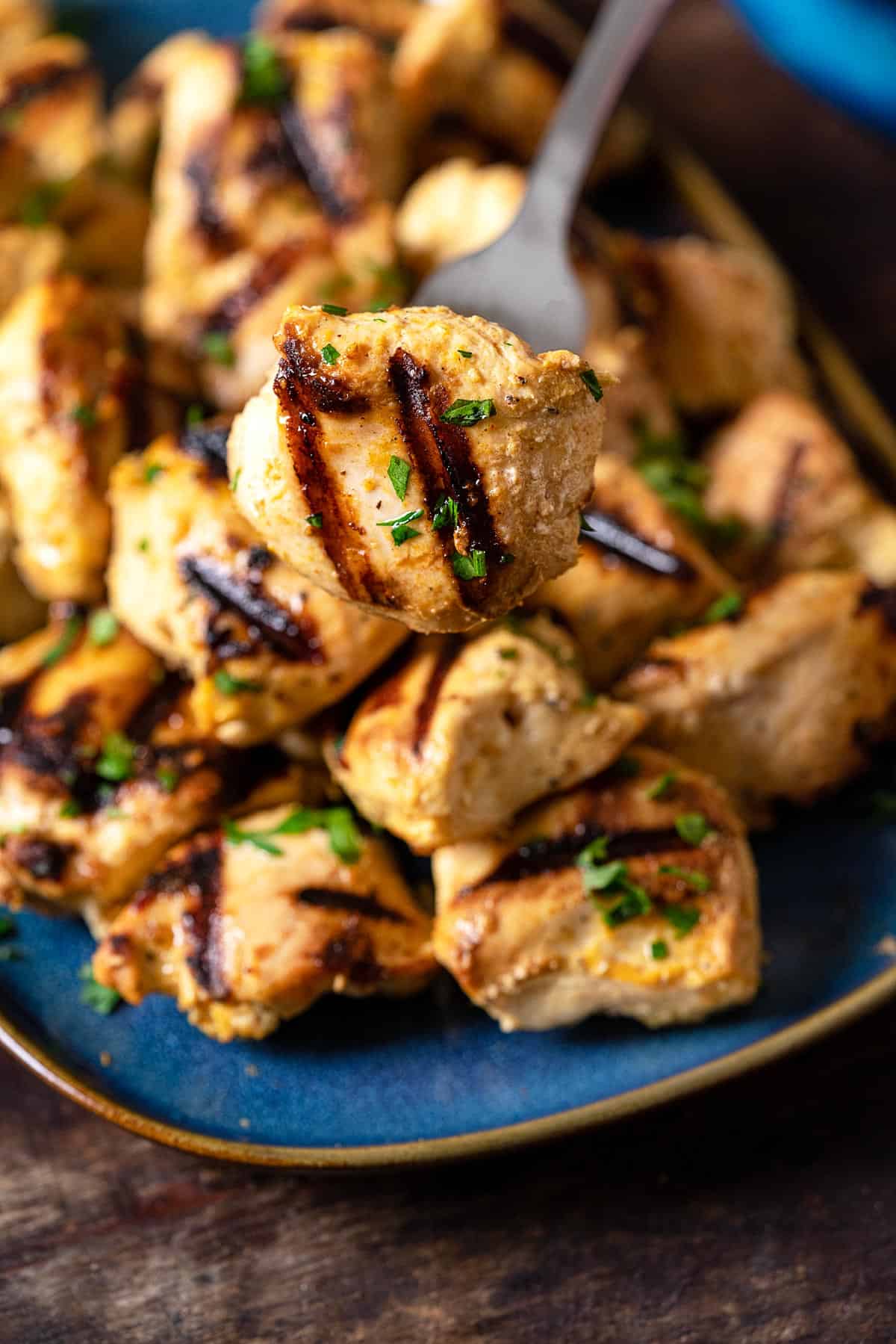
Succulent chicken marinated in saffron, lemon, and caramelized onion, grilled over charcoal until charred and juicy. The saffron turns each morsel a stunning golden hue.
Nutrition & Info
Allergen Warnings
Equipment Needed
Presentation Guide
Vessel: flat plate over lavash bread
Garnishes: grilled tomato, sumac, saffron butter
Accompaniments: saffron rice, grilled tomato, raw onion
Instructions
-
1
Steep the ground saffron in hot water for at least fifteen minutes until the liquid turns a deep orange-gold. In a large bowl, combine the saffron water, lemon juice, grated onion juice, olive oil, yogurt, salt, and pepper.
-
2
Add the chicken pieces to the marinade, toss until every piece is thoroughly coated, then cover the bowl tightly and refrigerate for at least four hours, or ideally overnight for the deepest flavour penetration.
-
3
Remove the chicken from the refrigerator thirty minutes before grilling to bring it to room temperature, which ensures even cooking throughout without cold spots in the centre of each piece.
-
4
Thread the marinated chicken onto flat metal skewers, alternating with cherry tomatoes. Pack the chicken pieces snugly together on each skewer so the edges touch, which prevents the meat from drying out.
-
5
Preheat a charcoal grill or grill pan to high heat. Grill the skewers for four to five minutes per side, basting generously with melted butter each time you turn them, until the chicken is charred and cooked through.
-
6
Remove the skewers from the grill and let them rest for three minutes. Serve the joojeh kabab on warm lavash bread alongside grilled tomatoes, saffron-steamed basmati rice, and fresh herbs.
Did You Know?
Joojeh kabab is traditionally a springtime dish, popular during Nowruz picnics.
Chef's Notes
Equipment Tips
- flat skewers
- charcoal grill
- mixing bowl
Garnishing
grilled tomato, sumac, saffron butter
Accompaniments
saffron rice, grilled tomato, raw onion
The Story Behind جوجه کباب
### The Story
Joojeh kabab (chicken kebab) belongs to the ancient Persian kebab tradition, where the word "kebab" derives from the Aramaic kabbaba, itself from the Akkadian kababu meaning "to burn" or "to char." While kebab culture in Persia stretches back millennia, joojeh kabab as a distinct preparation crystallized during the Qajar Dynasty (1789-1925), when the shah Nasereddin Shah was known for his passionate interest in kebabs. The chicken is marinated in a mixture of saffron, lemon juice, onion, and yogurt -- ingredients that both tenderize and perfume the meat -- then grilled over charcoal until charred at the edges and juicy within.
### On the Calendar
Joojeh kabab is a year-round dish, but it is especially associated with Sizdah Bedar, the 13th day of Nowruz, when Iranian families picnic outdoors and grill kebabs in parks and countryside. It is also a standard feature of wedding receptions and formal gatherings.
### Then & Now
Joojeh kabab is served in two primary settings: at restaurants and elaborate parties, it accompanies chelow (steamed saffron rice); at casual gatherings and picnics, it is wrapped in lavash bread. Some versions use bone-in chicken pieces, while others use boneless chunks. The essential elements -- saffron marinade, charcoal grilling, and the accompanying grilled tomato -- remain unchanged. Joojeh kabab has become one of the most commonly ordered dishes in Persian restaurants worldwide.
### Legacy
Joojeh kabab distills Persian cuisine to its essence: saffron, fire, and patience -- transforming simple chicken into something golden, fragrant, and unmistakably Persian.
Comments (0)
Log in to leave a comment.
No comments yet. Be the first to share your thoughts!