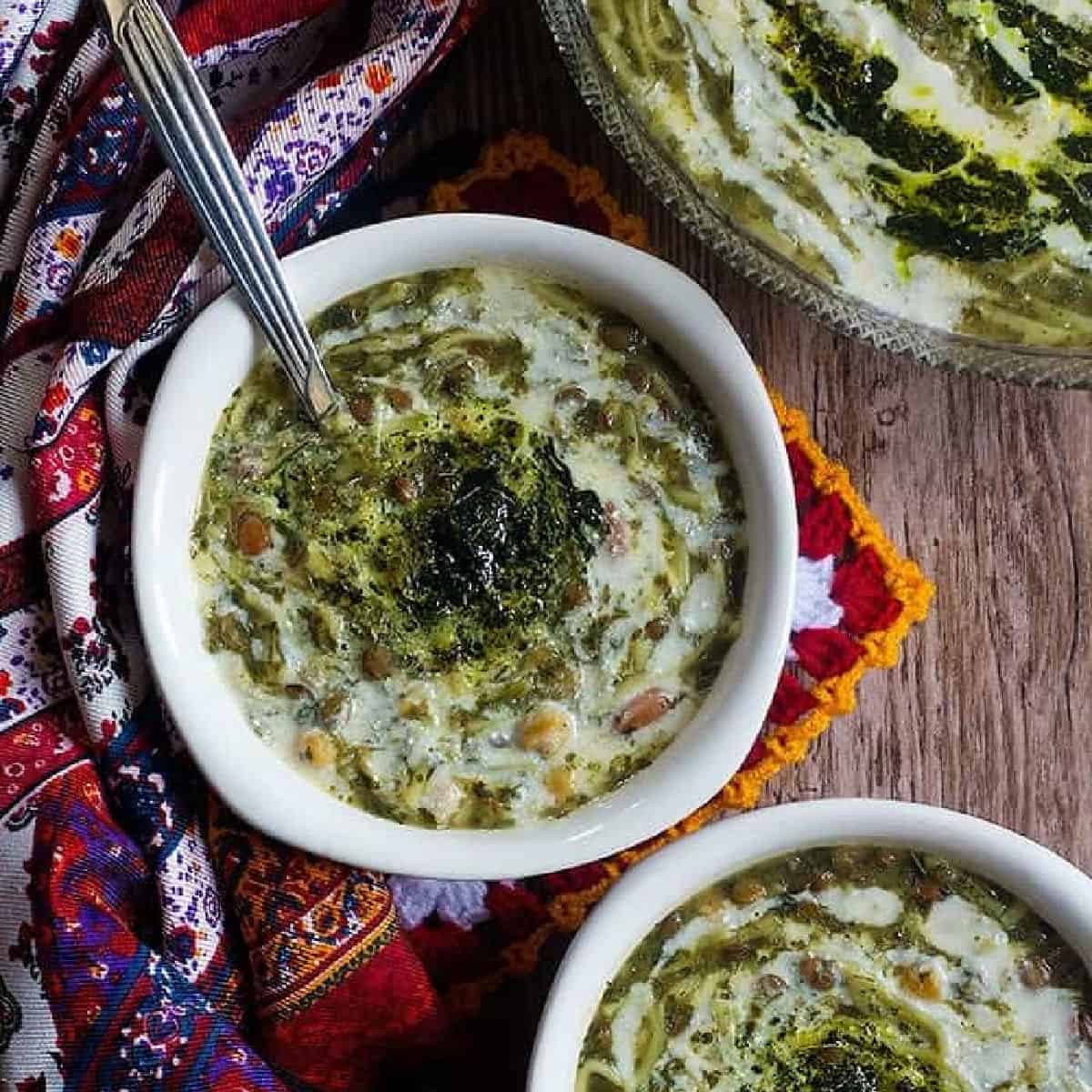
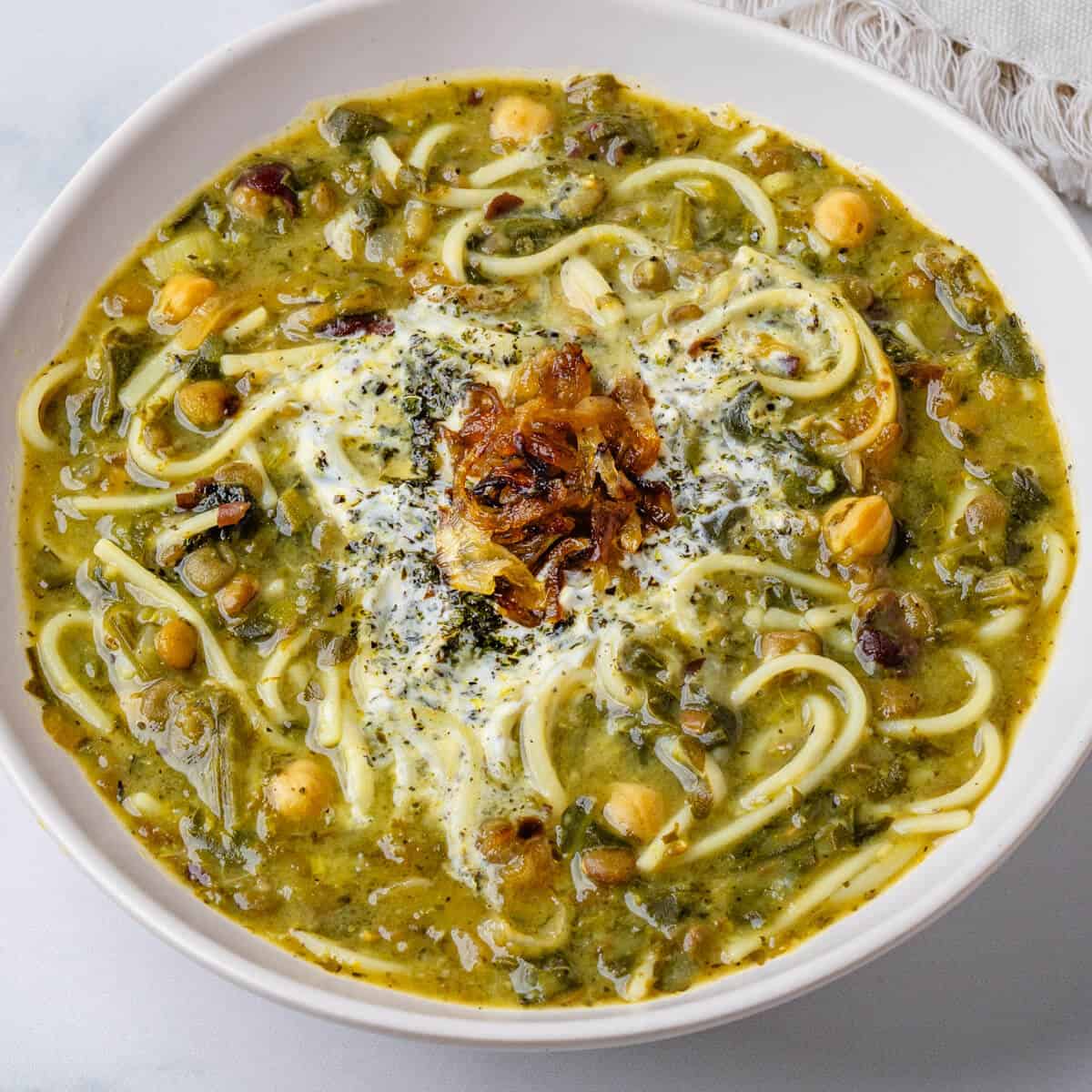
A thick, hearty noodle soup brimming with herbs, legumes, and tangy kashk that warms you from within. Served at celebrations and new beginnings.
Nutrition & Info
Allergen Warnings
Equipment Needed
Presentation Guide
Vessel: deep bowl
Garnishes: kashk (whey), fried mint, fried onions
Accompaniments: flatbread
Instructions
-
1
Place the soaked and drained chickpeas and kidney beans in a large pot, cover with the water or broth, bring to a boil, then reduce heat and simmer for forty minutes until the legumes are nearly tender but still hold their shape.
-
2
Add the lentils to the pot and continue simmering for an additional twenty minutes. Skim any foam that rises to the surface to keep the broth clear and the final soup clean-looking.
-
3
While the legumes cook, heat the oil in a large skillet over medium heat. Sauté the diced onion for ten minutes until golden brown, then stir in the turmeric for thirty seconds until fragrant.
-
4
Add the chopped parsley, cilantro, dill, scallions, and spinach to the sautéed onion and cook for five to seven minutes, stirring frequently, until the herbs wilt and darken slightly in colour.
-
5
Transfer the herb mixture into the pot with the legumes, stir to combine, and simmer for fifteen minutes. Add the broken reshteh noodles and cook for another ten to twelve minutes until the noodles are tender.
-
6
Heat the butter in a small pan over medium heat. Add the dried mint and fry for thirty seconds until it sizzles and turns dark, releasing its fragrance. Remove immediately to prevent burning.
-
7
Ladle the thick soup into deep bowls and finish each serving with a generous swirl of kashk, a spoonful of the fried mint butter, and a scatter of crispy fried onions on top.
Did You Know?
Ash reshteh is served on Nowruz because long noodles symbolize the many paths of life ahead.
Chef's Notes
Equipment Tips
- large pot
- sharp knife
- ladle
- skillet
Garnishing
kashk (whey), fried mint, fried onions
Accompaniments
flatbread
The Story Behind آش رشته
### The Story
Ash reshteh belongs to the ancient tradition of ash -- Persian thick soups that number over 50 varieties in Iranian cooking. The word "ash" derives from a very old Persian term for "food" itself, reflecting how fundamental these soups are to the culture. The dish's roots trace to the Sassanian Empire (3rd-7th century CE), though noodles (reshteh) were not incorporated until around 500 CE, transforming the soup into its present form. Reshteh means "thread" or "string" and, by extension, symbolizes the threads of fate -- Iranians believe eating reshteh brings good fortune and helps untangle life's difficulties.
### On the Calendar
Ash reshteh is the traditional soup of Nowruz (Persian New Year), eaten by Iranians worldwide to welcome the spring equinox. It is also prepared when someone embarks on a journey or begins a new venture, invoking the good luck associated with noodles.
### Then & Now
Classic ash reshteh combines flat noodles with kidney beans, chickpeas, lentils, and a generous mix of fresh herbs (parsley, cilantro, dill, chives), topped with kashk (fermented whey), caramelized onions, and dried mint. The soup is so thick it straddles the line between soup and stew. Modern preparations remain faithful to the traditional recipe, though some cooks substitute Greek yogurt for the harder-to-find kashk outside Iran.
### Legacy
Ash reshteh nourishes both body and spirit -- a soup that connects modern Iranians to their Sassanian ancestors while carrying wishes of good fortune into the new year.

Comments (0)
Log in to leave a comment.
No comments yet. Be the first to share your thoughts!