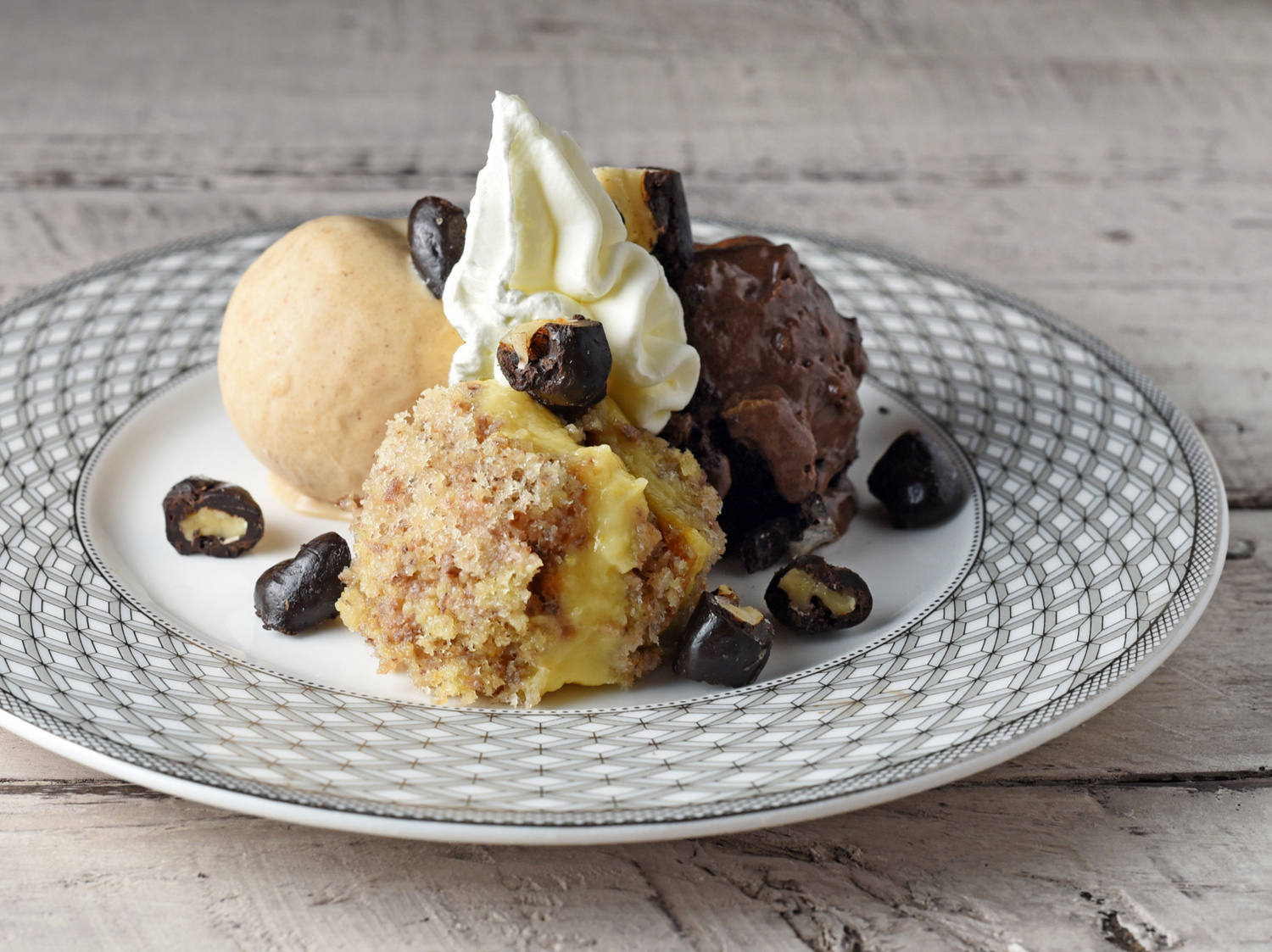
A decadent Hungarian trifle of three different sponge cakes soaked in rum syrup, layered with chocolate sauce, walnut cream, and whipped cream.
Nutrition & Info
Allergen Warnings
Equipment Needed
Presentation Guide
Vessel: glass trifle bowl or individual glasses
Garnishes: whipped cream, chocolate sauce drizzle, walnut pieces
Accompaniments: espresso
Instructions
-
1
Bake three sponge cakes: one plain vanilla, one with ground walnuts, one with cocoa. Cool and tear into rough pieces.
-
2
Make rum syrup: dissolve sugar in water, simmer 5 min, add rum and raisins.
-
3
Make chocolate sauce: heat milk, whisk in cocoa and cornstarch, simmer until thick. Add chopped chocolate, stir until melted.
-
4
Layer torn sponge pieces in individual glasses: vanilla first, drizzle with rum syrup, add walnut cream and chocolate sauce. Repeat with walnut sponge, then chocolate sponge.
-
5
Chill for at least 2 hours.
-
6
Top with whipped cream and drizzle with extra chocolate sauce before serving.
Did You Know?
Somlói galuska was created by waiter Károly Gollerits at the Gundel restaurant in 1958 and won a gold medal at the Brussels World Fair the same year.
Chef's Notes
Equipment Tips
- cake pans
- saucepan
- serving glasses or bowls
- whisk
Garnishing
whipped cream, chocolate sauce drizzle, walnut pieces
Accompaniments
espresso
The Story Behind Somlói Galuska
This spectacular dessert was born at Budapest's legendary Gundel restaurant when waiter Károly Gollerits entered it in a competition. Its triumph at the 1958 Brussels World Fair made it an overnight national treasure. Despite its relatively recent origin, it is now considered as essential to Hungarian cuisine as goulash.


Comments (0)
Log in to leave a comment.
No comments yet. Be the first to share your thoughts!