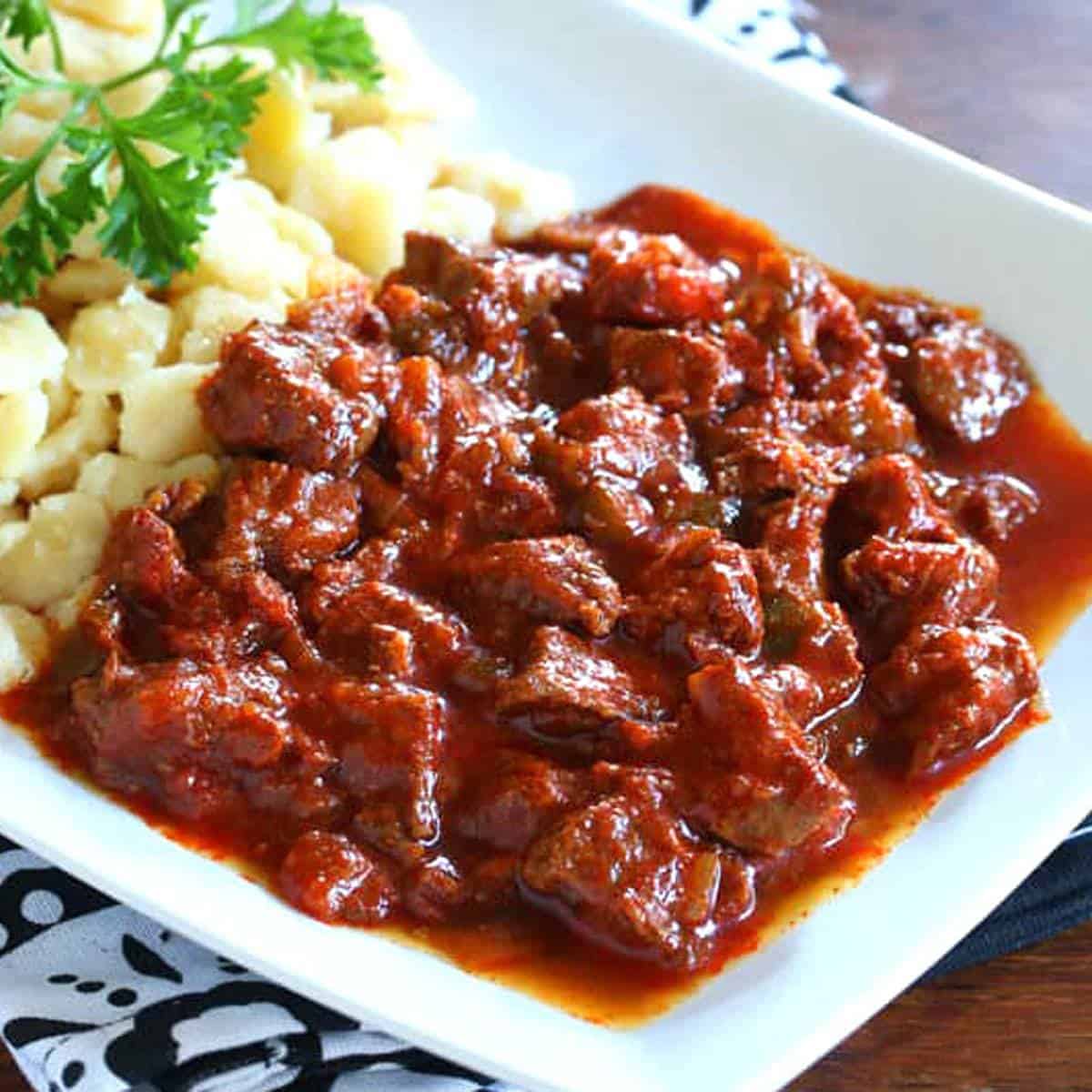
Slow-braised beef chunks in a thick, deeply paprika-infused onion sauce — the robust, no-liquid-added Hungarian stew that defines hearty cooking.
Nutrition & Info
Equipment Needed
Presentation Guide
Vessel: deep plate
Garnishes: paprika sprinkle, sour cream optional
Accompaniments: nokedli, fresh bread
Instructions
-
1
Heat oil in a heavy pot. Sauté diced onions over medium-low heat for 15-20 min until completely soft and translucent.
-
2
Remove from heat, add both paprikas, and stir for 30 seconds to bloom the spice without burning.
-
3
Return to heat, add beef cubes. Stir to coat in the paprika-onion mixture. Cook 5 min.
-
4
Add green peppers, tomato, garlic, and caraway seeds. Season with salt.
-
5
Cover tightly and cook on very low heat for 1.5-2 hours, stirring occasionally. The onions and meat juices should create enough liquid — add water only if needed.
-
6
The pörkölt is done when the beef is fork-tender and the sauce is thick and deeply colored. Serve with nokedli.
Did You Know?
Unlike goulash (which is a soup), pörkölt is a thick stew — this distinction is one of the most common culinary misunderstandings about Hungarian cuisine.
Chef's Notes
Equipment Tips
- dutch oven or heavy pot
- wooden spoon
- sharp knife
Garnishing
paprika sprinkle, sour cream optional
Accompaniments
nokedli, fresh bread
The Story Behind Marha Pörkölt
Pörkölt — meaning "singed" or "scorched" — originated with Hungarian shepherds on the Great Plain who slow-cooked meat in cauldrons. The key technique of cooking massive amounts of onions to near-dissolution creates the sauce base without added liquid, resulting in an intensely flavored stew that is arguably more representative of traditional Hungarian cooking than goulash itself.


Comments (0)
Log in to leave a comment.
No comments yet. Be the first to share your thoughts!