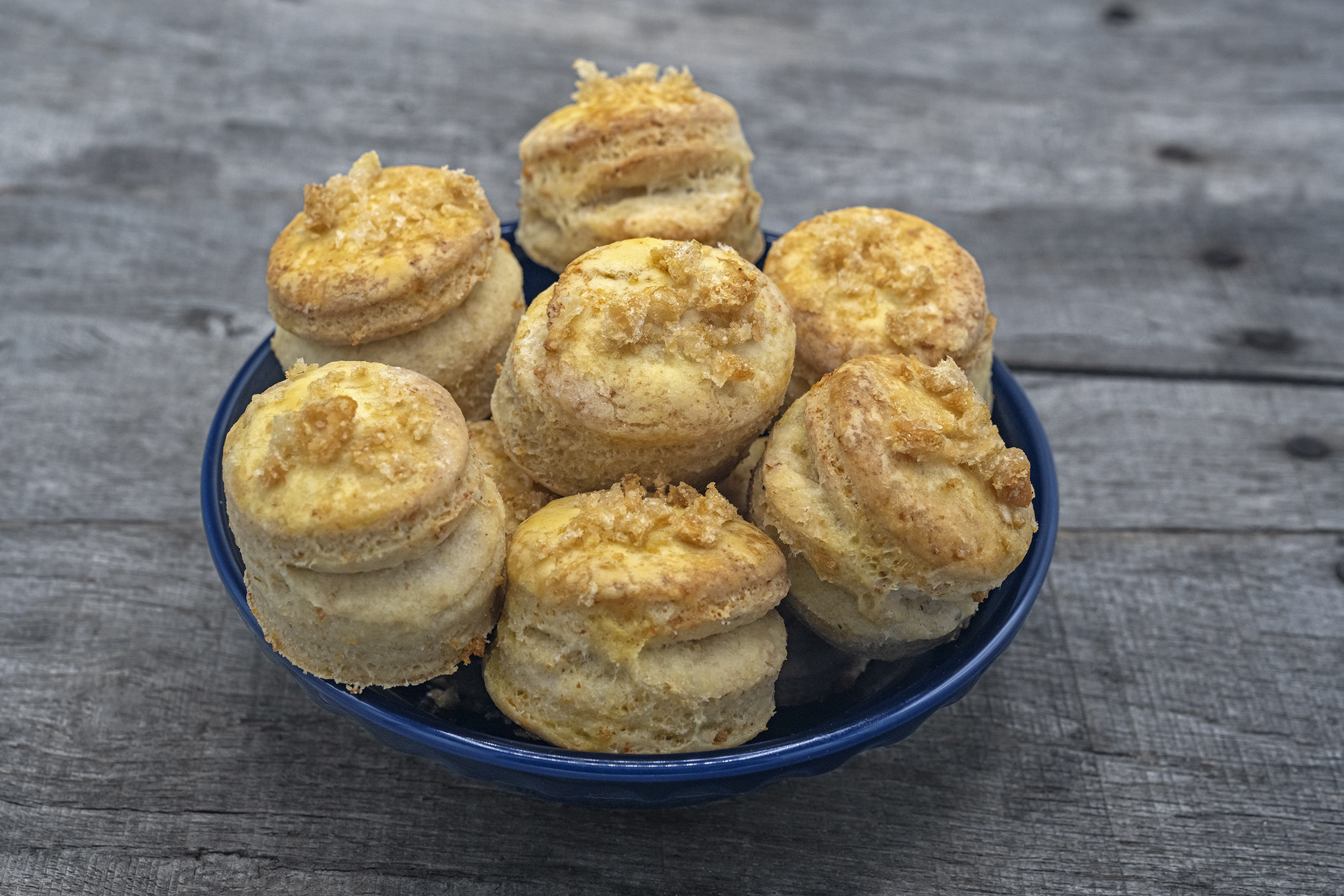
Flaky, buttery savory scones with a golden crackle-top crust, studded with cheese or crackling — Hungary's most popular snack bread.
Instructions
-
1
Mix flour, salt, sugar, and yeast. Cut in cold butter until the mixture resembles coarse crumbs.
-
2
Add sour cream, 1 egg yolk, and grated cheese. Mix until a soft dough forms. Do not overwork.
-
3
Wrap dough and refrigerate 30 min.
-
4
Roll dough to 2cm thickness. Cut rounds with a cutter. Score a cross-hatch pattern on each top.
-
5
Place on a lined baking sheet. Brush with beaten egg yolk and sprinkle with caraway seeds.
-
6
Bake at 180°C (350°F) for 20-25 min until deeply golden and flaky. Serve warm.
Did You Know?
Pogácsa is so central to Hungarian hospitality that offering one to a guest is considered a sign of welcome — the word itself comes from the Latin "panis focacius."
The Story Behind Pogácsa
Pogácsa has been baked in Hungary since the Ottoman period, likely adapted from Turkish bread traditions. It became the essential accompaniment to wine drinking and the default welcome snack. Regional varieties abound: some use cheese, others beef drippings or sheep's curd. No Hungarian wine cellar visit is complete without a plate of fresh pogácsa.


Comments (0)
Log in to leave a comment.
No comments yet. Be the first to share your thoughts!