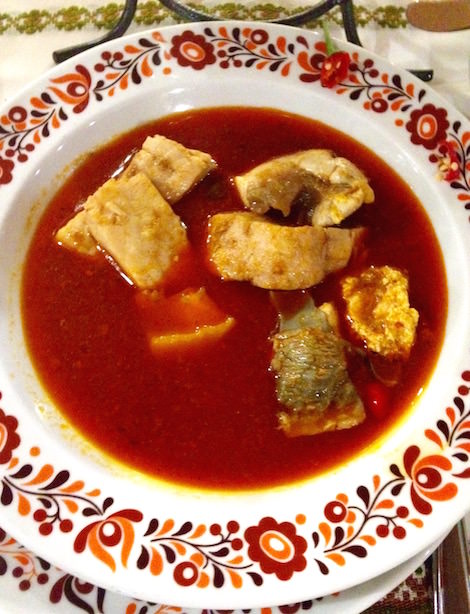
A fiery, paprika-red river fish soup with tender chunks of carp and catfish, simmered to a velvety consistency that warms from the inside out.
Nutrition & Info
Allergen Warnings
Equipment Needed
Presentation Guide
Vessel: traditional bogrács or deep bowl
Garnishes: hot paprika, fresh bread
Accompaniments: white bread, pickled hot peppers
Instructions
-
1
Simmer small fish and trimmings with one diced onion and water for 30 min to make a rich broth. Strain through a fine sieve, pressing solids.
-
2
In the same pot, sauté remaining onion in a splash of oil until softened. Remove from heat, add sweet and hot paprika, stir quickly.
-
3
Pour strained fish broth into the pot. Add green peppers, tomatoes, and cherry pepper. Simmer 15 min.
-
4
Add the large fish steaks gently. Simmer without stirring (only shake the pot gently) for 15-20 min until fish is opaque and flakes easily.
-
5
Season with salt. Serve steaming hot directly from the pot.
Did You Know?
True halászlé is never stirred with a spoon — the pot is gently rocked or shaken so the delicate fish pieces stay intact.
Chef's Notes
Equipment Tips
- bogrács (cauldron) or large pot
- ladle
- fine sieve
Garnishing
hot paprika, fresh bread
Accompaniments
white bread, pickled hot peppers
The Story Behind Halászlé
Halászlé is Hungary's iconic fisherman's soup, born on the banks of the Danube and Tisza rivers. The two great regional versions — Szeged's refined, strained broth and Baja's rustic, chunky style — have fueled a friendly rivalry for centuries. It remains the traditional Christmas Eve dish for many Hungarian families.


Comments (0)
Log in to leave a comment.
No comments yet. Be the first to share your thoughts!