
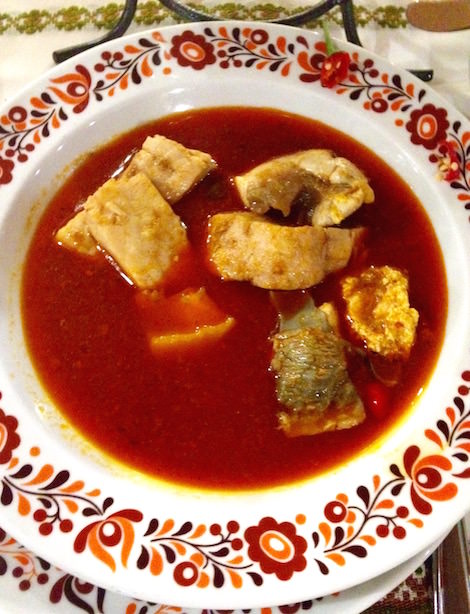
A rich, paprika-red beef stew with potatoes, carrots, and caraway seeds. Hungary's most famous export to world cuisine.
Nutrition & Info
Equipment Needed
Presentation Guide
Vessel: deep bowl
Garnishes: sour cream dollop, fresh paprika
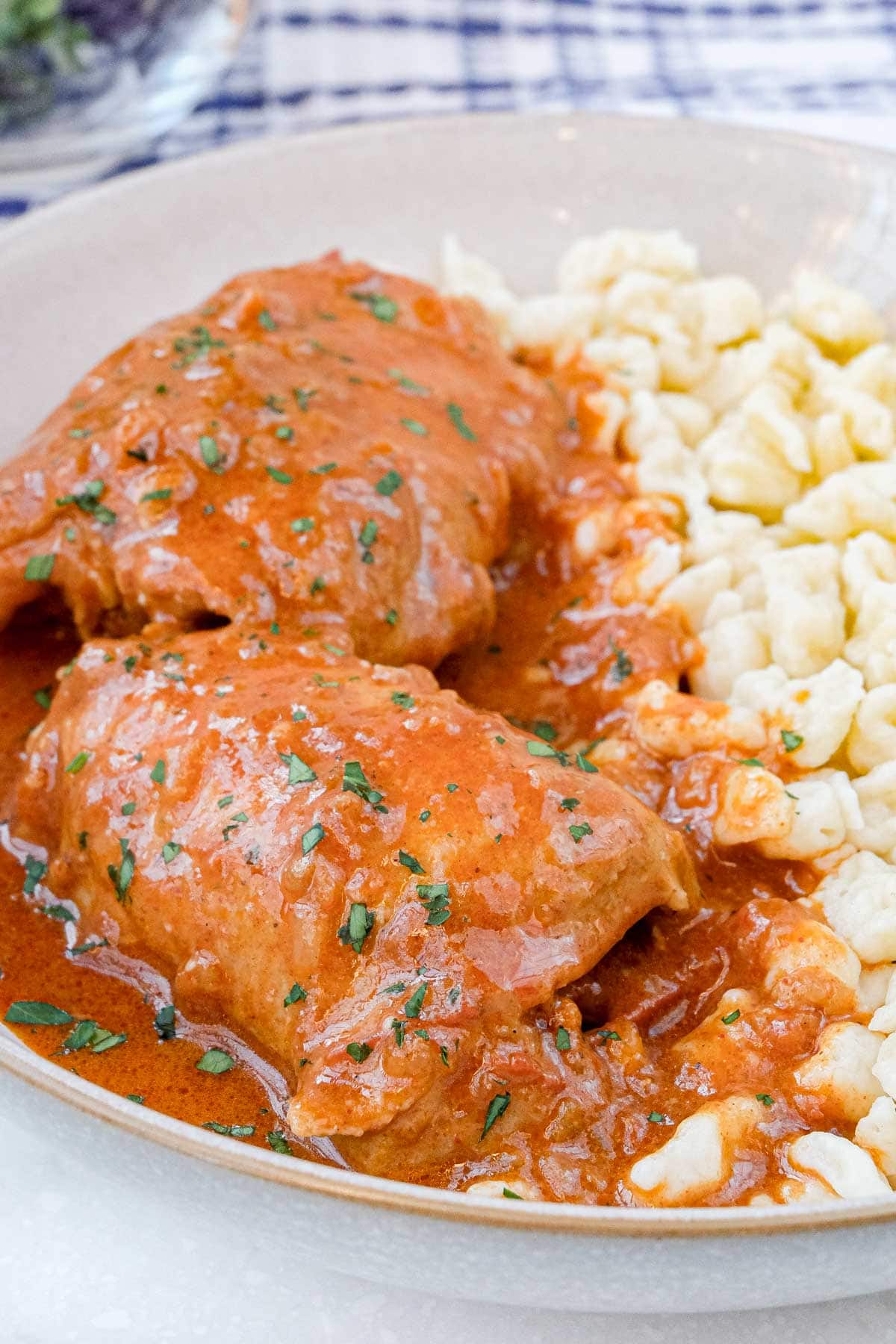
Accompaniments: crusty bread, csipetke (pinched noodles)
Instructions
-
1
Heat the oil or oil in a large heavy pot or Dutch oven over medium heat, add all the diced onions, and cook slowly for fifteen to twenty minutes, stirring frequently, until they are deeply soft, golden, and almost melting into a paste.
-
2
Remove the pot from the heat and stir in both the sweet and hot paprika immediately, mixing quickly for thirty seconds to coat the onions without burning the paprika, which is the foundation of the goulash flavour.
-
3
Return the pot to high heat, add the beef cubes in a single layer, and cook for five minutes, turning occasionally, until the meat is lightly seared on all sides and has absorbed the paprika-onion base.
-
4
Add the diced tomatoes, diced peppers, crushed caraway seeds, and minced garlic, stirring to combine, then pour in the water or broth and bring everything to a boil over high heat.
-
5
Reduce the heat to a gentle simmer, cover the pot with a lid, and cook for sixty minutes, skimming any foam that rises to the surface, until the beef begins to feel tender when pierced with a fork.
-
6
Add the cubed potatoes to the pot, stir gently, and continue simmering for another thirty minutes until the potatoes are soft and the beef is very tender, falling apart at the touch of a spoon.
-
7
Taste and adjust the seasoning with salt, noting that authentic Hungarian goulash should be a soupy stew with a thin, paprika-red broth, not a thick, gravy-like sauce. Add more water if the consistency is too thick.
-
8
Ladle the goulash into deep bowls, ensuring each serving has generous portions of tender beef, soft potatoes, and plenty of the fragrant paprika broth. Serve with crusty bread and no sour cream, which is reserved for paprikash.
Did You Know?
Real Hungarian goulash is a soup, not a thick stew — what foreigners call 'goulash' is actually porkolt.
Chef's Notes
Equipment Tips
- large heavy pot or dutch oven
- sharp knife
- wooden spoon
Garnishing
sour cream dollop, fresh paprika
Accompaniments
crusty bread, csipetke (pinched noodles)
The Story Behind Gulyas
The Story: Gulyas (Goulash) is Hungary's most famous dish and one of the world's great stews: a slow-simmered soup-stew of beef, onions, potatoes, carrots, and sweet paprika, seasoned with caraway seeds and often enriched with small pinched pasta (csipetke). Contrary to popular international belief, authentic Hungarian gulyas is a soup, not a thick stew. The dish traces directly to the Magyar cowboys (gulyasok) of the Great Plain, who cooked chunks of beef with onions in heavy iron cauldrons (bogracs) over open fires. The introduction of paprika in the eighteenth century transformed this simple herdsman's stew into the iconic, red-hued dish known today.
On the Calendar: Gulyas is eaten year-round in Hungary, served at family meals, in restaurants, and at outdoor cooking competitions where teams vie for the best bogracsgulyas (cauldron goulash). It is standard fare at festivals, village celebrations, and harvest events.
Then & Now: While kitchen-cooked goulash is everyday food, the tradition of cooking gulyas in a bogracs over an open fire endures as both practical rural cooking and cherished ritual. Goulash competitions (bogracsfesztivals) are major cultural events across Hungary.
Legacy: Gulyas is Hungary's gift to world cuisine, a dish born on the open steppe that carried the flavor of paprika and the spirit of Magyar nomadism from the Carpathian Basin to every continent.


Comments (0)
Log in to leave a comment.
No comments yet. Be the first to share your thoughts!