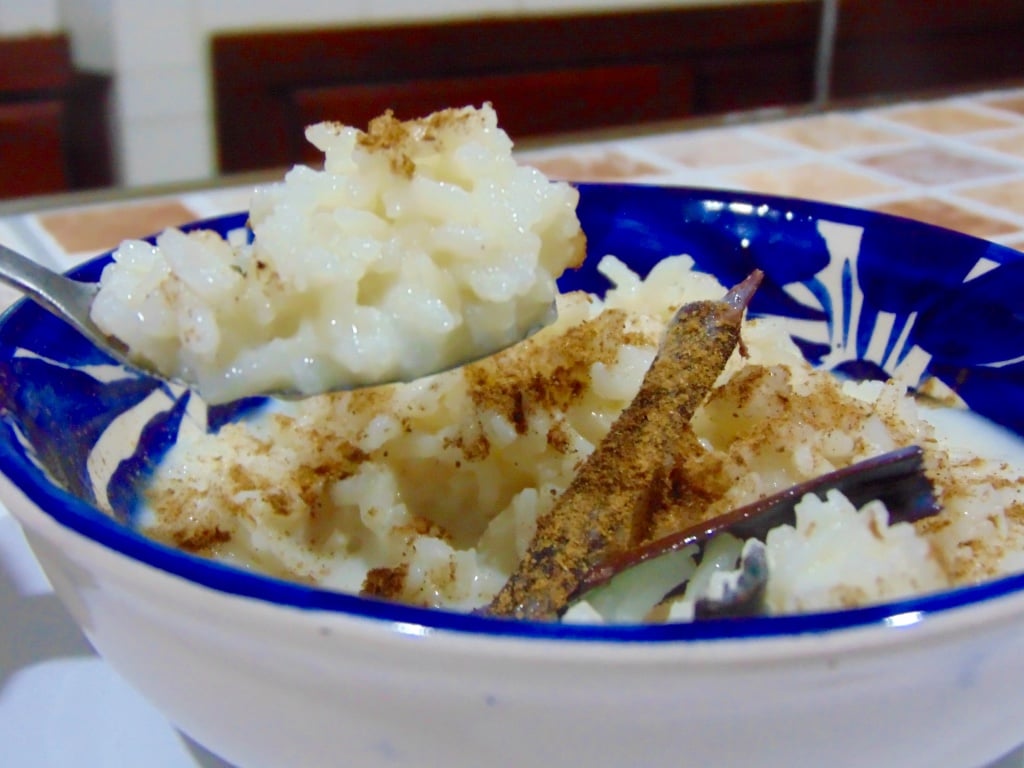
Arroz con Leche Hondureño
Arroz con Leche (ah-ROHS kon LEH-cheh)
Honduran Rice Pudding
Creamy cinnamon-spiced rice pudding made with whole milk, condensed milk, and vanilla, served chilled with a generous dusting of ground cinnamon.
Nutrition & Info
Allergen Warnings
Equipment Needed
Presentation Guide
Instructions
-
1
Rinse rice well and cook in two cups of water with cinnamon sticks until water is absorbed and rice is tender, about fifteen minutes.
-
2
Add whole milk gradually, stirring frequently over medium-low heat. Let the rice absorb the milk slowly.
-
3
Stir in condensed milk, vanilla, nutmeg, and salt. Continue cooking and stirring until thick and creamy, about twenty more minutes.
-
4
Remove cinnamon sticks. Spoon into individual serving glasses or a large bowl.
-
5
Refrigerate until chilled, at least two hours. Dust generously with ground cinnamon before serving.
Did You Know?
Honduran grandmothers say the secret to perfect arroz con leche is patience and never stopping the stirring, even when your arm gets tired.
Chef's Notes
Equipment Tips
- heavy-bottomed saucepan
- wooden spoon
- serving glasses
Garnishing
ground cinnamon dusting
Accompaniments
The Story Behind Arroz con Leche Hondureño
Arroz con leche came to Honduras with Spanish colonizers who brought both rice cultivation and dairy cattle to the Americas. The dish was quickly adopted across all social classes, becoming one of the most beloved desserts in the country. The Honduran version tends to be creamier and sweeter than its Spanish ancestor, reflecting the Latin American preference for condensed milk as a sweetener. It remains a fixture at family meals, church gatherings, and celebrations throughout Honduras.
More Honduran Dishes
 Easy
📜 Story
Easy
📜 Story
Atol de Elote
Sweet Corn Beverage
Breakfast or afternoon merienda Easy
📜 Story
Easy
📜 Story
Baleada
Stuffed Flour Tortilla
Any meal, street food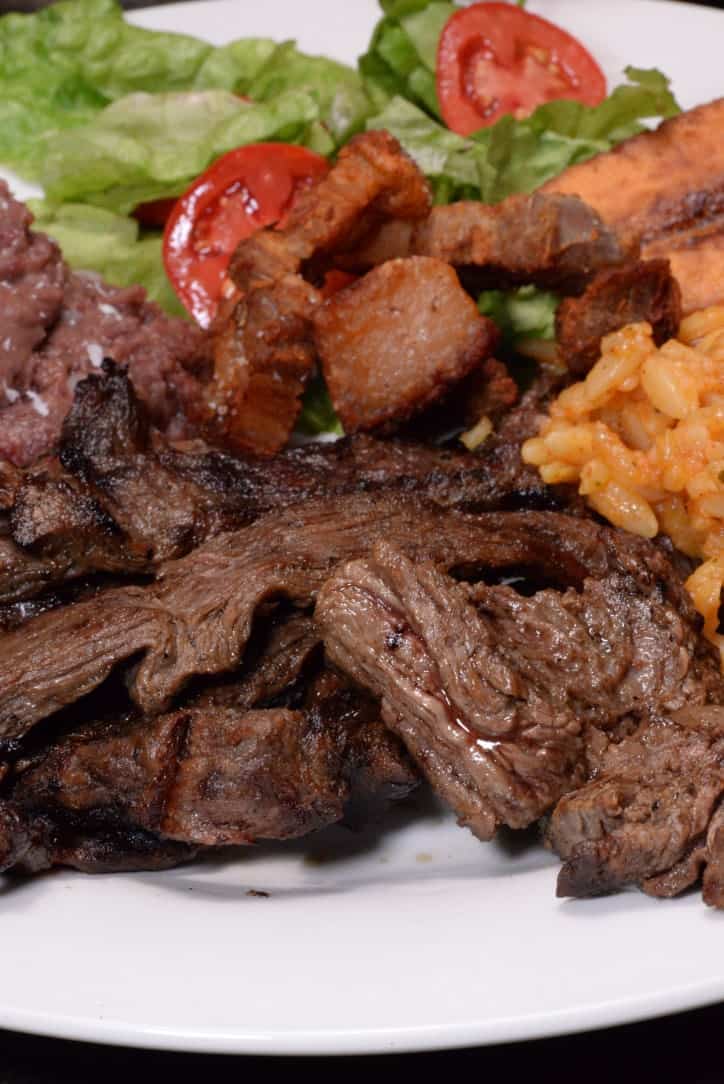 Easy
📜 Story
Easy
📜 Story
Carne Asada Hondureña
Honduran Grilled Beef
Weekend cookouts and celebrations Easy
📜 Story
Easy
📜 Story
Catrachas
Fried Tortilla with Bean and Cheese Topping
Appetizer or snack any time of day
Comments (0)
Log in to leave a comment.
No comments yet. Be the first to share your thoughts!