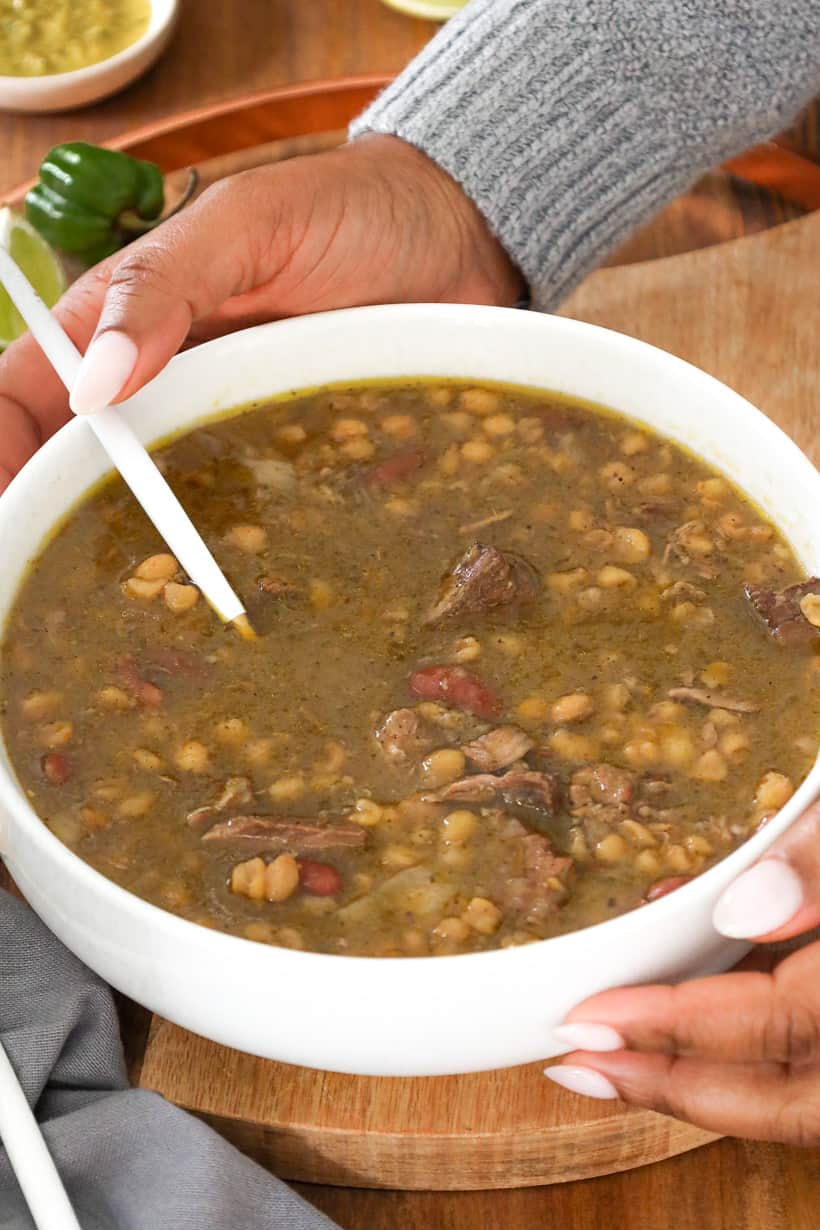
A thick, rustic stew made with dried corn, red beans, squash, and smoked herring, simmered for hours until everything melds into a hearty, earthy porridge.
Instructions
-
1
Drain soaked corn and beans. Add to a large pot with fresh water. Bring to a boil and cook for one hour.
-
2
Add squash cubes and continue cooking for thirty minutes until corn and beans are tender and squash begins to break down.
-
3
Add flaked smoked herring, onion, garlic, epis paste, thyme, and whole Scotch bonnet.
-
4
Pour in coconut milk and stir well. Simmer for another thirty minutes, stirring occasionally to prevent sticking.
-
5
The stew should be very thick, almost porridge-like. Mash some squash against the side of the pot to thicken.
-
6
Remove Scotch bonnet and thyme. Season with salt and pepper. Serve in deep bowls.
Did You Know?
Tchaka is named after the Taino word for corn, reflecting the dish's pre-colonial indigenous roots that predate European arrival in Hispaniola.
The Story Behind Tchaka
Tchaka is one of Haiti's most ancient dishes, combining indigenous Taino corn traditions with African bean-cooking techniques and colonial-era preserved fish. The slow-cooked stew represents a meeting point of the three cultures that shaped Haitian cuisine. Corn and beans together provide complete protein, making tchaka a nutritionally important dish that sustained rural Haitian communities for generations. The long cooking time allows flavors to develop fully, creating remarkable depth from simple ingredients.



Comments (0)
Log in to leave a comment.
No comments yet. Be the first to share your thoughts!