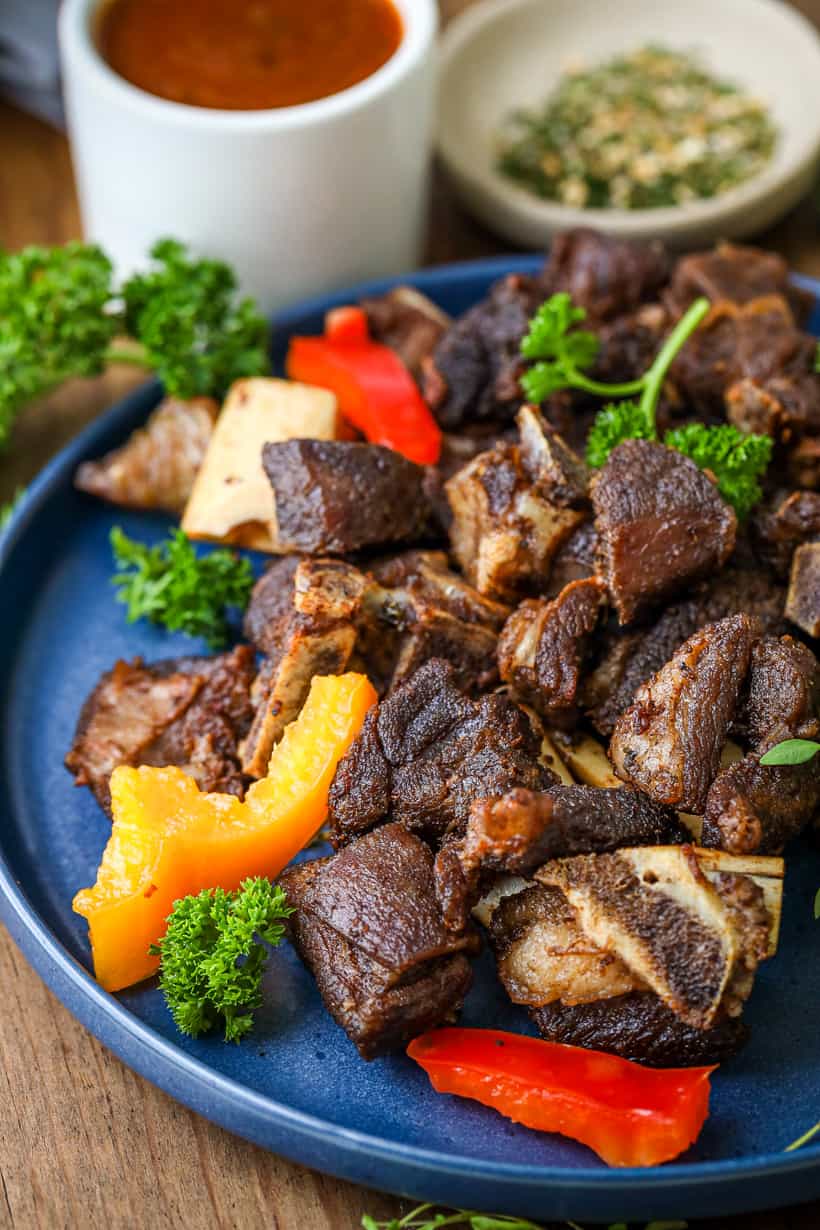
Tender goat meat marinated in sour orange and epis, then braised until fork-tender and deep-fried to a golden, crackling crust. A beloved celebration dish.
Nutrition & Info
Equipment Needed
Presentation Guide
Instructions
-
1
Combine sour orange juice, garlic, shallots, epis paste, Scotch bonnet, and thyme. Coat goat pieces thoroughly and marinate overnight.
-
2
Transfer goat and all marinade to a heavy pot. Add water and bring to a boil over medium heat.
-
3
Reduce heat and simmer for two hours until goat is very tender and liquid has reduced to a glaze.
-
4
Remove goat pieces and let them cool on a wire rack for ten minutes until the surface dries.
-
5
Heat oil to 175C in a deep pot. Fry goat pieces in batches until deeply golden and crispy, about five minutes per batch.
-
6
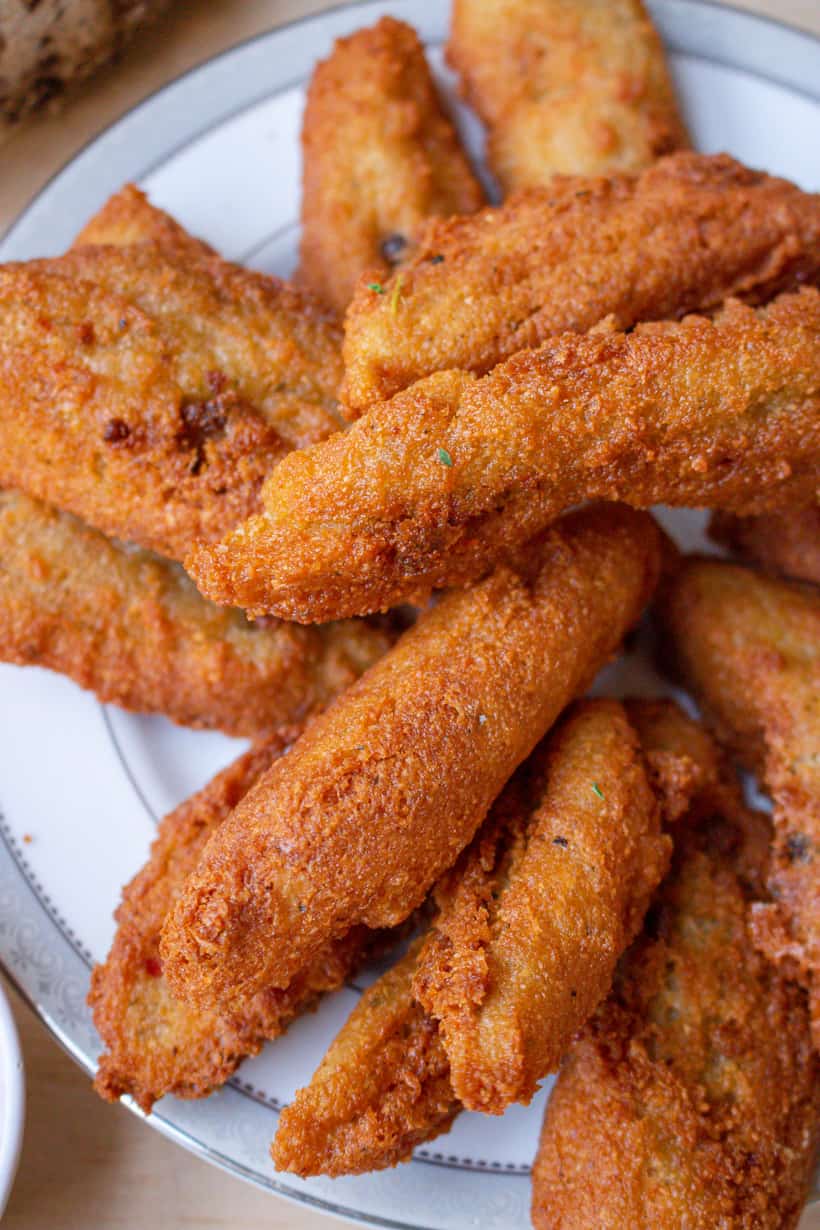
Drain on paper towels and serve immediately with pikliz, fried plantains, and rice and beans.
Did You Know?
In rural Haiti, tassot cabrit is the ultimate sign of a serious celebration. Families may save for weeks to afford the goat for a special occasion.
Chef's Notes
Equipment Tips
- heavy pot
- deep fryer or Dutch oven
- tongs
Garnishing
pikliz, lime wedges
Accompaniments
fried plantains, diri ak pwa
The Story Behind Tassot Cabrit
Tassot cabrit shares the iconic Haitian double-cooking technique with griot: braising followed by frying. This method, which produces extraordinarily tender meat with a crispy exterior, is considered one of Haiti's greatest culinary contributions. Goat has been central to Haitian cuisine since colonial times, raised on small farms across the countryside. The dish represents celebration and abundance, appearing at weddings, baptisms, and holiday gatherings.

Comments (0)
Log in to leave a comment.
No comments yet. Be the first to share your thoughts!