
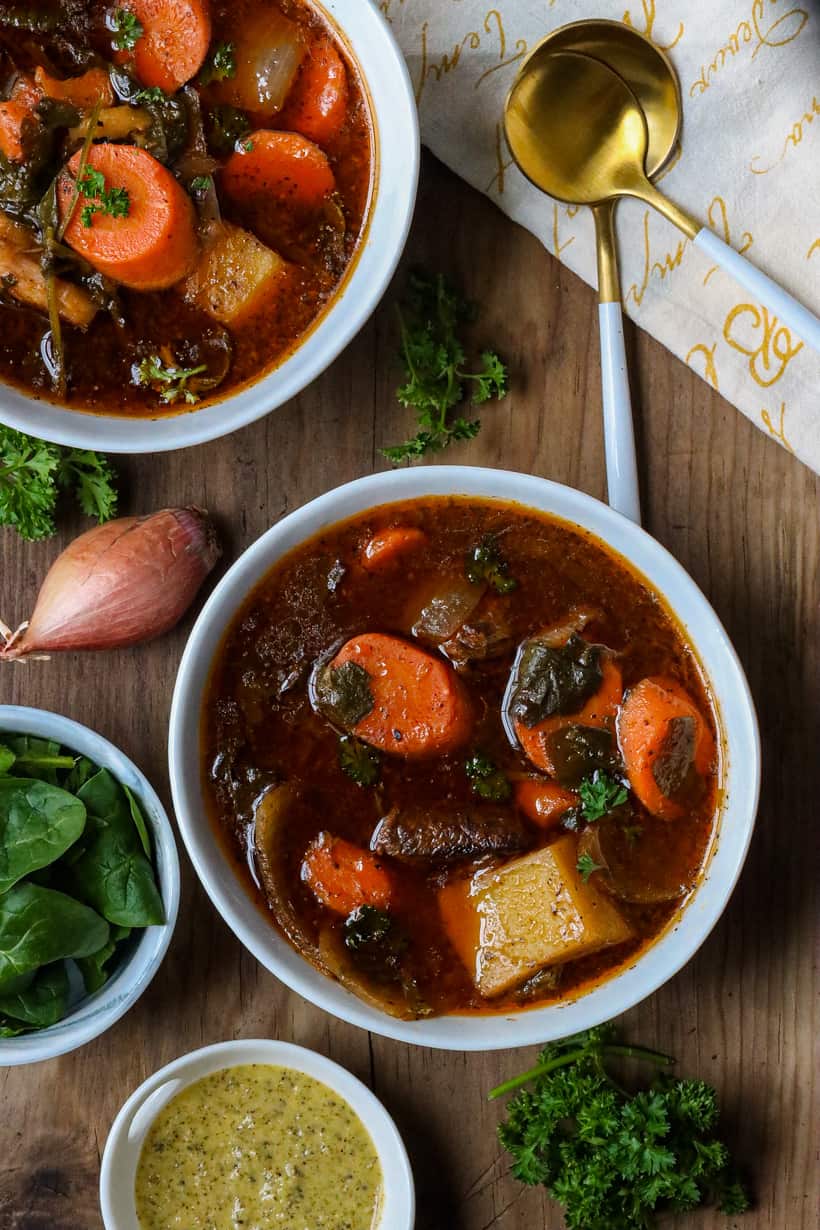
A rich, velvety pumpkin soup loaded with beef, pasta, and vegetables — Haiti's Independence Day soup, eaten every January 1st to celebrate freedom.
Nutrition & Info
Allergen Warnings
Equipment Needed
Presentation Guide
Instructions
-
1
Season the beef cubes with salt, pepper, and epis paste, then heat the vegetable oil in a large stockpot over high heat and brown the beef on all sides for six to eight minutes until a deep crust forms.
-
2
Add the garlic and thyme to the pot, stir for one minute, then pour in the water or broth and bring to a boil. Reduce heat to a simmer, cover, and cook for forty-five minutes until the beef is nearly tender.
-
3
While the beef simmers, boil the cubed pumpkin or squash in a separate pot of salted water for fifteen minutes until very soft, then drain and blend to a completely smooth puree using an immersion blender or regular blender.
-
4
Pour the pumpkin puree into the pot with the simmering beef, stirring well to create a thick, velvety, golden broth base. Add the whole scotch bonnet pepper, being careful not to burst it if you want moderate heat.
-
5
Add the cubed potatoes, sliced carrots, cubed turnip, chopped cabbage, and sliced leek to the enriched broth, then return to a gentle simmer and cook for twenty minutes until all the root vegetables are nearly tender.
-
6
Add the pasta to the pot and cook for an additional ten to twelve minutes until the pasta is al dente, stirring occasionally to prevent the pasta from sticking to the bottom of the pot as the soup thickens.
-
7
Remove the scotch bonnet pepper and thyme sprigs, then stir in the fresh lime juice and taste the soup carefully, adjusting the salt, pepper, and lime balance until the flavour is rich, bright, and perfectly seasoned.
-
8
Ladle the thick, hearty soup into deep bowls, ensuring each serving has a generous portion of beef, vegetables, and pasta. Serve with crusty bread and celebrate Haiti's independence, traditionally on January 1st and every Saturday.
Did You Know?
Soup joumou was inscribed on UNESCO's Intangible Cultural Heritage list. During slavery, enslaved Haitians were forbidden from eating this soup — after independence in 1804, eating it became an act of freedom.
Chef's Notes
Equipment Tips
- large pot
- blender
- sharp knife
- ladle
Garnishing
fresh parsley, lime wedge
Accompaniments
The Story Behind Soup Joumou
The Story: Soup joumou is a rich squash soup that holds a unique place in world culinary history as a dish of liberation. During the French colonial period, the enslaved people of Saint-Domingue were forbidden from eating the giraumon squash soup that they prepared for their enslavers. When Haiti won its independence on January 1, 1804, the formerly enslaved people celebrated by cooking and eating the soup that had been denied to them. Since that day, soup joumou has been served every January 1st as a celebration of freedom.
On the Calendar: Soup joumou is served on January 1st, Haitian Independence Day, making it one of the few dishes in the world tied to a specific date of national liberation. Families begin preparation on New Year's Eve, simmering the squash-based broth with beef, vegetables, pasta, and spices through the night.
Then & Now: In 2021, UNESCO inscribed soup joumou on its Intangible Cultural Heritage list, recognizing its significance to Haitian identity and human history. The recipe varies by family but always centers on giraumon squash, producing a velvety, golden soup enriched with meat, root vegetables, cabbage, and pasta.
Legacy: Soup joumou is more than a dish; it is an act of remembrance and defiance, a golden bowl of freedom that Haitians share every New Year's Day in honor of the ancestors who fought and won the right to eat it.


Comments (0)
Log in to leave a comment.
No comments yet. Be the first to share your thoughts!