
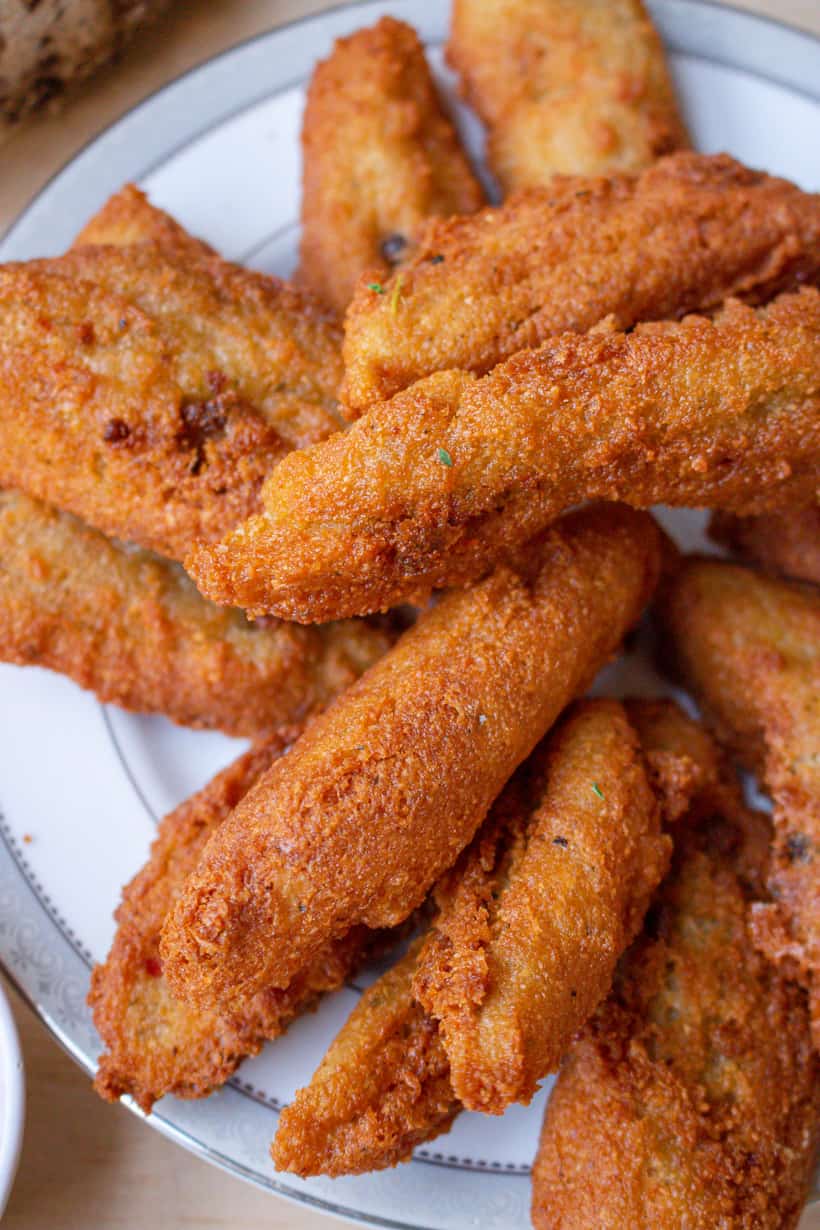
Green plantain slices fried once until soft, smashed flat, then fried again until golden and crispy. The quintessential Haitian side dish and snack.
Instructions
-
1
Peel plantains and cut into two-centimeter thick rounds. Soak in salted water for five minutes, then drain.
-
2
Heat oil to 165C in a deep skillet. Fry plantain rounds for three minutes until pale golden and slightly soft.
-
3
Remove plantains and drain on paper towels. While still warm, flatten each round to half its thickness using a tostonera or the bottom of a plate.
-
4
Dip flattened plantains briefly in salted water, then return to hot oil raised to 180C.
-
5
Fry again for two to three minutes until deeply golden and crispy on both sides.
-
6
Drain on paper towels, sprinkle with salt, and serve immediately while hot and crunchy.
Did You Know?
The tostonera, a wooden press used to flatten plantains, is considered an essential kitchen tool in every Haitian household.
The Story Behind Bannann Peze
Bannann peze is perhaps the single most ubiquitous food in Haiti, served alongside virtually every meal and available from street vendors across the country. The twice-frying technique, which creates a crispy exterior while maintaining a tender center, likely originated with the Taino people who cultivated plantains long before European contact. The dish survived colonization and remains a daily staple that connects modern Haitians to their Caribbean roots.
Comments (0)
Log in to leave a comment.
No comments yet. Be the first to share your thoughts!