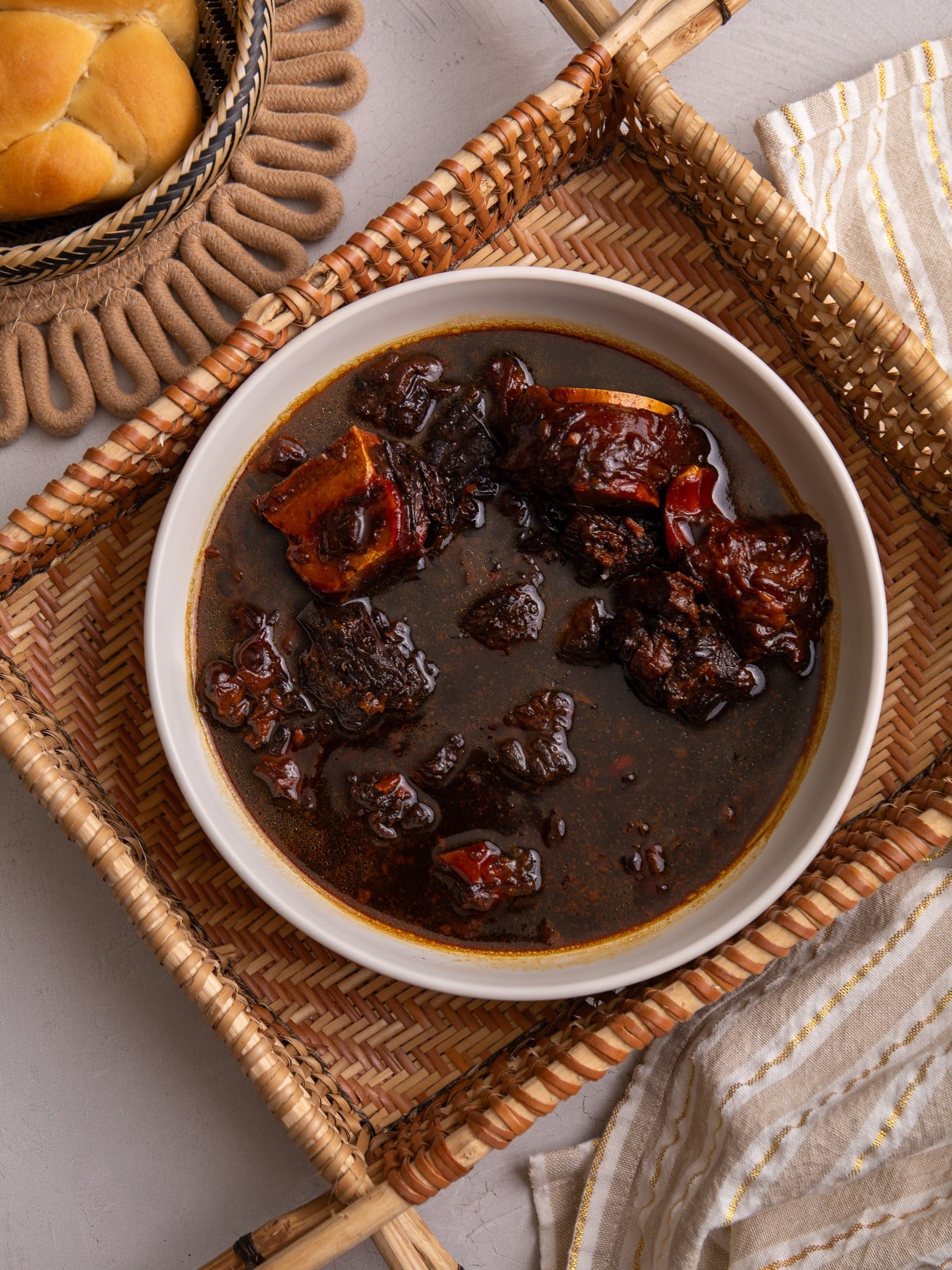
A dark, rich stew of beef slow-cooked in cassareep (cassava syrup) with cinnamon, cloves, and hot peppers. Guyana's Christmas centerpiece.
Instructions
-
1
Pat the beef cubes dry with paper towels and season generously with salt. Heat the vegetable oil in a large heavy-bottomed pot over high heat and sear the beef in batches until deeply browned on all sides, about eight minutes per batch.
-
2
Return all the seared beef to the pot, add the cassareep, and stir well so every piece of meat is coated in the dark, glossy cassava syrup, allowing it to cook for two minutes while stirring constantly.
-
3
Add the cinnamon sticks, whole cloves, wiri wiri peppers, orange peel, thyme sprigs, and brown sugar to the pot, then pour in the water and stir to dissolve the sugar and distribute the spices evenly.
-
4
Bring the pot to a boil over high heat, then immediately reduce to the lowest possible simmer. Cover with a tight-fitting lid and cook for two and a half to three hours, stirring occasionally to prevent sticking.
-
5
Check the pepperpot periodically: the beef should become extremely tender and the sauce should reduce to a dark, thick, glossy consistency that clings to the meat. Add a splash of water if it reduces too quickly.
-
6
When the beef is fork-tender and the sauce has the consistency of a rich, dark syrup, remove the cinnamon sticks, orange peel, and thyme sprigs. Taste and adjust salt and sugar to achieve the proper savoury-sweet balance.
-
7
Serve the pepperpot hot in deep bowls with thick slices of crusty bread or traditional Guyanese plait bread for dipping into the rich, dark sauce, which is an essential part of the Guyanese Christmas morning tradition.
-
8
The pepperpot improves dramatically when reheated the next day, as the cassareep acts as a natural preservative. Simply bring back to a simmer, adding a splash of water if the sauce has thickened too much overnight.
Did You Know?
Pepperpot can be kept simmering for weeks — Amerindian families kept perpetual pots going for months.
The Story Behind Pepperpot
The Story: Pepperpot is Guyana's national dish: a slow-cooked stew of beef, mutton, or mixed meats simmered in casareep, the thick, dark extract of bitter cassava that serves as both flavoring and preservative. Cinnamon sticks, cloves, hot peppers, and brown sugar season the stew, which develops a deep, complex, bittersweet flavor unique in world cuisine. The dish is of Amerindian origin, developed by indigenous peoples who discovered that casareep's antimicrobial properties allowed the stew to be kept at room temperature for days, with fresh meat added to the pot indefinitely. This perpetual stew tradition is one of the oldest food preservation methods in the Americas.
On the Calendar: Pepperpot is the essential Guyanese Christmas morning dish, served at breakfast on December 25th with fresh bread. Many families maintain a pepperpot that is reheated and replenished throughout the holiday season, with some claiming their pot has been continuously active for years.
Then & Now: The fundamental recipe is unchanged, with casareep remaining the non-negotiable foundation. Guyanese abroad go to great lengths to source authentic casareep for Christmas pepperpot, and the dish serves as the most powerful symbol of Guyanese cultural identity.
Legacy: Pepperpot is the oldest continuously prepared dish in the Caribbean, an Amerindian masterwork of preservation and flavor that became the symbol of an entire nation's Christmas and identity.
More Guyanese Dishes
 Medium
📜 Story
Medium
📜 Story
Aloo Pie
Fried Potato-Stuffed Pastry
Breakfast, snack, or anytime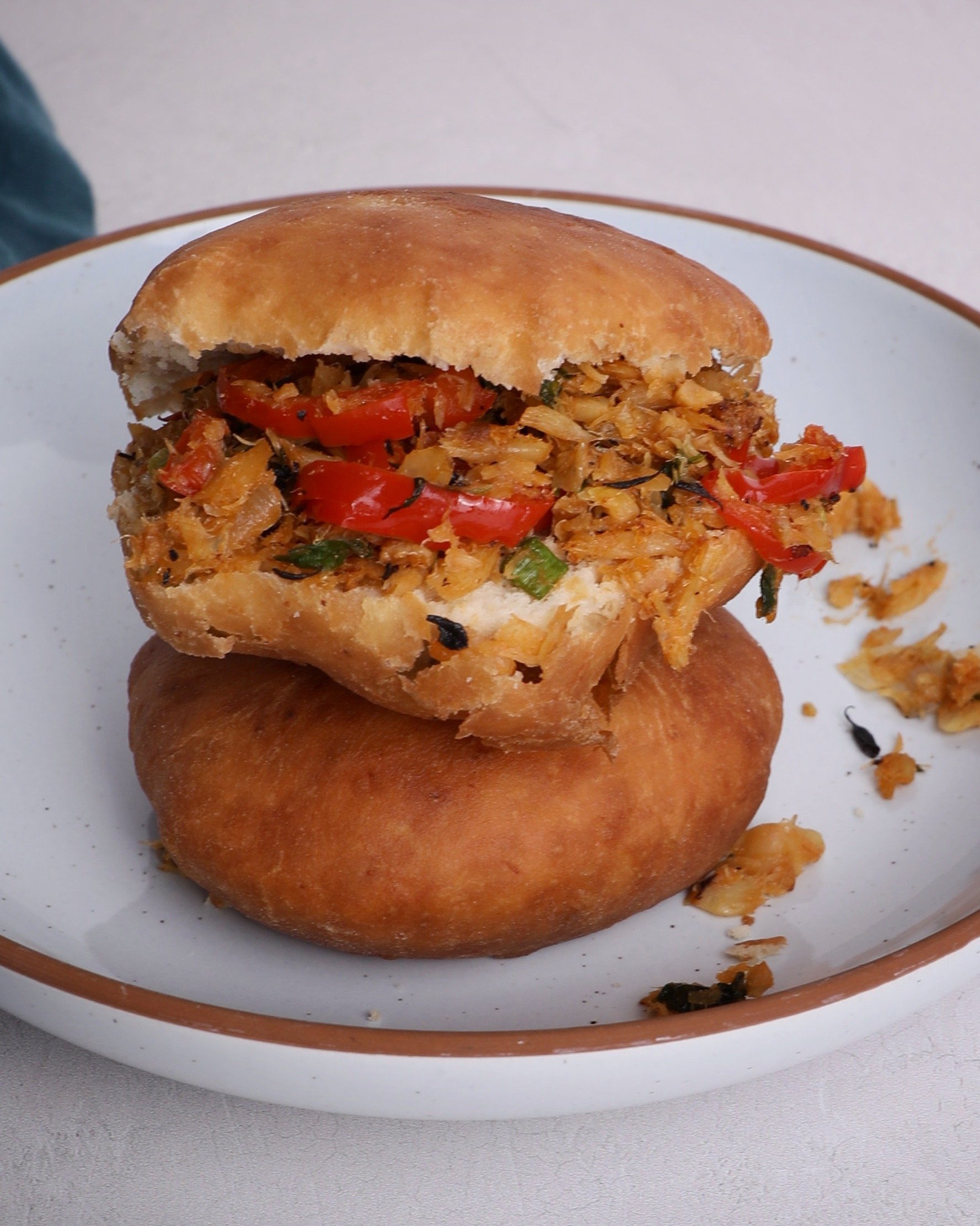 Medium
📜 Story
Medium
📜 Story
Bake and Saltfish
Fried Bread with Seasoned Salt Cod
Breakfast or weekend brunch Hard
📜 Story
Hard
📜 Story
Black Pudding with Rice
Spiced Blood Sausage with Seasoned Rice
Weekend breakfast or Christmas Medium
📜 Story
Medium
📜 Story
Bunjal Chicken
Dry-Fried Spiced Chicken
Dinner or party dish
Comments (0)
Log in to leave a comment.
No comments yet. Be the first to share your thoughts!