
Boiled green plantains pounded into a smooth, stretchy dough and shaped into balls, served with rich soups and stews for dipping.
Instructions
-
1
Peel green plantains and cut into two-inch chunks. Place in a pot of salted boiling water.
-
2
Boil for twenty minutes until very soft and easily pierced with a fork. Drain, reserving a little cooking water.
-
3
Immediately pound the hot plantain in a mortar with a pestle, or mash vigorously with a wooden spoon.
-
4
Continue pounding, adding tiny splashes of reserved water, until the mixture becomes smooth and stretchy like mochi.
-
5
Shape into balls with wet hands, making each about the size of a tennis ball.
-
6
Serve immediately alongside pepperpot, metemgee, or any hearty soup for dipping and soaking up the broth.
Did You Know?
The rhythmic pounding sound of making foo foo was once a familiar soundtrack in Guyanese villages and could be heard across entire neighborhoods.
The Story Behind Foo Foo
Foo foo is one of Guyana's most direct links to West African culinary tradition, where pounded starchy foods accompany soups and stews across the continent. Enslaved Africans brought the technique to Guyana, using local plantains instead of African yams. The dish has remained virtually unchanged for centuries, a testament to its fundamental role in the cuisine.
More Guyanese Dishes
 Medium
📜 Story
Medium
📜 Story
Aloo Pie
Fried Potato-Stuffed Pastry
Breakfast, snack, or anytime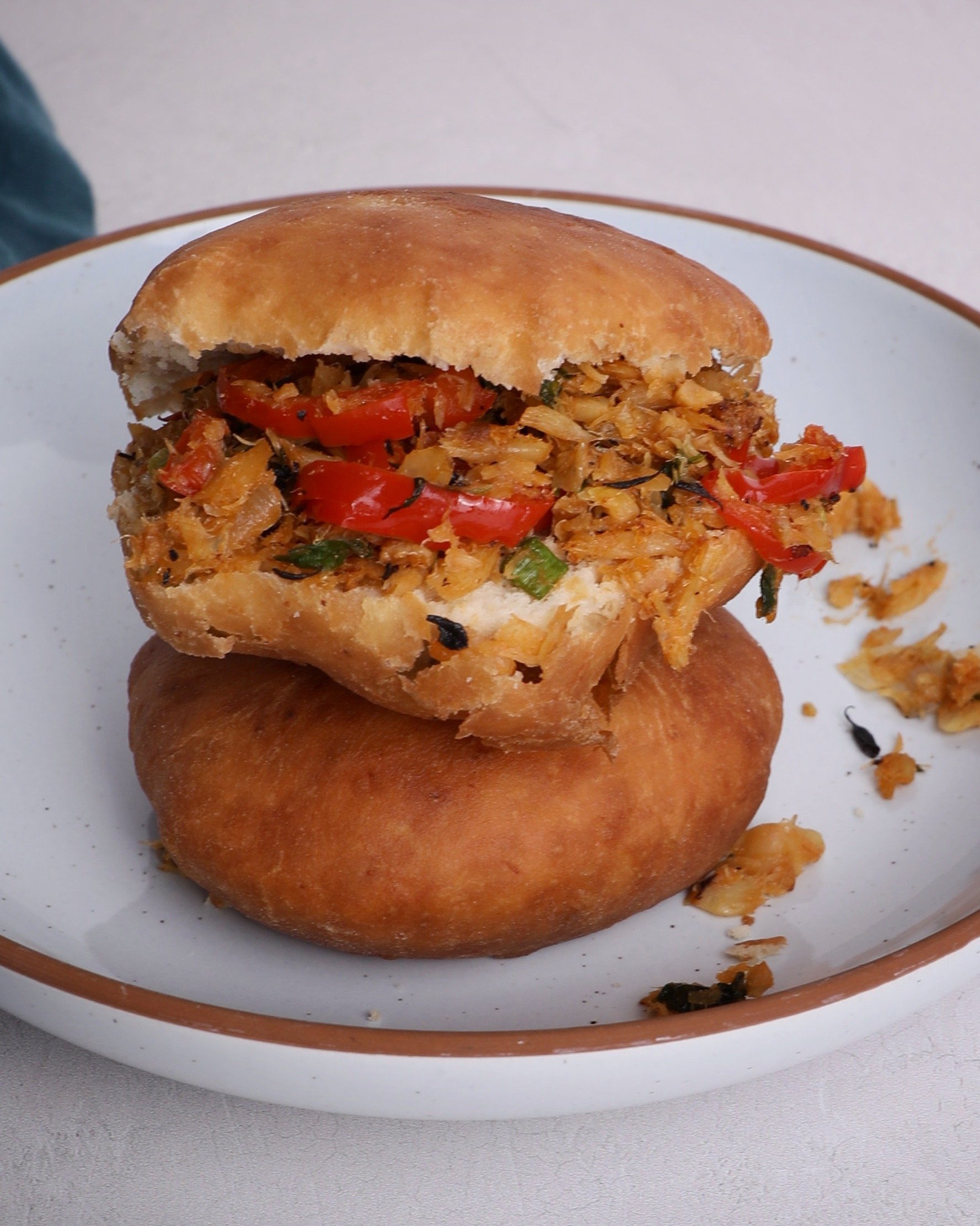 Medium
📜 Story
Medium
📜 Story
Bake and Saltfish
Fried Bread with Seasoned Salt Cod
Breakfast or weekend brunch Hard
📜 Story
Hard
📜 Story
Black Pudding with Rice
Spiced Blood Sausage with Seasoned Rice
Weekend breakfast or Christmas Medium
📜 Story
Medium
📜 Story
Bunjal Chicken
Dry-Fried Spiced Chicken
Dinner or party dish
Comments (0)
Log in to leave a comment.
No comments yet. Be the first to share your thoughts!