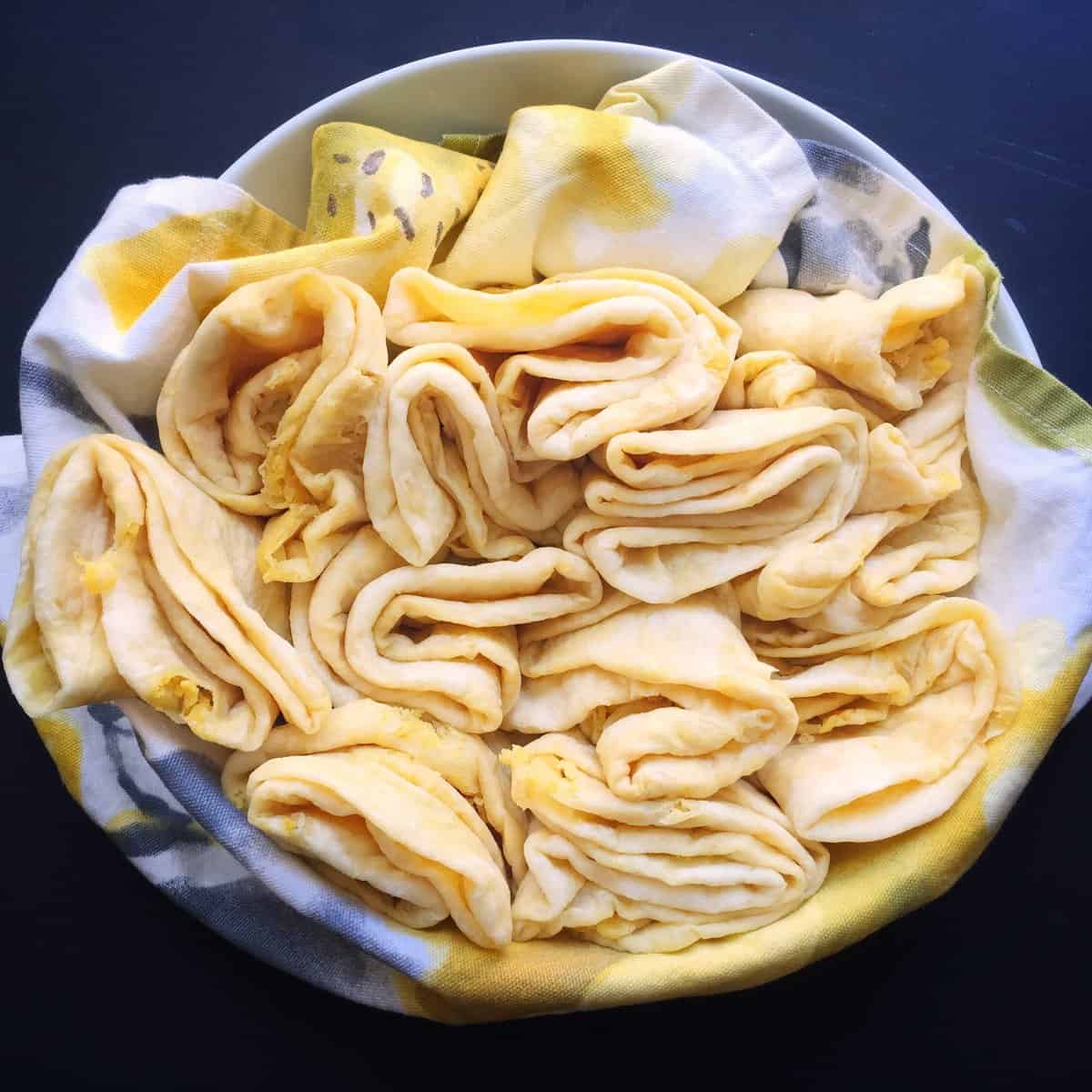
Thin flatbread with a split pea filling baked inside, served with curry. A staple of Indo-Guyanese cuisine.
Nutrition & Info
Allergen Warnings
Equipment Needed
Presentation Guide
Vessel: flat plate or wrapped in foil
Garnishes: none
Accompaniments: curry chicken, pumpkin curry, chutney
Instructions
-
1
Rinse the yellow split peas thoroughly, then place them in a pot with enough water to cover by five centimetres. Add the turmeric and a pinch of salt, bring to a boil, and cook for twenty minutes until soft but not mushy.
-
2
Drain the cooked split peas completely, then mash them using a food processor or mortar until you have a coarse, dry paste. Season with the ground cumin, taste, and adjust the salt as needed.
-
3
Combine the flour and salt in a large bowl, add the oil and warm water gradually, and knead for five minutes until you have a smooth, pliable dough that does not stick to your hands. Cover and rest for thirty minutes.
-
4
Divide the dough into eight equal balls. Flatten each ball with your palm, place two tablespoons of the seasoned split pea filling in the centre, then gather the edges together and pinch to seal completely.
-
5
Carefully roll each stuffed ball on a lightly floured surface into a thin circle about twenty centimetres in diameter, using gentle, even pressure to distribute the filling without tearing through the dough.
-
6
Heat a flat tawa or heavy skillet over medium-high heat until a drop of water sizzles and evaporates on contact. Place one rolled roti on the hot surface and cook for twenty to thirty seconds until bubbles appear.
-
7
Flip the roti, brush the top with ghee or oil, then flip again after twenty seconds and brush the other side. Continue flipping and brushing for a total of about ninety seconds until both sides have golden-brown spots.
-
8
Remove the cooked roti from the tawa and gently clap it between your palms to create the signature soft, layered texture. Stack the finished rotis in a clean towel to keep them warm and pliable while you cook the rest.
-
9
Serve the warm dhalpuri roti alongside chicken or vegetable curry, tearing off pieces and using them to scoop up the saucy curry in the traditional Indo-Guyanese manner.
Did You Know?
Dhalpuri roti technique came with Indian indentured laborers in the 1800s and has become uniquely Guyanese.
Chef's Notes
Equipment Tips
- tawa (flat griddle)
- rolling pin
- mixing bowl
Garnishing
none
Accompaniments
curry chicken, pumpkin curry, chutney
The Story Behind Dhalpuri Roti
The Story: Dhalpuri Roti is a thin, soft flatbread filled with a layer of seasoned ground split peas (dal), cooked on a tawa (flat griddle) until supple and slightly charred. It is the most popular roti variety in Guyana, used to wrap curried chicken, beef, goat, or vegetables into a portable, satisfying meal. The dish was brought to Guyana by East Indian indentured laborers who arrived between 1838 and 1917 to work sugar plantations. These workers carried their culinary traditions from Bihar, Uttar Pradesh, and other Indian regions, adapting them to Caribbean ingredients and conditions. Dhalpuri evolved from the Indian paratha tradition, with the split pea filling providing protein that supplemented the limited rations of plantation life.
On the Calendar: Dhalpuri roti is everyday food in Guyana, eaten at lunch and dinner. It is the standard takeaway food, purchased from roti shops that serve it wrapped around curry. It also appears at celebrations, weddings, and religious occasions.
Then & Now: The recipe has remained remarkably stable since its plantation-era origins, with the main evolution being the variety of curry fillings available. Roti shops are a cornerstone of Guyanese food culture both at home and in diaspora communities.
Legacy: Dhalpuri roti is the most beloved evidence of Indian culinary genius transplanted to Caribbean soil, a flatbread that nourished plantation workers and became the daily bread of an entire nation.
More Guyanese Dishes
 Medium
📜 Story
Medium
📜 Story
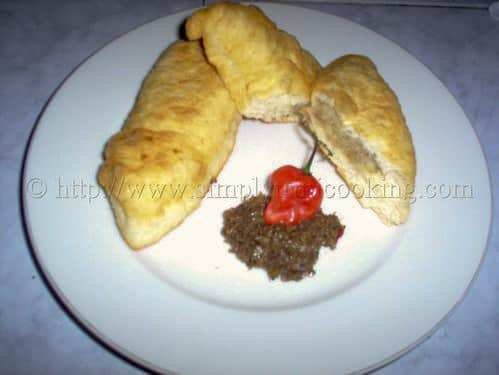
Aloo Pie
Fried Potato-Stuffed Pastry
Breakfast, snack, or anytime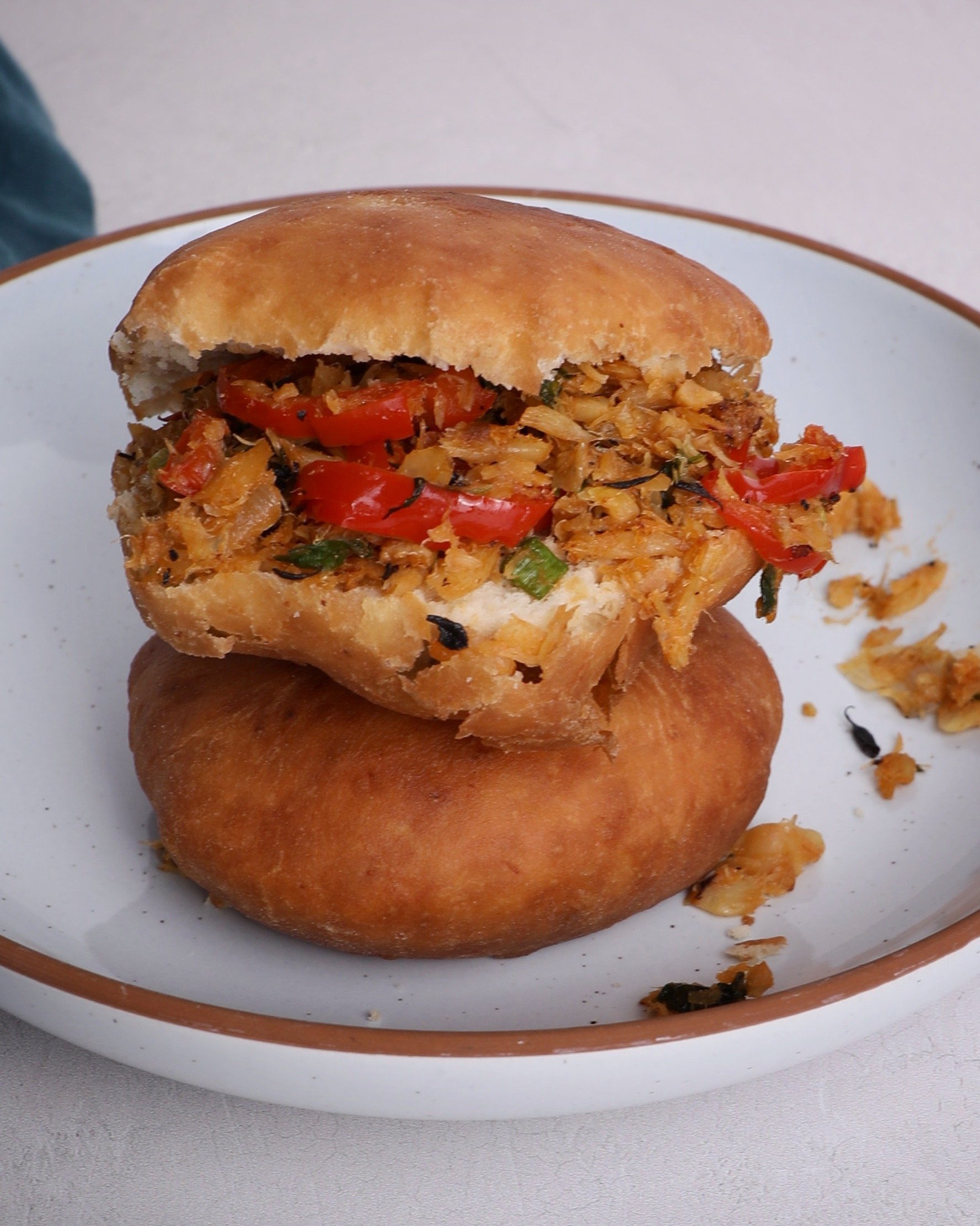 Medium
📜 Story
Medium
📜 Story
Bake and Saltfish
Fried Bread with Seasoned Salt Cod
Breakfast or weekend brunch Hard
📜 Story
Hard
📜 Story
Black Pudding with Rice
Spiced Blood Sausage with Seasoned Rice
Weekend breakfast or Christmas Medium
📜 Story
Medium
📜 Story
Bunjal Chicken
Dry-Fried Spiced Chicken
Dinner or party dish
Comments (0)
Log in to leave a comment.
No comments yet. Be the first to share your thoughts!