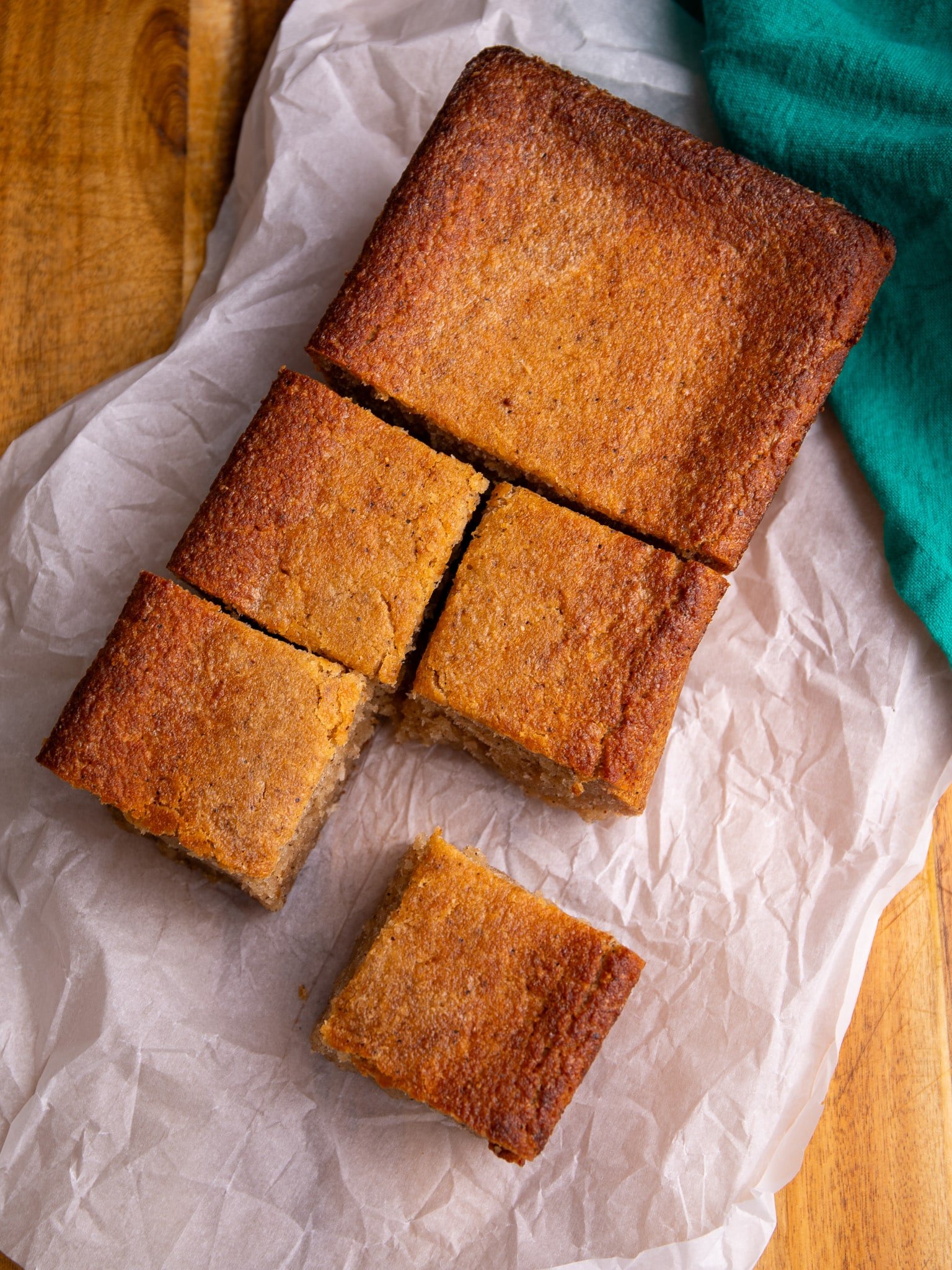
Cassava Pone
Pone (PONE (rhymes with bone))
Baked Cassava and Coconut Cake
Dense, chewy cake made from grated cassava, coconut, and spices, baked until the top is dark and caramelized with a moist, sticky interior.
Instructions
-
1
Grate cassava finely and squeeze out excess liquid through a clean cloth or cheesecloth.
-
2
Mix grated cassava with coconut, brown sugar, coconut milk, cinnamon, nutmeg, vanilla, butter, and salt until well combined.
-
3
Pour mixture into a greased baking pan, pressing down firmly and evenly. The layer should be about one inch thick.
-
4
Bake at 175C for one hour until the top turns deep brown and a crust forms. The inside should remain moist and sticky.
-
5
Let cool in the pan for thirty minutes. The pone will firm up as it cools but should stay chewy.
-
6
Cut into squares and serve at room temperature. It tastes even better the next day once the flavors have melded.
Did You Know?
Guyanese grandmothers say the secret to perfect pone is grating the cassava by hand, claiming food processors produce an inferior texture.
The Story Behind Cassava Pone
Cassava pone represents the beautiful convergence of Amerindian cassava knowledge and African baking traditions. Indigenous peoples provided the cassava expertise while enslaved Africans contributed coconut and the concept of baked sweet cakes. The result is a uniquely Guyanese dessert that has no equivalent elsewhere. Its dense, chewy texture and caramelized top make it unlike any Western cake.
More Guyanese Dishes
 Medium
📜 Story
Medium
📜 Story
Aloo Pie
Fried Potato-Stuffed Pastry
Breakfast, snack, or anytime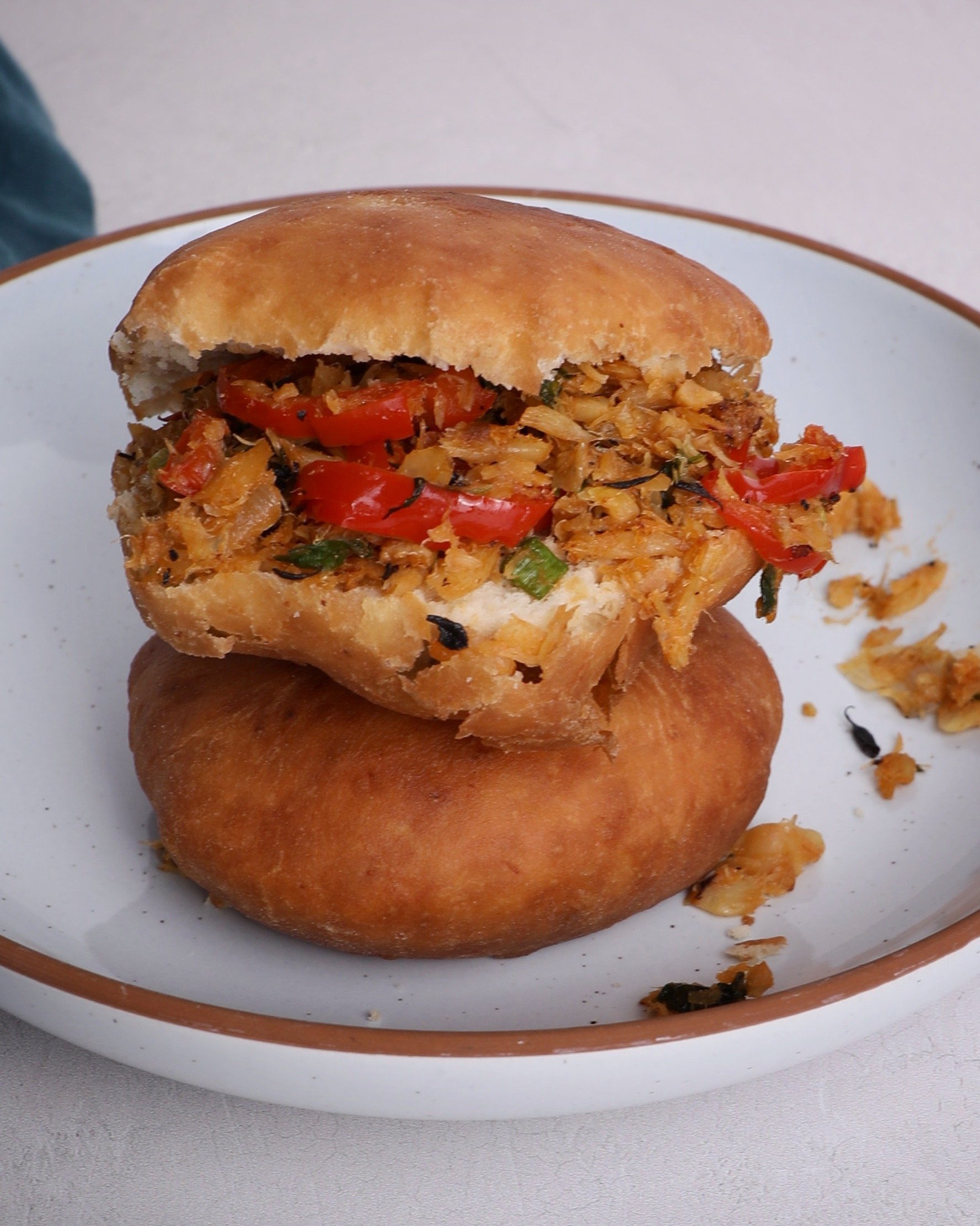 Medium
📜 Story
Medium
📜 Story
Bake and Saltfish
Fried Bread with Seasoned Salt Cod
Breakfast or weekend brunch Hard
📜 Story
Hard
📜 Story
Black Pudding with Rice
Spiced Blood Sausage with Seasoned Rice
Weekend breakfast or Christmas Medium
📜 Story
Medium
📜 Story
Bunjal Chicken
Dry-Fried Spiced Chicken
Dinner or party dish
Comments (0)
Log in to leave a comment.
No comments yet. Be the first to share your thoughts!