
Cassava Bread
Cassava Bread (kah-SAH-vah bred)
Flat Toasted Cassava Cake
Paper-thin rounds of grated and pressed cassava baked on a flat griddle until dry and crisp, an ancient Amerindian staple still cherished today.
Instructions
-
1
Peel cassava and grate finely using a traditional grater or food processor until you have a wet pulp.
-
2
Place grated cassava in a clean cloth or traditional matapee and squeeze out all the liquid. The starch water is toxic and must be removed.
-
3
Spread the dry cassava meal on a tray and break up any lumps until it resembles fine, dry crumbs.
-
4
Heat a flat griddle or tawa over medium heat. Sprinkle cassava meal evenly to form a thin, round layer.
-
5
Press gently with a flat spatula and cook five minutes until the underside sets and begins to dry. Flip carefully.
-
6
Cook another five minutes until completely dry and lightly toasted. The bread should be crisp and snap when broken.
Did You Know?
Cassava bread can last for months without spoiling, making it the original survival food of the Guyanese interior.
The Story Behind Cassava Bread
Cassava bread is arguably the oldest prepared food still eaten in Guyana, dating back thousands of years to the Arawak and Carib peoples. The process of grating, pressing, and toasting cassava was developed by indigenous peoples who discovered how to remove the naturally occurring cyanide from bitter cassava. This ancient knowledge was essential for survival and remains a living tradition in Amerindian communities today.
More Guyanese Dishes
 Medium
📜 Story
Medium
📜 Story
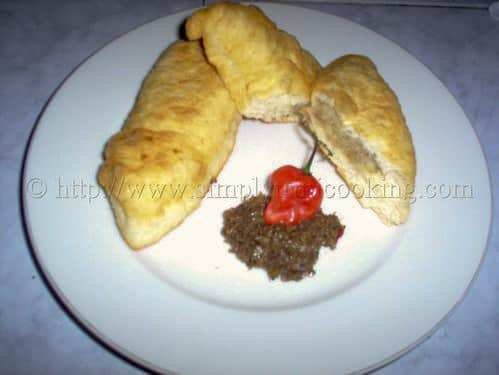
Aloo Pie
Fried Potato-Stuffed Pastry
Breakfast, snack, or anytime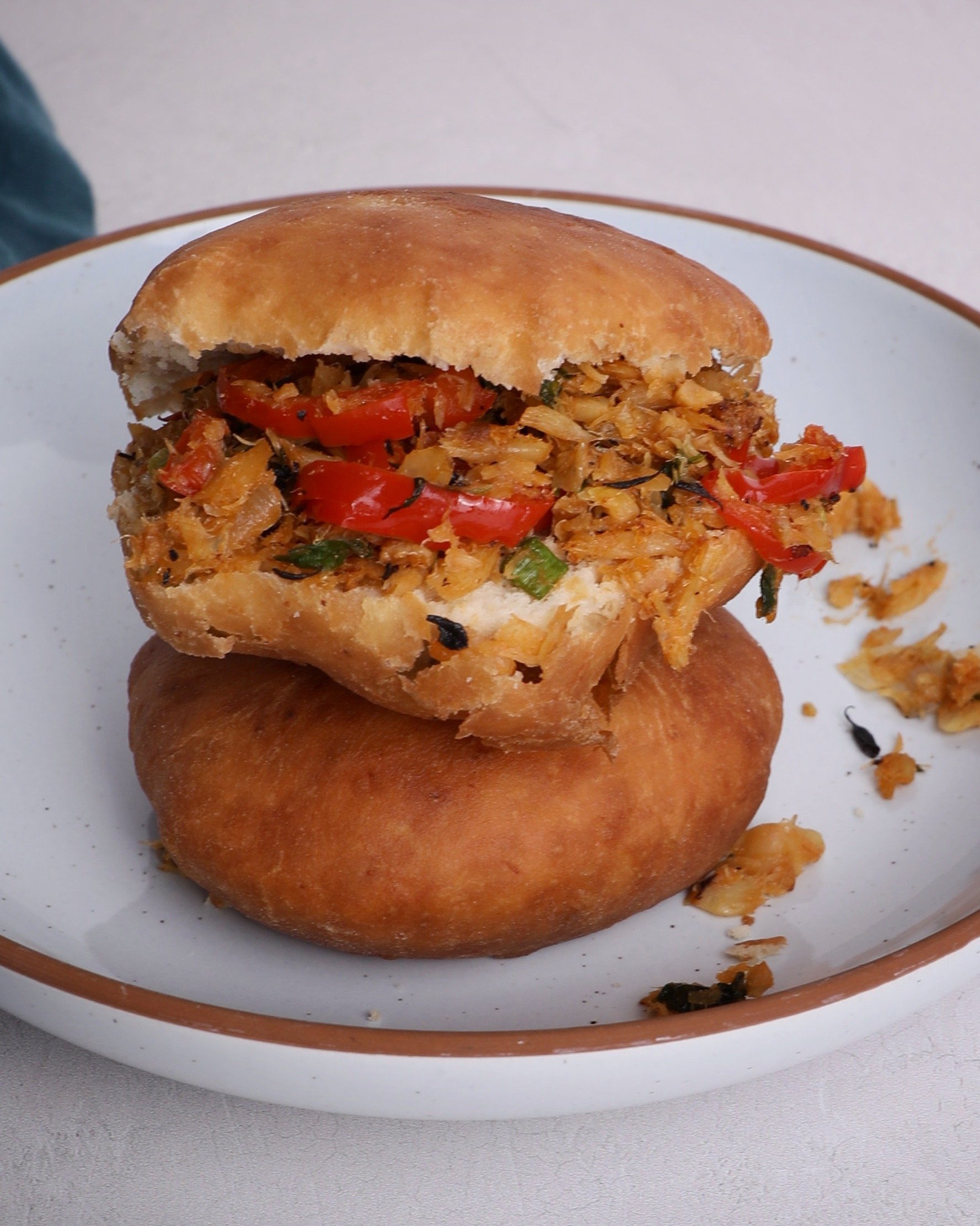 Medium
📜 Story
Medium
📜 Story
Bake and Saltfish
Fried Bread with Seasoned Salt Cod
Breakfast or weekend brunch Hard
📜 Story
Hard
📜 Story
Black Pudding with Rice
Spiced Blood Sausage with Seasoned Rice
Weekend breakfast or Christmas Medium
📜 Story
Medium
📜 Story
Bunjal Chicken
Dry-Fried Spiced Chicken
Dinner or party dish
Comments (0)
Log in to leave a comment.
No comments yet. Be the first to share your thoughts!