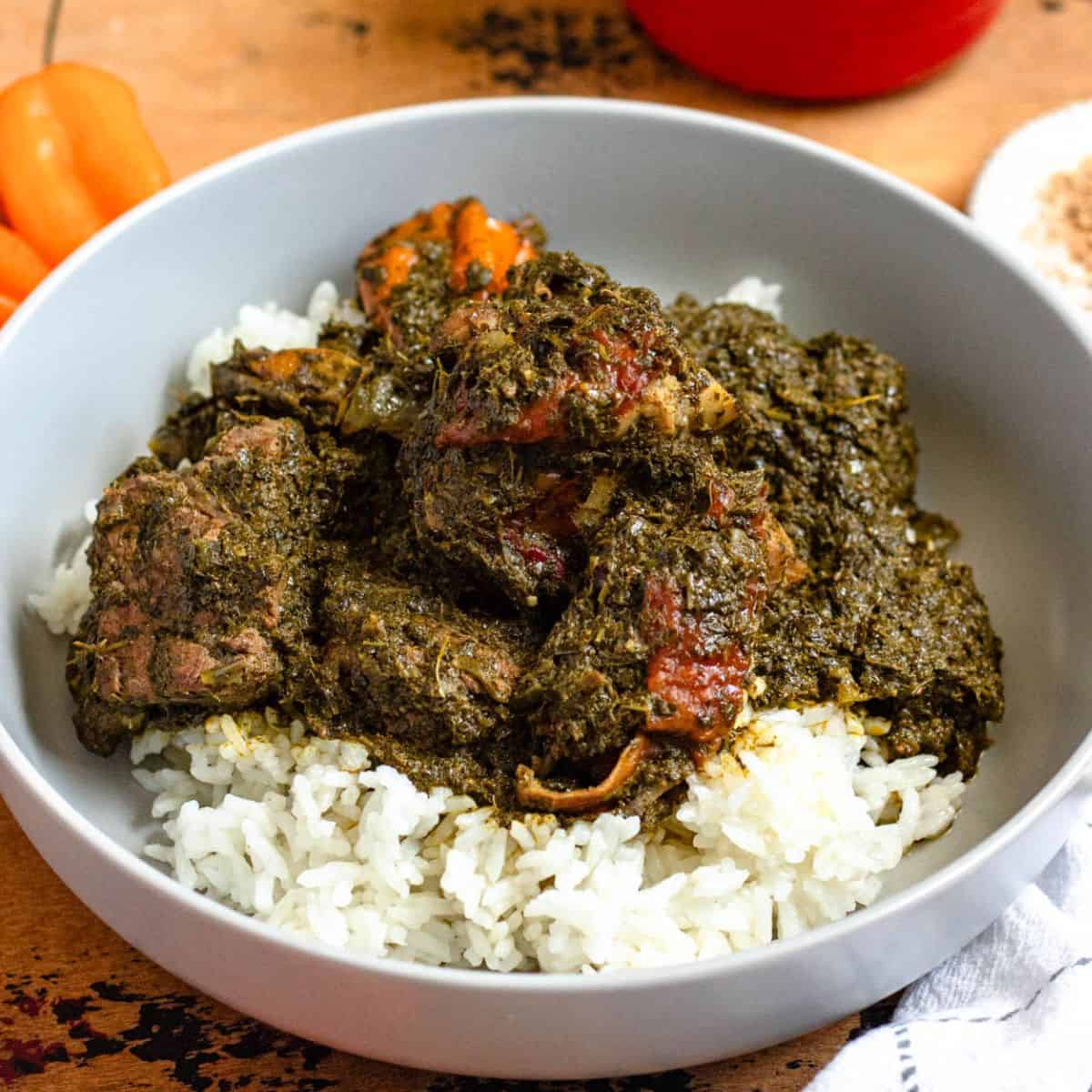
Sauce Feuilles de Manioc
Sauce Feuilles (sohs fuh-yuh duh mah-NYOCK)
Cassava Leaf Sauce
A slow-cooked, deeply savory sauce of pounded cassava leaves enriched with palm oil, ground peanuts, and smoked fish, producing a thick green stew that is Guinea's national comfort dish.
Nutrition & Info
Allergen Warnings
Equipment Needed
Presentation Guide
Vessel: deep communal bowl
Garnishes: palm oil drizzle, sliced peppers
Accompaniments: white rice, fufu
Instructions
-
1
Pound cassava leaves in a mortar until very fine, or use pre-ground frozen leaves.
-
2
Boil pounded leaves in salted water for 30 minutes to reduce bitterness.
-
3
In a separate pot, heat palm oil and sauté onions until golden.
-
4
Add groundnut paste and stir for 5 minutes until fragrant.
-
5
Combine with cassava leaves, add smoked fish, peppers, and bouillon cubes.
-
6
Simmer on low heat for 1 hour, stirring occasionally, until thick and dark green.
Did You Know?
Pounding cassava leaves by hand is considered a rite of passage for young Guinean women, and the rhythmic sound of the mortar is the soundtrack of village mornings.
Chef's Notes
Equipment Tips
- large pot
- mortar and pestle
- wooden spoon
Garnishing
palm oil drizzle, sliced peppers
Accompaniments
white rice, fufu
The Story Behind Sauce Feuilles de Manioc
Cassava leaf sauce is arguably Guinea's most iconic dish, prepared in every household across the country's four natural regions. The recipe reflects centuries of agricultural tradition, with cassava arriving from the Americas through Portuguese traders and becoming deeply embedded in Guinean food culture. Each ethnic group adds its own signature twist.



Comments (0)
Log in to leave a comment.
No comments yet. Be the first to share your thoughts!