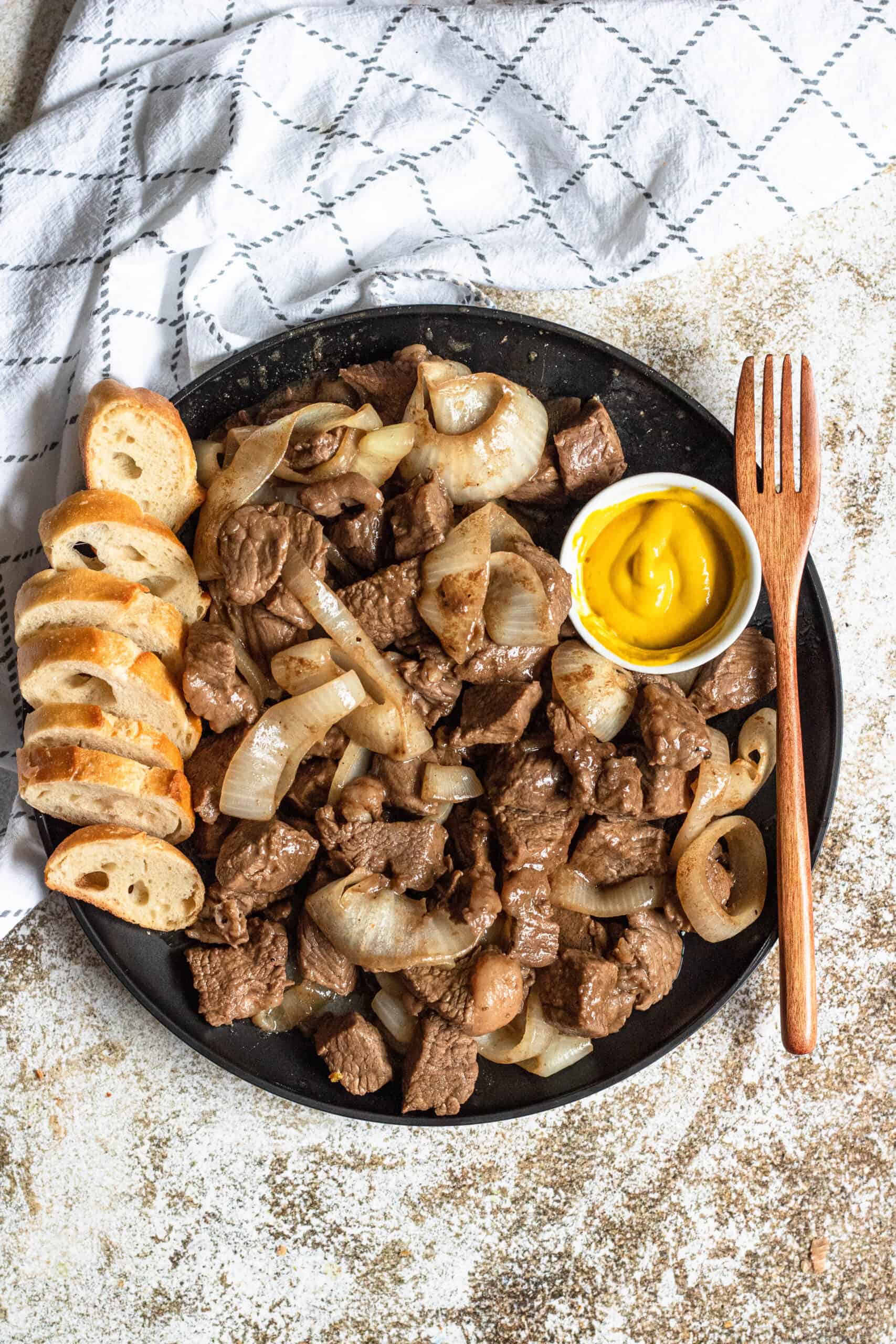
Caldo de Cabrito
Caldo de Cabrito (KAHL-doh deh kah-BREE-toh)
Goat Meat Stew
A hearty slow-cooked goat stew with cassava, tomatoes, and palm oil — a celebratory dish served at Guinea-Bissauan festivals and family gatherings.
Nutrition & Info
Equipment Needed
Presentation Guide
Vessel: large communal pot
Garnishes: fresh parsley, palm oil drizzle
Accompaniments: steamed rice, fried plantain
Instructions
-
1
Season goat meat with salt, pepper, and crushed garlic. Let rest for 20 minutes.
-
2
Heat palm oil in a heavy pot. Brown goat meat in batches until deep golden. Remove and set aside.
-
3
Sauté onions in the same pot until caramelized, about 12 minutes.
-
4
Add tomatoes, bay leaves, and scotch bonnet. Cook until thick.
-
5
Return meat to pot. Add water and bouillon cubes. Bring to a boil.
-
6
Reduce heat, cover, and simmer for 1 hour until meat is nearly tender.
-
7
Add cassava cubes. Cook for 25 more minutes until cassava is soft. Serve with rice.
Did You Know?
In Guinea-Bissau, goat is the meat of celebration — no tabanka (village) festival is complete without a pot of caldo de cabrito large enough to feed the entire community.
Chef's Notes
Equipment Tips
- large heavy pot
- mortar and pestle
- wooden spoon
Garnishing
fresh parsley, palm oil drizzle
Accompaniments
steamed rice, fried plantain
The Story Behind Caldo de Cabrito
Goat rearing has been central to Guinea-Bissauan rural life for centuries, with the Balanta and Fula communities keeping herds as both wealth and food source. Caldo de Cabrito is the festive dish that marks important events — harvest celebrations, weddings, and religious holidays. The slow cooking over wood fire gives the meat a distinctive smoky tenderness.


Comments (0)
Log in to leave a comment.
No comments yet. Be the first to share your thoughts!