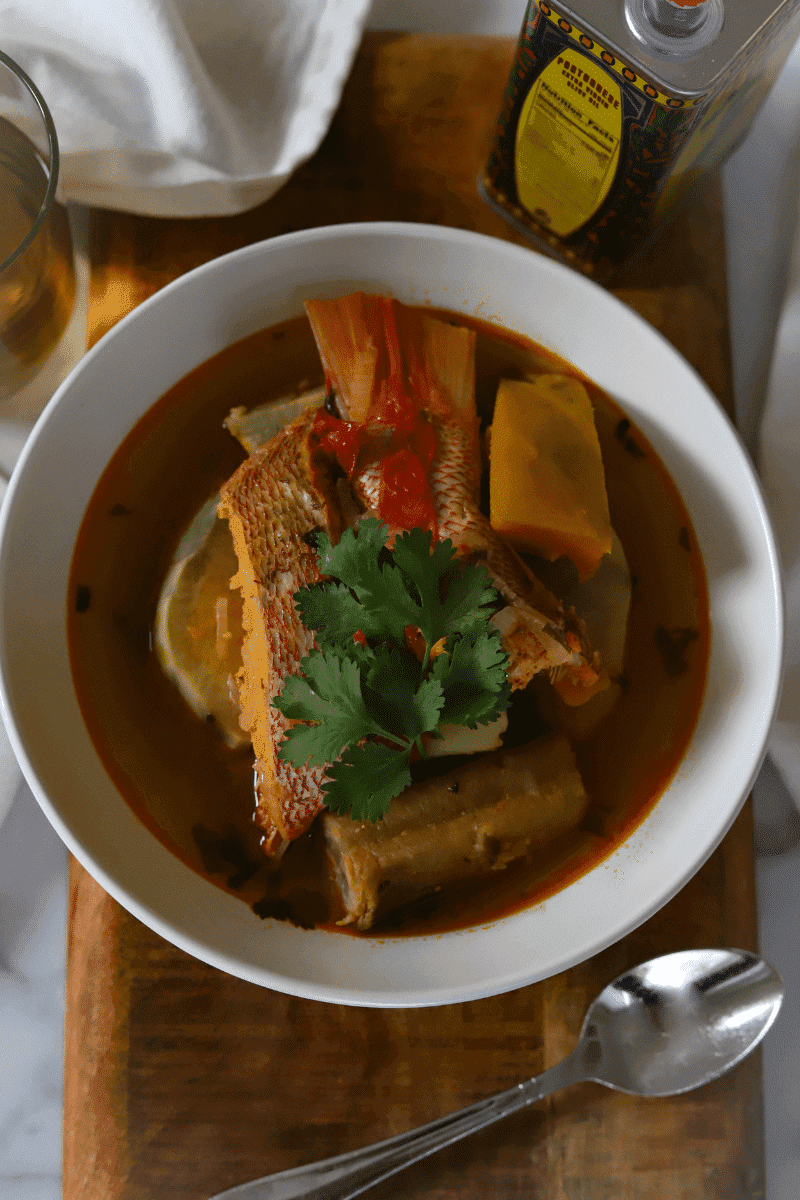
Caldo de Chabéu
Caldo de Chabéu (KAHL-doh deh shah-BEH-oo)
Palm Oil Fish Stew
A deeply aromatic stew of fresh fish simmered in dense red palm oil with tomatoes, okra, and bitter greens, embodying the coastal soul of Guinea-Bissau.
Nutrition & Info
Allergen Warnings
Equipment Needed
Presentation Guide
Vessel: deep clay bowl
Garnishes: palm oil drizzle, sliced scotch bonnet
Accompaniments: steamed white rice
Instructions
-
1
Season fish with salt and set aside for 15 minutes.
-
2
Heat palm oil in a large pot over medium heat. Sauté onion and garlic until softened, about 5 minutes.
-
3
Add chopped tomatoes and scotch bonnet peppers. Cook until tomatoes break down into a thick sauce, about 10 minutes.
-
4
Add water and bouillon cube. Bring to a simmer.
-
5
Add okra slices and cook for 8 minutes until slightly thickened.
-
6
Gently place the fish into the stew. Cover and cook for 15 minutes without stirring to keep fish intact.
-
7
Add bitter greens in the last 3 minutes. Serve hot over rice.
Did You Know?
Chabéu is the Crioulo word for the red palm oil that defines Guinea-Bissauan cooking — no kitchen is complete without a bottle.
Chef's Notes
Equipment Tips
- large clay pot
- wooden spoon
- mortar and pestle
Garnishing
palm oil drizzle, sliced scotch bonnet
Accompaniments
steamed white rice
The Story Behind Caldo de Chabéu
Caldo de Chabéu is the everyday stew of coastal Guinea-Bissau, dating back centuries to when fishing communities along the Bijagós archipelago combined their daily catch with locally pressed palm oil. The dish reflects the deep connection between the sea and the land in Bissau-Guinean life, with each family guarding its own spice proportions.


Comments (0)
Log in to leave a comment.
No comments yet. Be the first to share your thoughts!