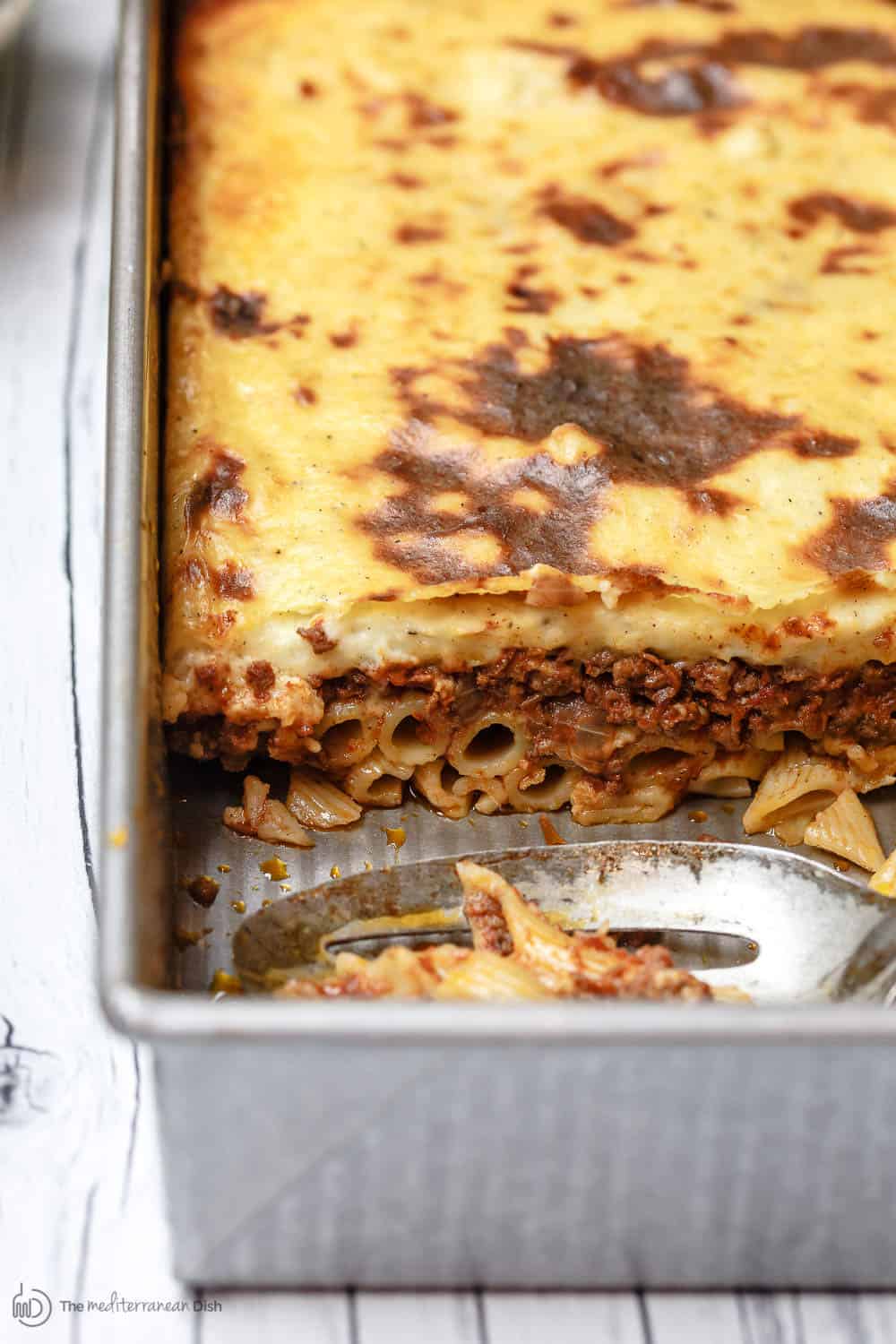
A grand layered casserole of tubular pasta, spiced beef ragout, and luscious bechamel sauce, baked until golden and set to a beautiful cross-section of distinct layers.
Nutrition & Info
Allergen Warnings
Equipment Needed
Presentation Guide
Vessel: rectangular baking dish
Garnishes: grated cheese, fresh parsley
Accompaniments: green salad, bread
Instructions
-
1
Brown ground beef in olive oil with diced onion. Add crushed tomatoes, tomato paste, cinnamon, allspice, salt, and pepper. Simmer 20 minutes until thick.
-
2
Cook pasta until just al dente, drain, and toss with a little butter and half the grated cheese.
-
3
Make bechamel: melt butter, whisk in flour, cook 2 minutes. Gradually add warm milk, whisking constantly until thick and smooth. Season with nutmeg.
-
4
Remove bechamel from heat, let cool slightly, then whisk in beaten eggs and remaining cheese.
-
5
Layer half the pasta in a buttered baking dish, spread meat sauce evenly, then add remaining pasta on top.
-
6
Pour bechamel over the top layer, smoothing it out. Bake at 180C for 45 minutes until golden and set. Rest 20 minutes before cutting.
Did You Know?
Pastitsio is sometimes called the Greek lasagna, but Greeks will quickly tell you it predates the Italian version in their culinary tradition.
Chef's Notes
Equipment Tips
- large baking dish
- 3 saucepans
- whisk
- colander
Garnishing
grated cheese, fresh parsley
Accompaniments
green salad, bread
The Story Behind Παστίτσιο
Pastitsio arrived in Greece through Italian influence during the Venetian period, but Greek cooks transformed it with their signature spices of cinnamon and allspice. It became a cornerstone of Greek home cooking, served at Sunday gatherings and festive occasions, with each family proudly maintaining their own version.
Comments (0)
Log in to leave a comment.
No comments yet. Be the first to share your thoughts!