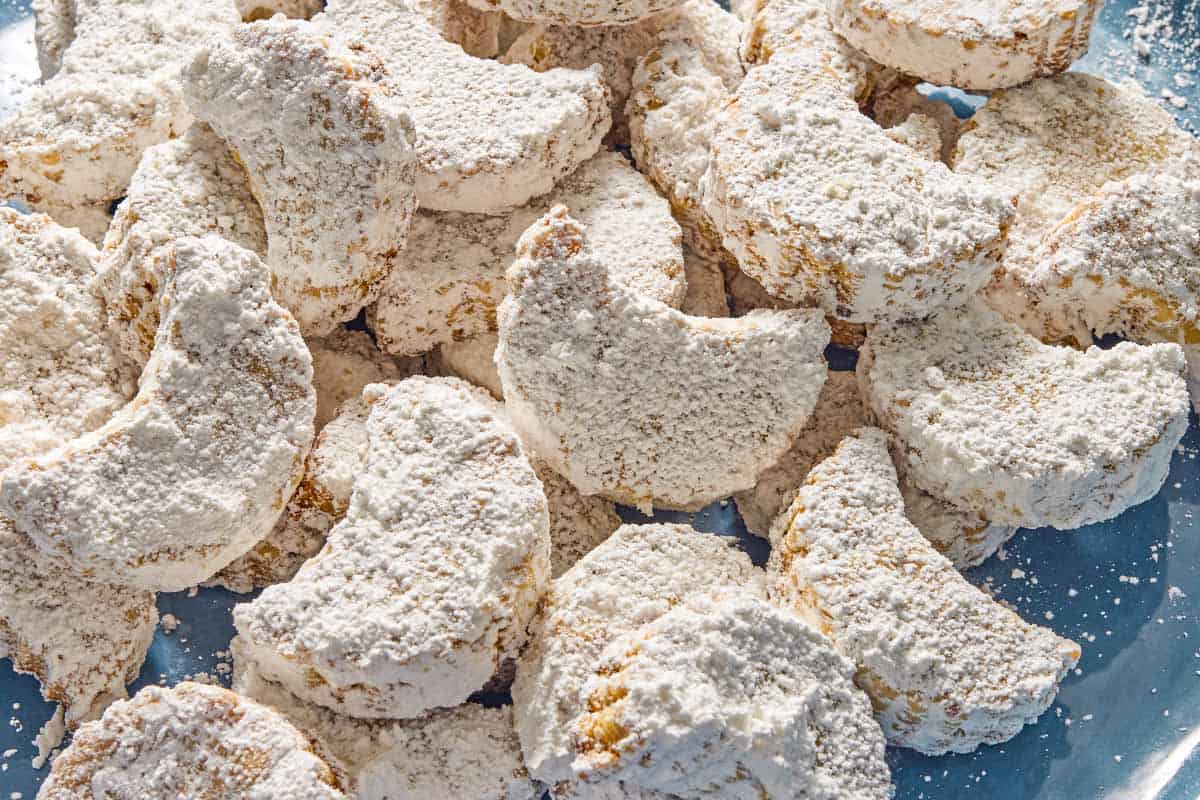
Melt-in-your-mouth butter cookies studded with toasted almonds and buried under a thick snowdrift of powdered sugar. The quintessential Greek Christmas cookie.
Nutrition & Info
Allergen Warnings
Equipment Needed
Presentation Guide
Vessel: decorative platter
Garnishes: powdered sugar, whole almond
Accompaniments: Greek coffee, brandy
Instructions
-
1
Beat butter for 10 minutes until extremely pale and fluffy. This long beating is essential for the melt-in-mouth texture.
-
2
Add powdered sugar, egg yolk, brandy, and vanilla. Beat until combined and airy.
-
3
Fold in toasted chopped almonds. Sift flour and baking powder together, fold into the butter mixture gently.
-
4
Shape dough into crescent or round shapes, about 5cm each. Place on lined baking sheets.
-
5
Bake at 170C for 18-20 minutes until set but still pale — they should barely take on any color.
-
6
While still warm, sprinkle with rosewater. Let cool slightly, then bury completely in sifted powdered sugar, coating generously.
Did You Know?
In Greek tradition, a single clove is pressed into each kourabiedes before baking, symbolizing the spices brought by the Three Wise Men.
Chef's Notes
Equipment Tips
- mixing bowl
- electric mixer
- baking sheets
- sieve
Garnishing
powdered sugar, whole almond
Accompaniments
Greek coffee, brandy
The Story Behind Κουραμπιέδες
Kourabiedes trace their origins to Persian cuisine, arriving in Greece through the Ottoman Empire. They became inseparably linked with Greek Christmas celebrations, alongside melomakarona. Every Greek household bakes enormous batches in December, and the cookies are shared with visitors throughout the holiday season as a gesture of hospitality and joy.
Comments (0)
Log in to leave a comment.
No comments yet. Be the first to share your thoughts!