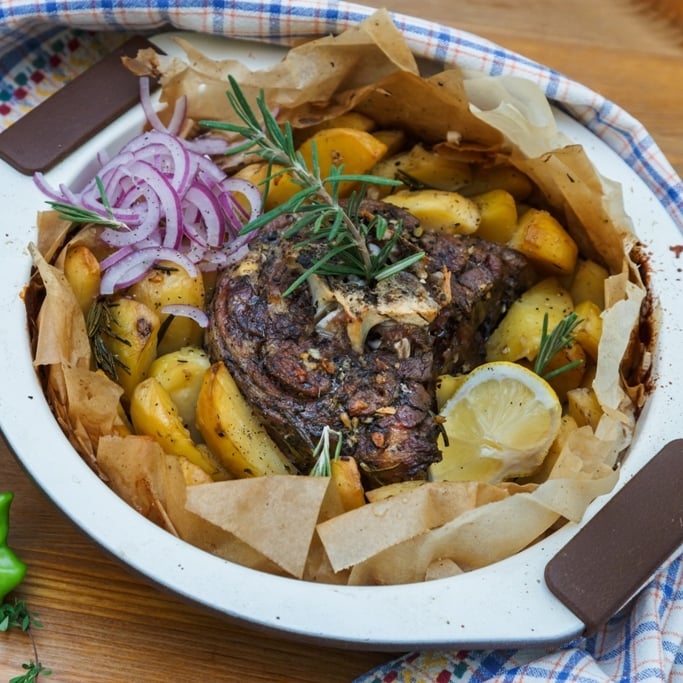
Lamb slow-roasted in a sealed parchment parcel with garlic, lemon, and oregano until it falls apart at the touch of a fork, supremely tender and aromatic.
Nutrition & Info
Equipment Needed
Presentation Guide
Vessel: parchment parcel opened at table
Garnishes: lemon wedges, oregano
Accompaniments: Greek salad, tzatziki
Instructions
-
1
Make small incisions all over the lamb and insert garlic slivers. Rub with olive oil, lemon juice, oregano, salt, and pepper.
-
2
Place the lamb on a large sheet of parchment paper. Surround with quartered potatoes and sliced peppers.
-
3
Scatter feta cubes and thyme sprigs around the lamb. Drizzle remaining olive oil and lemon zest.
-
4
Wrap the parchment tightly around everything, sealing completely. Place in a roasting pan.
-
5
Roast at 160C for 3.5 to 4 hours until the lamb is falling off the bone and the parchment has puffed.
-
6
Open the parcel at the table for dramatic presentation. The aroma is part of the experience. Serve with the cooking juices.
Did You Know?
Kleftiko means "stolen meat" — named after Greek mountain rebels who buried stolen lamb in sealed underground pits to cook without smoke, avoiding detection.
Chef's Notes
Equipment Tips
- large roasting pan
- parchment paper or foil
- sharp knife
Garnishing
lemon wedges, oregano
Accompaniments
Greek salad, tzatziki
The Story Behind Κλέφτικο
Kleftiko originated during the Greek War of Independence in the 1820s, when klephts (mountain guerrilla fighters) would steal lambs and cook them in sealed underground clay pits. The sealed cooking method prevented smoke from giving away their position. This ingenious technique produced incredibly tender meat, and the dish evolved into one of the most celebrated Greek lamb preparations.
Comments (0)
Log in to leave a comment.
No comments yet. Be the first to share your thoughts!