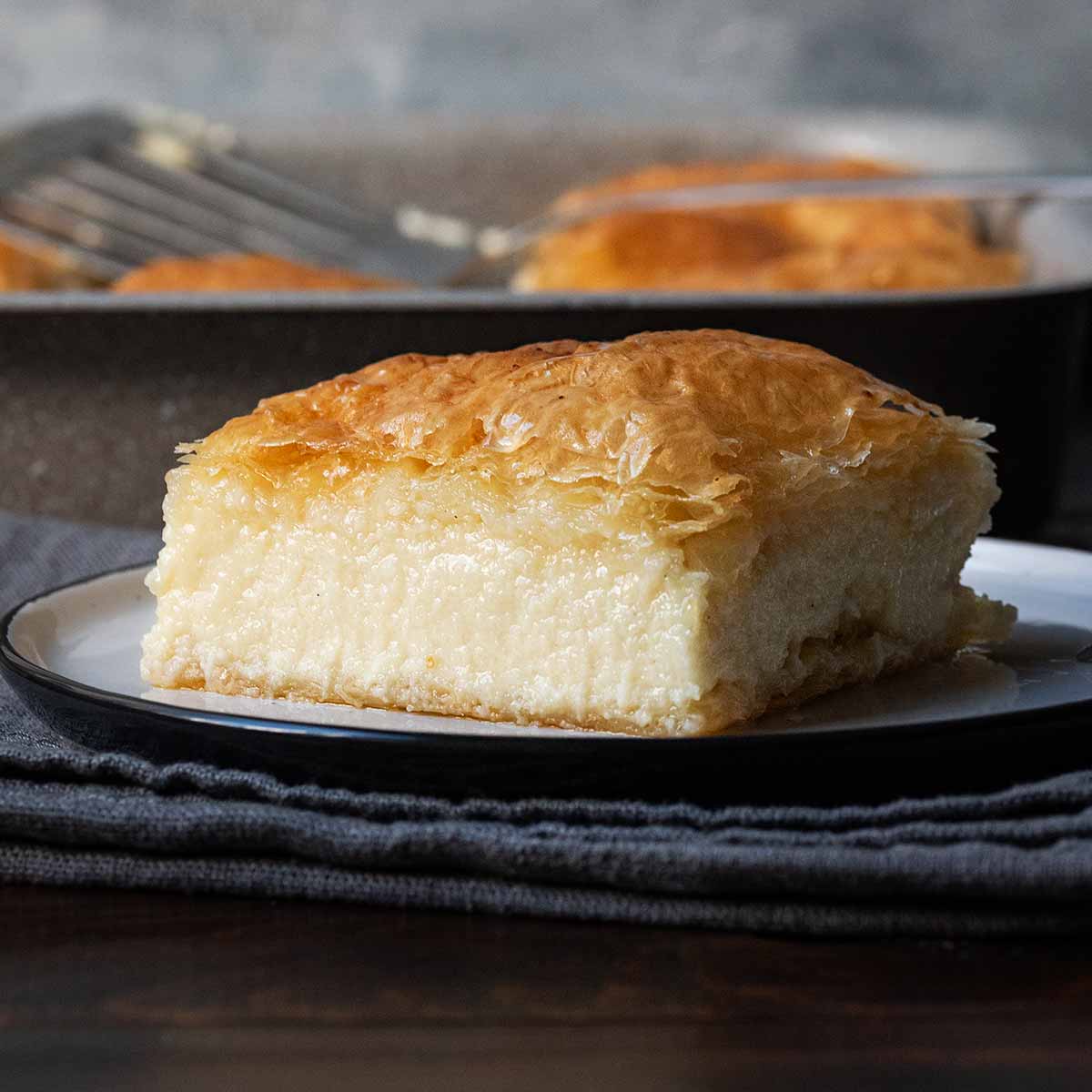
Γαλακτομπούρεκο
Γαλακτομπούρεκο (gah-lak-toh-BOO-reh-ko)
Custard Pie in Phyllo
A magnificent dessert of silky semolina custard encased in layers of crisp, buttery phyllo pastry, drenched in lemon-scented syrup while still hot.
Nutrition & Info
Allergen Warnings
Equipment Needed
Presentation Guide
Vessel: rectangular serving platter
Garnishes: cinnamon, powdered sugar
Accompaniments: Greek coffee
Instructions
-
1
Make syrup: boil sugar, water, lemon juice, and cinnamon stick for 8 minutes. Cool completely.
-
2
Heat milk in a saucepan. Whisk eggs with sugar until pale, then whisk in semolina. Gradually add hot milk while whisking.
-
3
Return mixture to the pot and cook over medium heat, stirring constantly, until custard is very thick. Remove from heat, add vanilla and lemon zest.
-
4
Brush a baking dish with butter. Layer 6 phyllo sheets, brushing each with melted butter, letting edges hang over the sides.
-
5
Pour the warm custard over the phyllo. Fold overhanging edges inward. Layer remaining 6 phyllo sheets on top, buttering each.
-
6
Tuck edges under neatly. Score the top into squares. Bake at 180C for 40-45 minutes until deep golden. Pour cold syrup over hot pastry immediately.
Did You Know?
The secret to perfect galaktoboureko is temperature contrast — the syrup must be cold when it meets the hot pastry for the crispest result.
Chef's Notes
Equipment Tips
- large baking dish
- saucepan
- whisk
- pastry brush
Garnishing
cinnamon, powdered sugar
Accompaniments
Greek coffee
The Story Behind Γαλακτομπούρεκο
Galaktoboureko is one of the great Greek desserts, combining the Byzantine tradition of phyllo pastry with Ottoman-style syrup-soaked sweets. The creamy semolina custard filling is uniquely Greek, distinguishing it from similar pastries across the Eastern Mediterranean. It remains a centerpiece of Greek celebrations and pastry shop windows.

Comments (0)
Log in to leave a comment.
No comments yet. Be the first to share your thoughts!