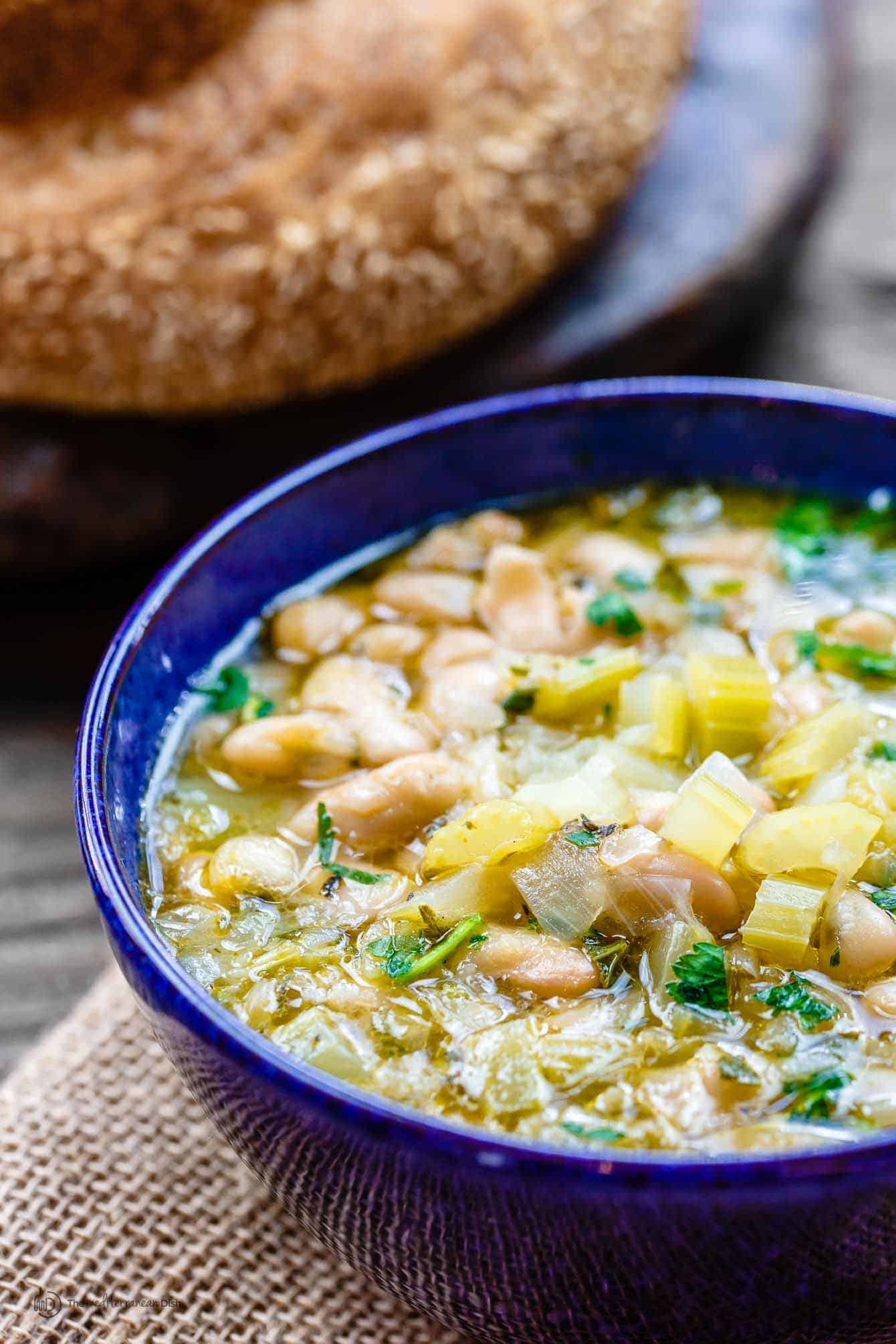
A thick, nourishing soup of white beans, tomatoes, carrots, celery, and olive oil, simmered slowly until velvety. This humble dish is considered the national food of Greece.
Nutrition & Info
Equipment Needed
Presentation Guide
Vessel: deep ceramic bowl
Garnishes: olive oil drizzle, red onion slices, oregano
Accompaniments: crusty bread, olives, feta
Instructions
-
1
Drain soaked beans, place in a large pot, cover with fresh water. Bring to a boil and cook 5 minutes, then drain and rinse.
-
2
Return beans to the pot with fresh water. Add carrots, celery, onion, crushed tomatoes, tomato paste, and bay leaves.
-
3
Bring to a boil, reduce heat, and simmer partially covered for 1 to 1.5 hours until beans are very tender and broth is thick.
-
4
Stir in olive oil, paprika, salt, and pepper during the last 15 minutes of cooking.
-
5
Remove bay leaves. The soup should be thick and creamy, with some beans breaking down naturally.
-
6
Serve in deep bowls drizzled with extra olive oil, a splash of red wine vinegar, and crusty bread alongside.
Did You Know?
Fasolada is considered the true national dish of Greece — even more so than moussaka or souvlaki — because it fed the nation through centuries of hardship.
Chef's Notes
Equipment Tips
- large pot
- colander
- wooden spoon
Garnishing
olive oil drizzle, red onion slices, oregano
Accompaniments
crusty bread, olives, feta
The Story Behind Φασολάδα
Fasolada traces its origins to ancient Greek bean soups mentioned by Aristophanes. After white beans arrived from the Americas in the 16th century, they replaced the original broad beans and the dish took its modern form. During the Greek famine of World War II, fasolada sustained entire communities, cementing its status as the soul food of Greece.
Comments (0)
Log in to leave a comment.
No comments yet. Be the first to share your thoughts!