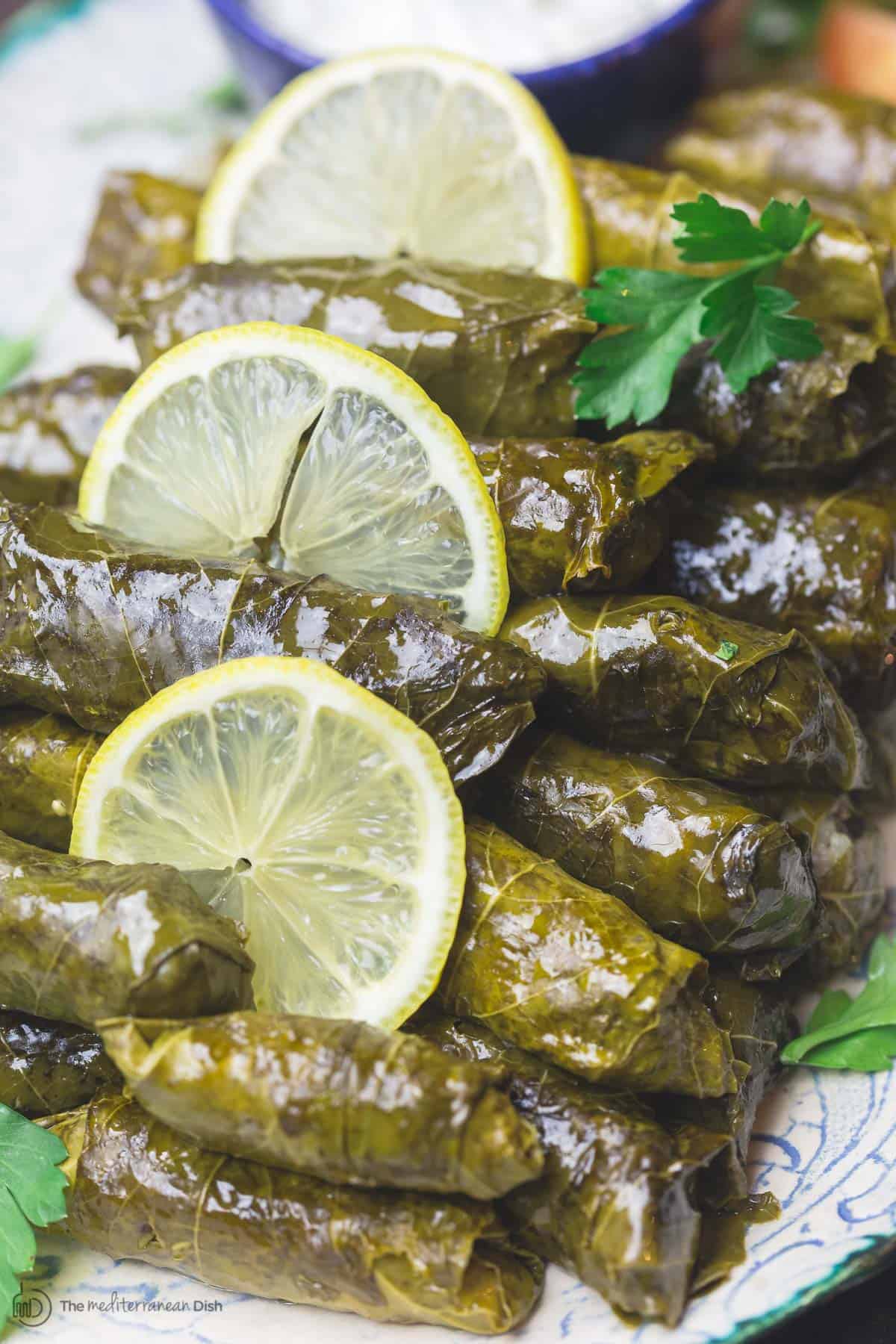
Tender vine leaves rolled around a fragrant filling of herbed rice, fresh dill, mint, and lemon juice, braised gently until meltingly soft.
Nutrition & Info
Equipment Needed
Presentation Guide
Instructions
-
1
Rinse grape leaves and blanch in boiling water for 2 minutes if fresh. Drain and pat dry.
-
2
Mix rice with diced onion, chopped dill, mint, parsley, half the lemon juice, 3 tbsp olive oil, salt, and pepper.
-
3
Place a grape leaf vein-side up, add a tablespoon of filling near the stem end, fold sides in, and roll tightly into a cylinder.
-
4
Line the bottom of a pot with torn or imperfect leaves. Pack rolled dolmadakia seam-side down in tight concentric circles.
-
5
Mix remaining lemon juice, olive oil, and water. Pour over the rolls. Place a plate on top to keep them submerged.
-
6
Simmer on low heat for 45-50 minutes until rice is tender and leaves are silky. Serve warm or at room temperature.
Did You Know?
Greek grandmothers judge a cook by the tightness and uniformity of their dolmadakia — each roll should be no larger than a finger.
Chef's Notes
Equipment Tips
- large pot
- mixing bowl
- cutting board
Garnishing
lemon wedges, fresh dill
Accompaniments
yogurt, bread
The Story Behind Ντολμαδάκια
Dolmadakia have roots in ancient Greek and Byzantine cuisine, where vine leaves were used to wrap grains and herbs. The dish spread throughout the Ottoman Empire, with each region adding its own signature. The Greek version, distinguished by abundant lemon and fresh herbs, remains one of the most beloved meze dishes.

Comments (0)
Log in to leave a comment.
No comments yet. Be the first to share your thoughts!