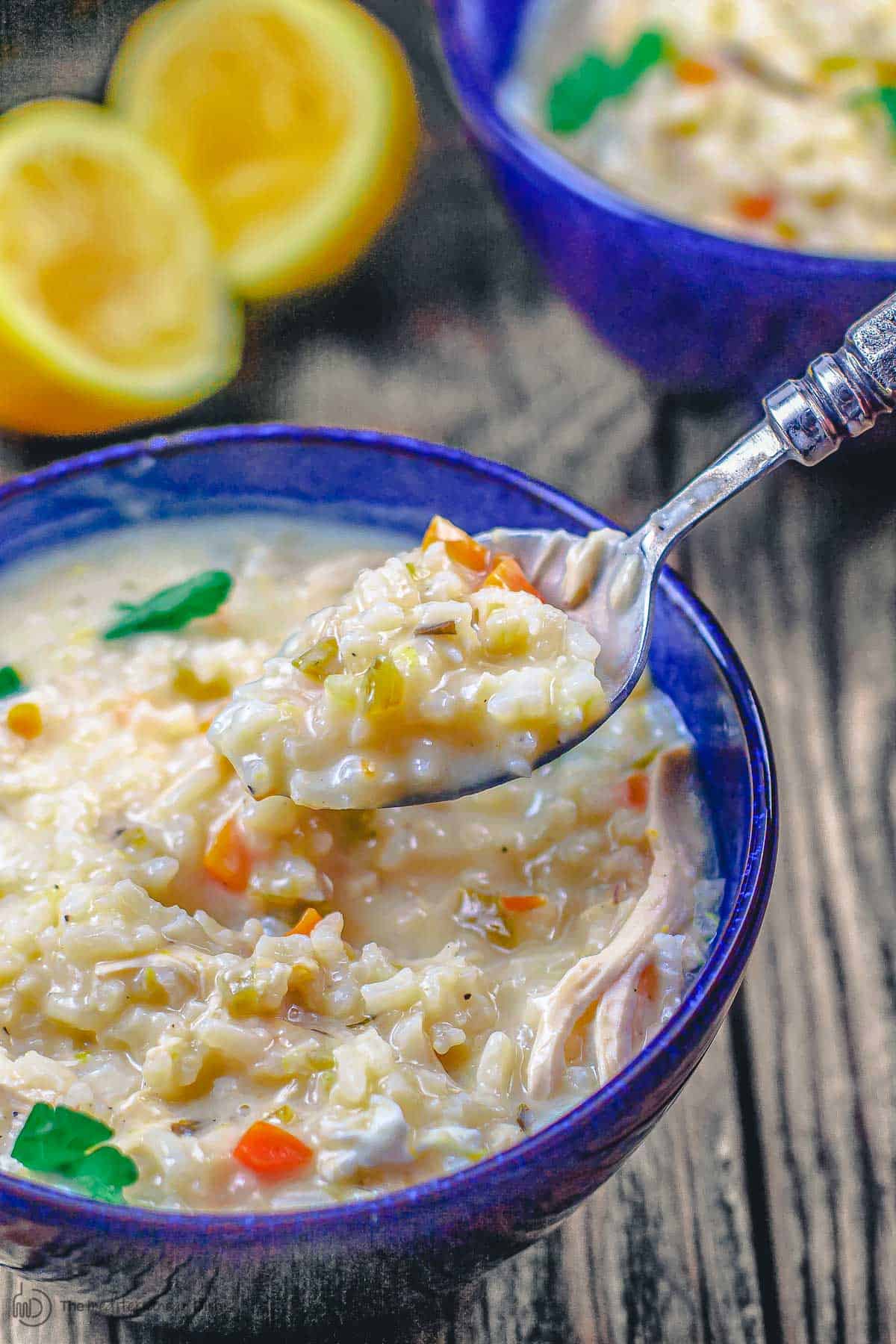
A silky, warming soup of chicken broth and rice enriched with a frothy egg-lemon liaison that creates a velvety, tangy, deeply comforting bowl.
Nutrition & Info
Allergen Warnings
Equipment Needed
Presentation Guide
Vessel: deep white bowl
Garnishes: fresh dill, lemon slice, white pepper
Accompaniments: crusty bread
Instructions
-
1
Bring chicken broth to a boil in a large pot. Add rice and simmer for 18-20 minutes until rice is very tender.
-
2
Meanwhile, whisk eggs vigorously in a bowl until frothy. Slowly whisk in the lemon juice.
-
3
Temper the egg mixture by ladling in hot broth one spoonful at a time, whisking constantly to prevent curdling.
-
4
Slowly pour the tempered egg-lemon mixture back into the pot, stirring constantly. Keep heat low — do not let it boil.
-
5
Add shredded chicken and stir gently. Season with salt and white pepper.
-
6
Serve immediately in warm bowls garnished with fresh dill. The soup thickens as it cools.
Did You Know?
The avgolemono technique is the Greek mother sauce — used not only in soup but as a finishing sauce for lamb, vegetables, and stuffed grape leaves.
Chef's Notes
Equipment Tips
- large pot
- whisk
- ladle
- bowl
Garnishing
fresh dill, lemon slice, white pepper
Accompaniments
crusty bread
The Story Behind Αυγολέμονο
Avgolemono is believed to have Sephardic Jewish origins, arriving in Greek cuisine through the Jewish communities of Thessaloniki. The egg-lemon emulsion became one of the defining techniques of Greek cooking, applied to soups, stews, and sauces across the culinary repertoire. It represents Greek cuisine at its most elegant and comforting.


Comments (0)
Log in to leave a comment.
No comments yet. Be the first to share your thoughts!