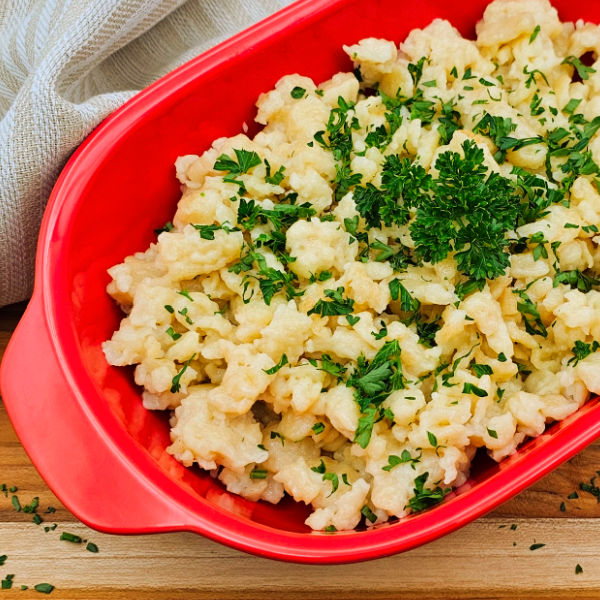
Soft, fluffy dumplings made from day-old bread rolls, eggs, and milk, poached until tender — Bavaria's genius for transforming stale bread into comfort food.
Nutrition & Info
Allergen Warnings
Equipment Needed
Presentation Guide
Vessel: deep plate
Garnishes: parsley, brown butter
Accompaniments: mushroom cream sauce, roast beef gravy
Instructions
-
1
Cut bread rolls into small cubes and place in a large bowl. Pour warm milk over and let soak for 15 min.
-
2
Sauté diced onion in butter until translucent. Add to the bread mixture.
-
3
Add eggs and parsley. Season with salt, pepper, and nutmeg. Mix well — the dough should hold together when pressed. Add a little flour if too wet.
-
4
With wet hands, form the mixture into tennis ball-sized dumplings, pressing firmly.
-
5
Gently place dumplings into simmering salted water. Cook uncovered for 20 min without letting the water boil vigorously.
-
6
Remove with a slotted spoon. Serve with gravy, mushroom sauce, or alongside roasted meats.
Did You Know?
In Bavaria, leftover Semmelknödel are never wasted — they are sliced and pan-fried in butter the next day, creating "Knödelscheiben," which many consider even better than the original.
Chef's Notes
Equipment Tips
- large pot
- mixing bowl
- sharp knife
Garnishing
parsley, brown butter
Accompaniments
mushroom cream sauce, roast beef gravy
The Story Behind Semmelknödel
Semmelknödel represent the Bavarian genius for avoiding waste. Since medieval times, stale bread rolls (Semmeln) have been rehydrated and transformed into dumplings. They became an essential part of Bavarian Sunday meals and feast days, served alongside roasts with rich gravies or as a main course with mushroom cream sauce.
More German Dishes
 Hard
📜 Story
Hard
📜 Story
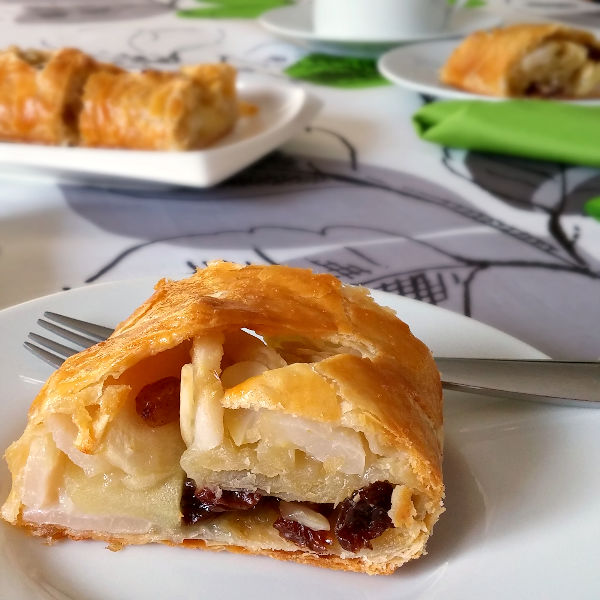
Apfelstrudel
Apple Strudel
Afternoon coffee or dessert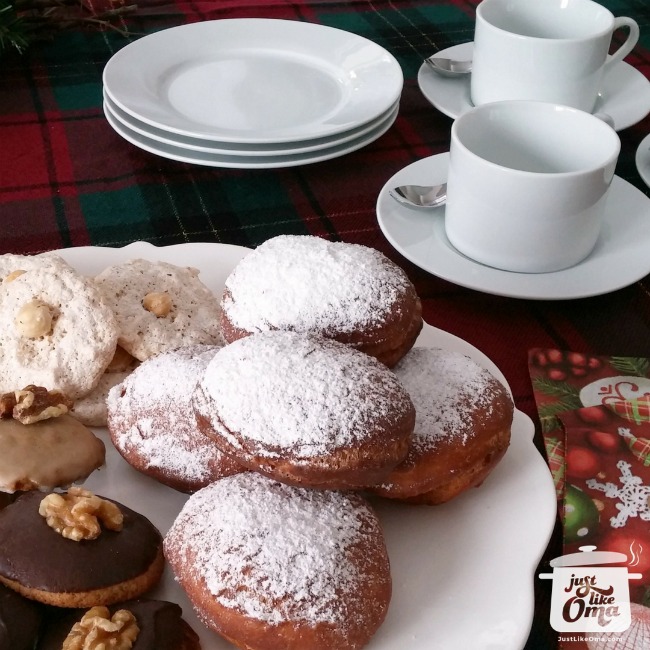 Medium
📜 Story
Medium
📜 Story
Berliner Pfannkuchen
Berlin Jelly Doughnut
Carnival (Karneval/Fasching) and New Year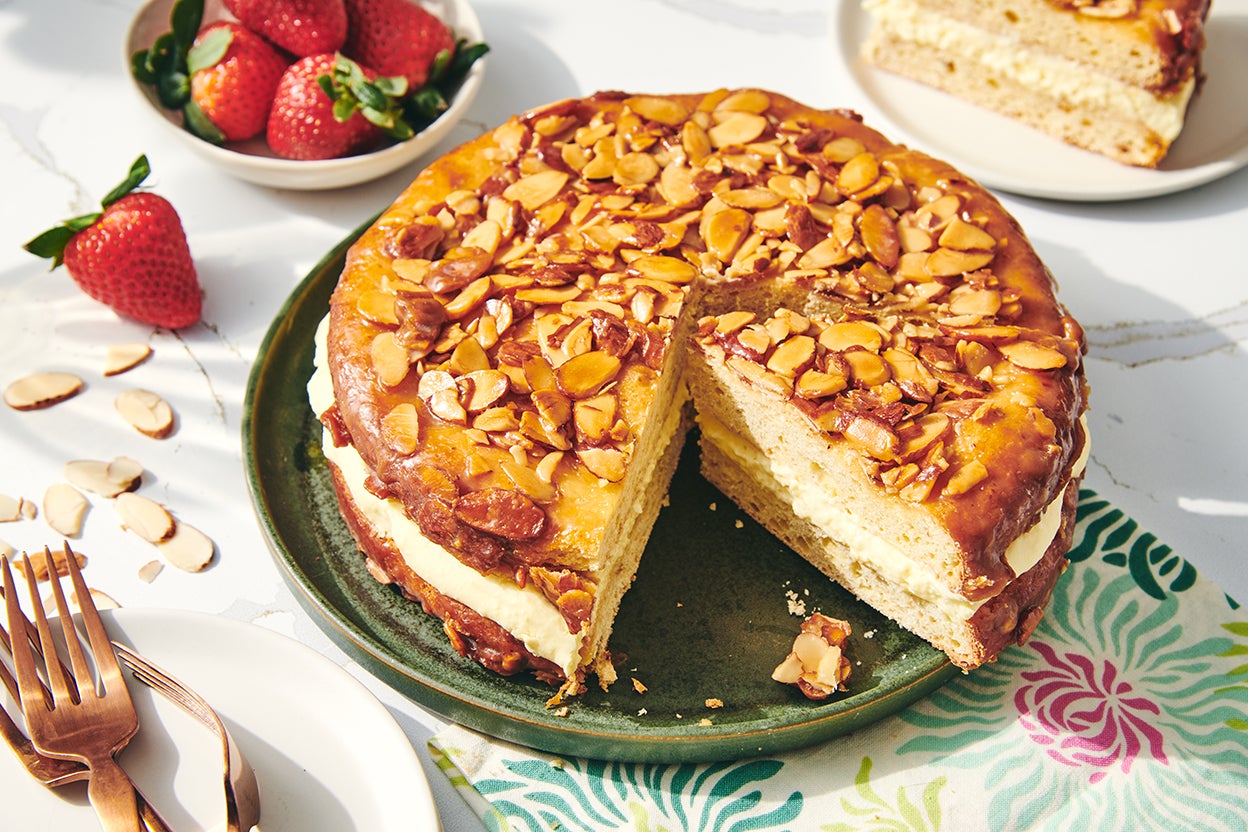 Hard
📜 Story
Hard
📜 Story
Bienenstich
Bee Sting Cake
Afternoon coffee (Kaffee und Kuchen) Medium
📜 Story
Medium
📜 Story
Brezel
Pretzels
Breakfast, snack, beer accompaniment
Comments (0)
Log in to leave a comment.
No comments yet. Be the first to share your thoughts!