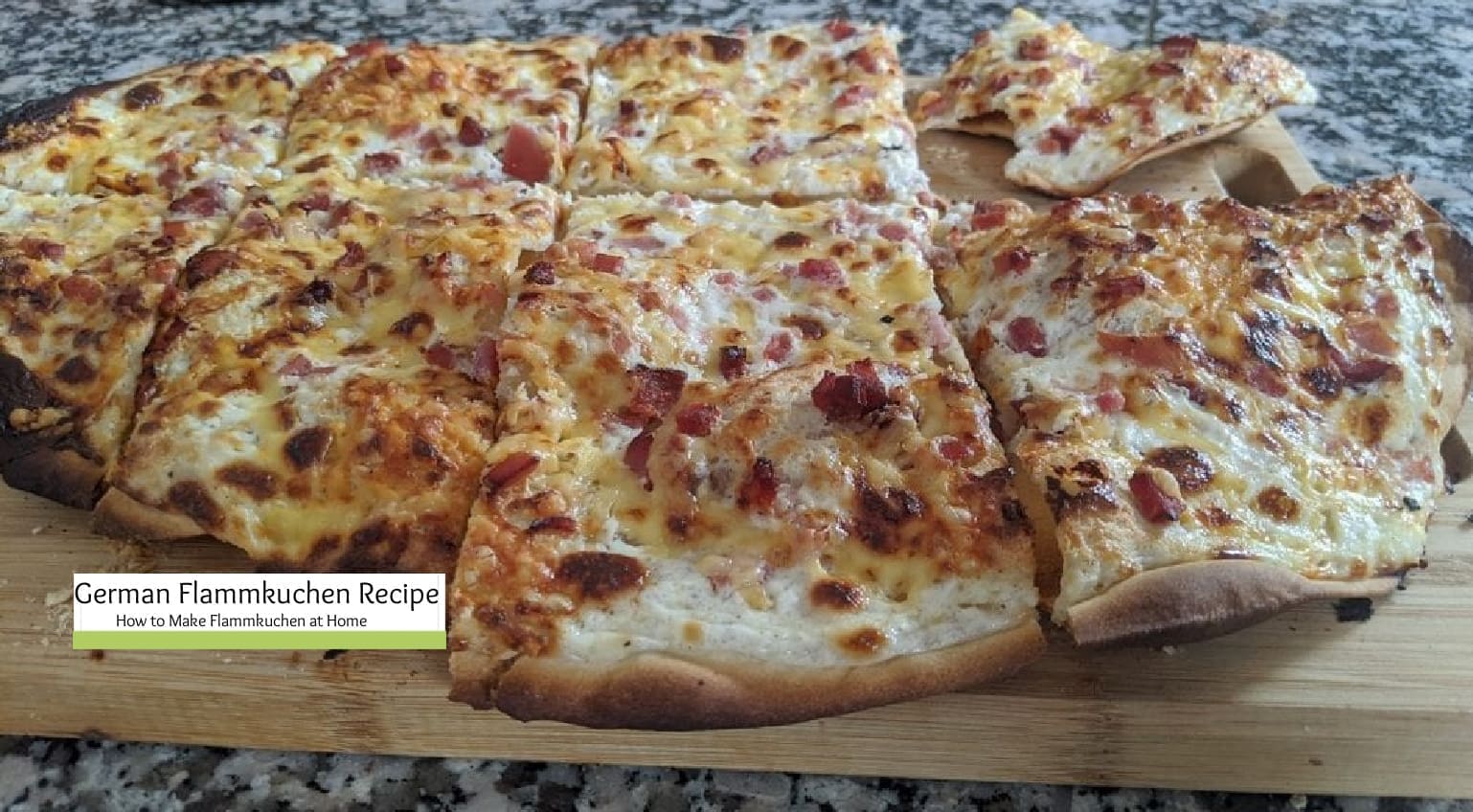
A paper-thin, crackling flatbread from the Rhine region, spread with crème fraîche, scattered with onions and smoked turkey, baked in fierce heat.
Nutrition & Info
Allergen Warnings
Equipment Needed
Presentation Guide
Vessel: wooden board
Garnishes: fresh chives, cracked pepper
Accompaniments: Riesling wine, green salad
Instructions
-
1
Combine flour, water, olive oil, and salt. Knead for 5 min until smooth and elastic. Rest 30 min.
-
2
Preheat oven to maximum temperature (250°C/480°F) with a baking stone or inverted baking sheet inside.
-
3
Divide dough in half. Roll each piece as thin as possible on parchment paper — it should be nearly translucent.
-
4
Mix crème fraîche and fromage blanc. Spread a thin layer across each dough round, leaving a narrow border.
-
5
Scatter thinly sliced onions and smoked turkey over the top. Season generously with pepper.
-
6
Slide onto the hot stone and bake 8-10 min until edges are charred and the base is crackling crisp. Garnish with chives.
Did You Know?
Flammkuchen was originally a baker's tool — bakers would slide it into the wood-fired oven to test if the temperature was right before baking bread.
Chef's Notes
Equipment Tips
- baking stone or sheet
- rolling pin
- oven
Garnishing
fresh chives, cracked pepper
Accompaniments
Riesling wine, green salad
The Story Behind Flammkuchen
Flammkuchen originated in the Alsace-Rhineland region, straddling French and German culinary traditions. It was a baker's test bread, baked in the fierce heat of wood-fired ovens before the main bread loaves went in. The name means "flame cake," referring to the open flames of the oven. Today it is the signature dish of German wine festivals.
More German Dishes
 Hard
📜 Story
Hard
📜 Story
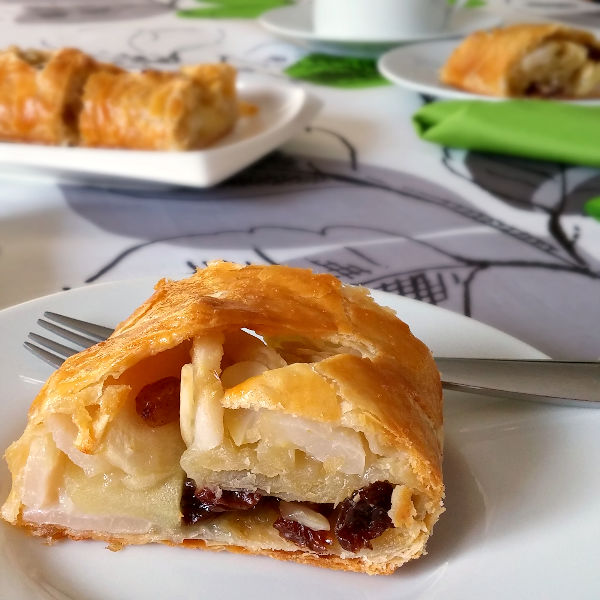
Apfelstrudel
Apple Strudel
Afternoon coffee or dessert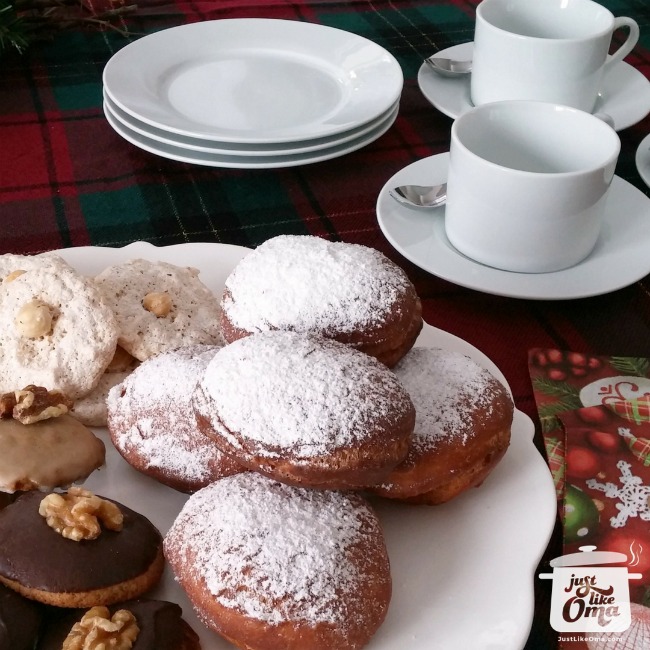 Medium
📜 Story
Medium
📜 Story
Berliner Pfannkuchen
Berlin Jelly Doughnut
Carnival (Karneval/Fasching) and New Year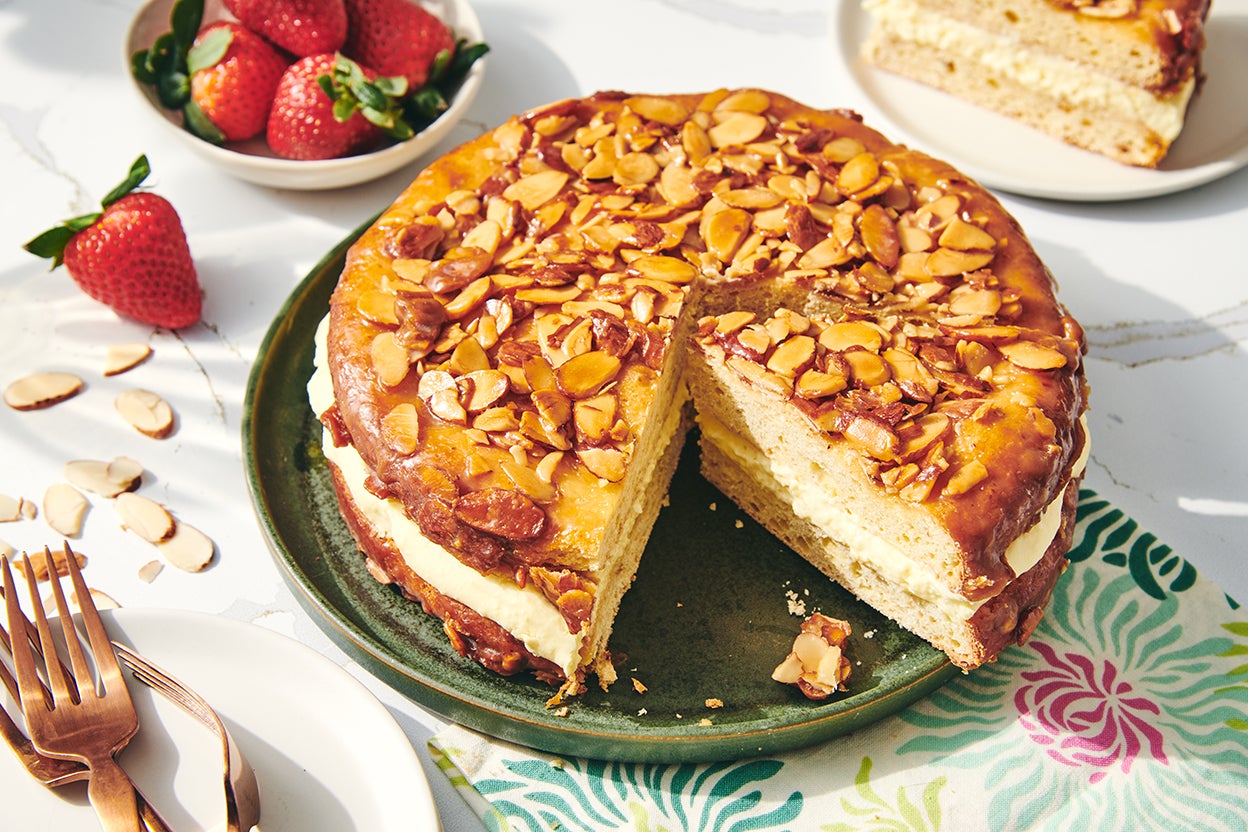 Hard
📜 Story
Hard
📜 Story
Bienenstich
Bee Sting Cake
Afternoon coffee (Kaffee und Kuchen) Medium
📜 Story
Medium
📜 Story
Brezel
Pretzels
Breakfast, snack, beer accompaniment
Comments (0)
Log in to leave a comment.
No comments yet. Be the first to share your thoughts!