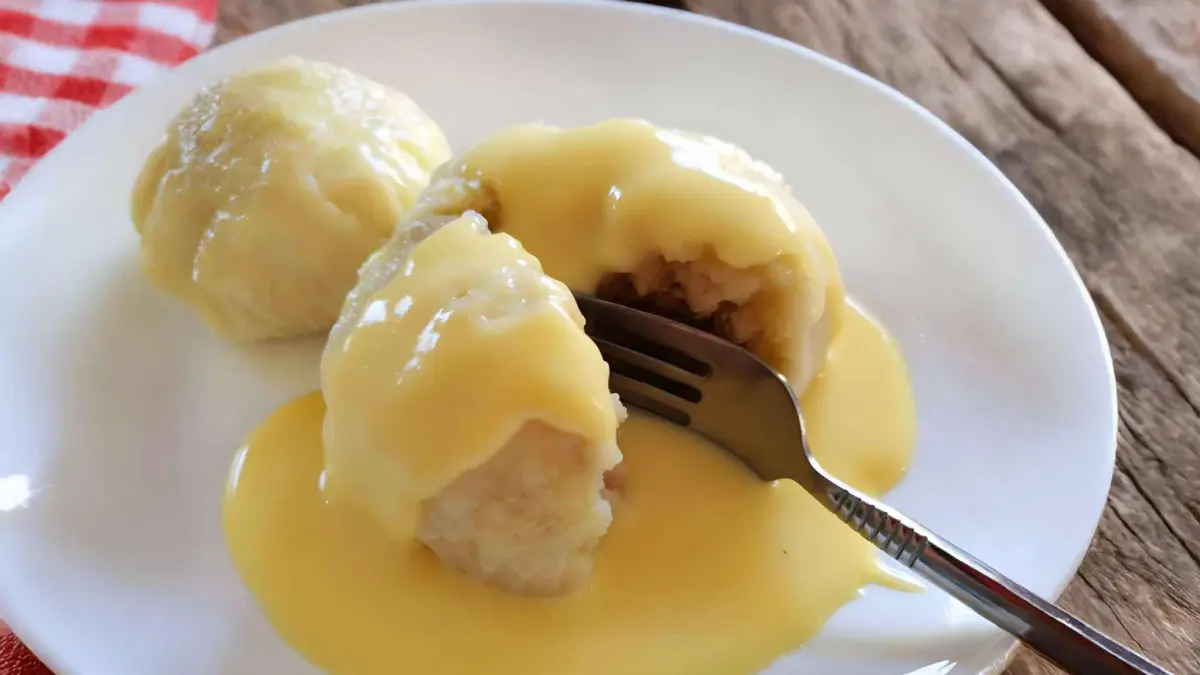
Fluffy steamed yeast dumplings with a caramelized, crusty bottom, served swimming in warm vanilla custard — a Palatinate and Bavarian comfort classic.
Nutrition & Info
Allergen Warnings
Equipment Needed
Presentation Guide
Vessel: deep plate
Garnishes: vanilla sauce, powdered sugar
Accompaniments: vanilla custard, stewed fruit
Instructions
-
1
Mix flour, sugar, yeast, and salt. Add warm milk, eggs, and softened butter. Knead 10 min until smooth. Let rise 1 hour.
-
2
Punch down and divide into 8-10 equal pieces. Shape into smooth rounds. Let rise 20 min.
-
3
Melt butter in a large lidded pan. Sprinkle sugar over the butter and add milk.
-
4
Place the dumplings in the pan, cover with a tight lid, and cook over medium-low heat for 20-25 min without lifting the lid. The bottoms will caramelize while the tops steam.
-
5
Meanwhile, make vanilla sauce: heat milk with split vanilla bean. Whisk yolks, sugar, and cornstarch, temper with hot milk, then cook until thickened.
-
6
Serve Dampfnudeln caramelized-side up with warm vanilla sauce poured around them.
Did You Know?
The golden rule of Dampfnudeln: never lift the lid while cooking. The steam must be trapped inside or the dumplings will collapse — experienced cooks judge doneness by ear, listening for a faint crackling sound when the liquid evaporates.
Chef's Notes
Equipment Tips
- large lidded pot or pan
- mixing bowl
- saucepan
Garnishing
vanilla sauce, powdered sugar
Accompaniments
vanilla custard, stewed fruit
The Story Behind Dampfnudeln
Dampfnudeln originated in the Palatinate and spread across Bavaria and southwestern Germany. They are unique in being both steamed and pan-fried simultaneously, creating a soft, cloudy top and a caramelized, crusty bottom. In the Palatinate, they are served with savory accompaniments, while Bavarians prefer them sweet with vanilla sauce.
More German Dishes
 Hard
📜 Story
Hard
📜 Story
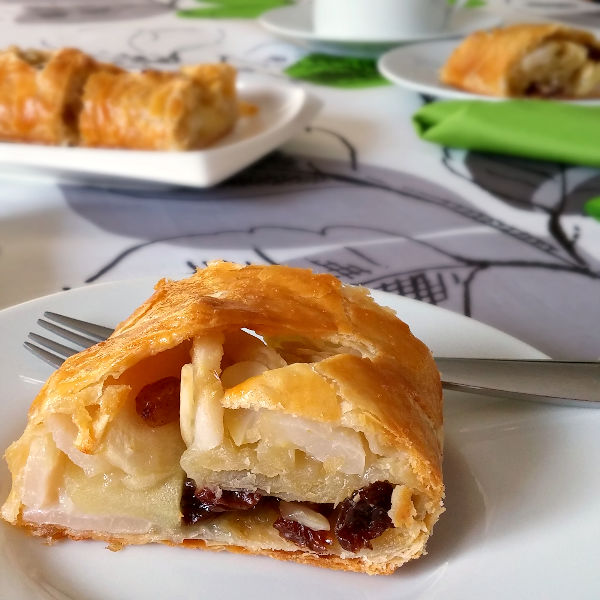
Apfelstrudel
Apple Strudel
Afternoon coffee or dessert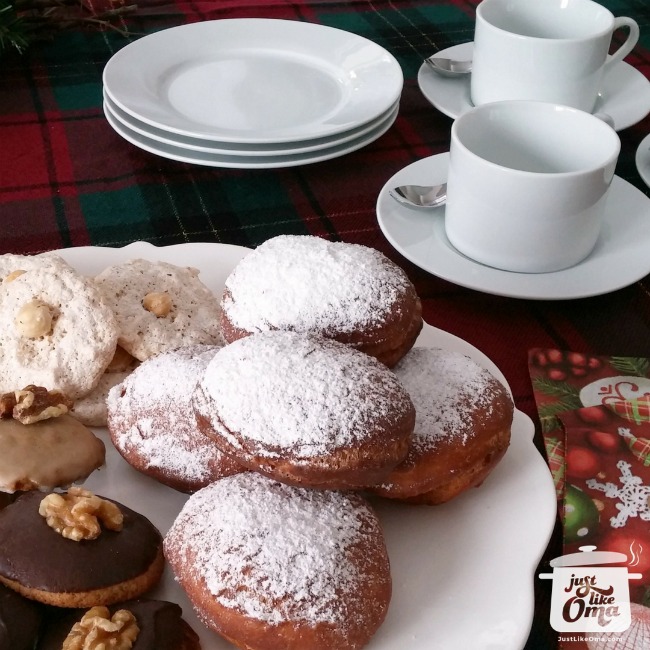 Medium
📜 Story
Medium
📜 Story
Berliner Pfannkuchen
Berlin Jelly Doughnut
Carnival (Karneval/Fasching) and New Year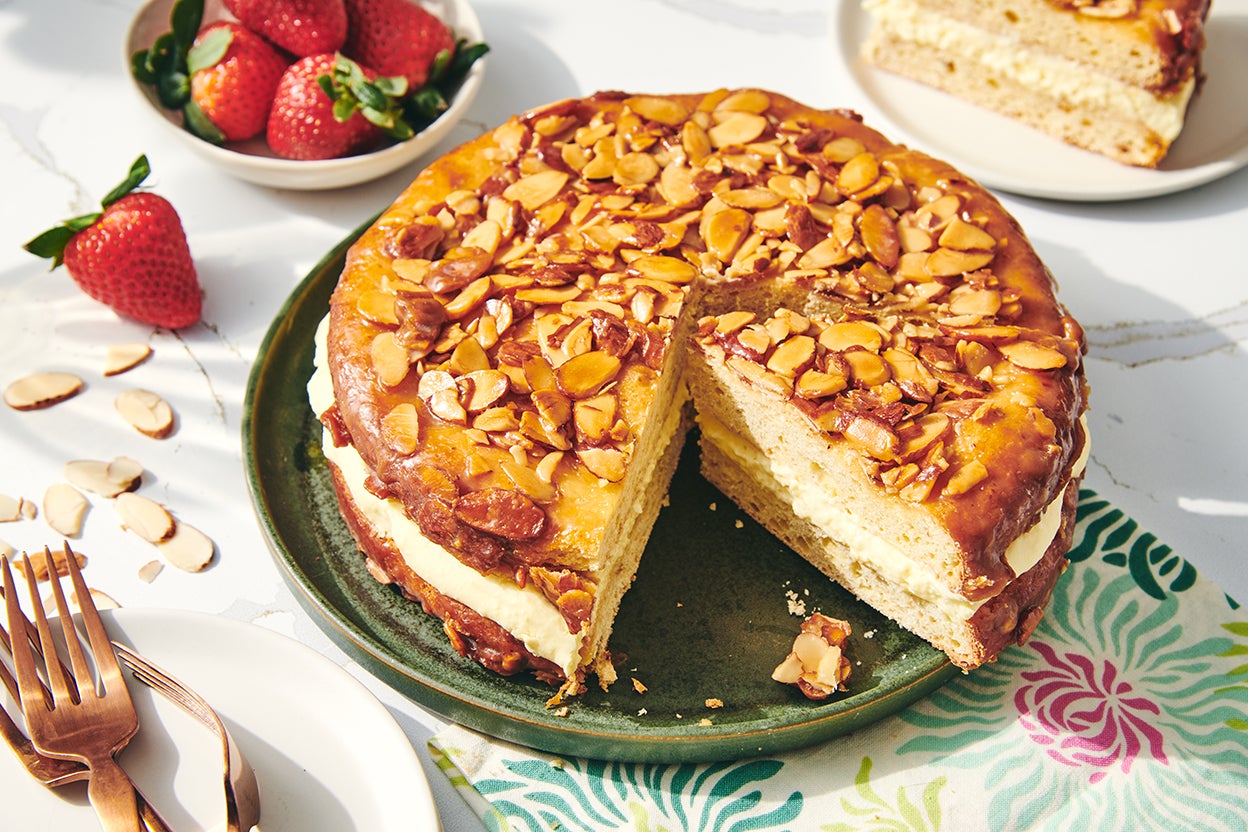 Hard
📜 Story
Hard
📜 Story
Bienenstich
Bee Sting Cake
Afternoon coffee (Kaffee und Kuchen) Medium
📜 Story
Medium
📜 Story
Brezel
Pretzels
Breakfast, snack, beer accompaniment
Comments (0)
Log in to leave a comment.
No comments yet. Be the first to share your thoughts!