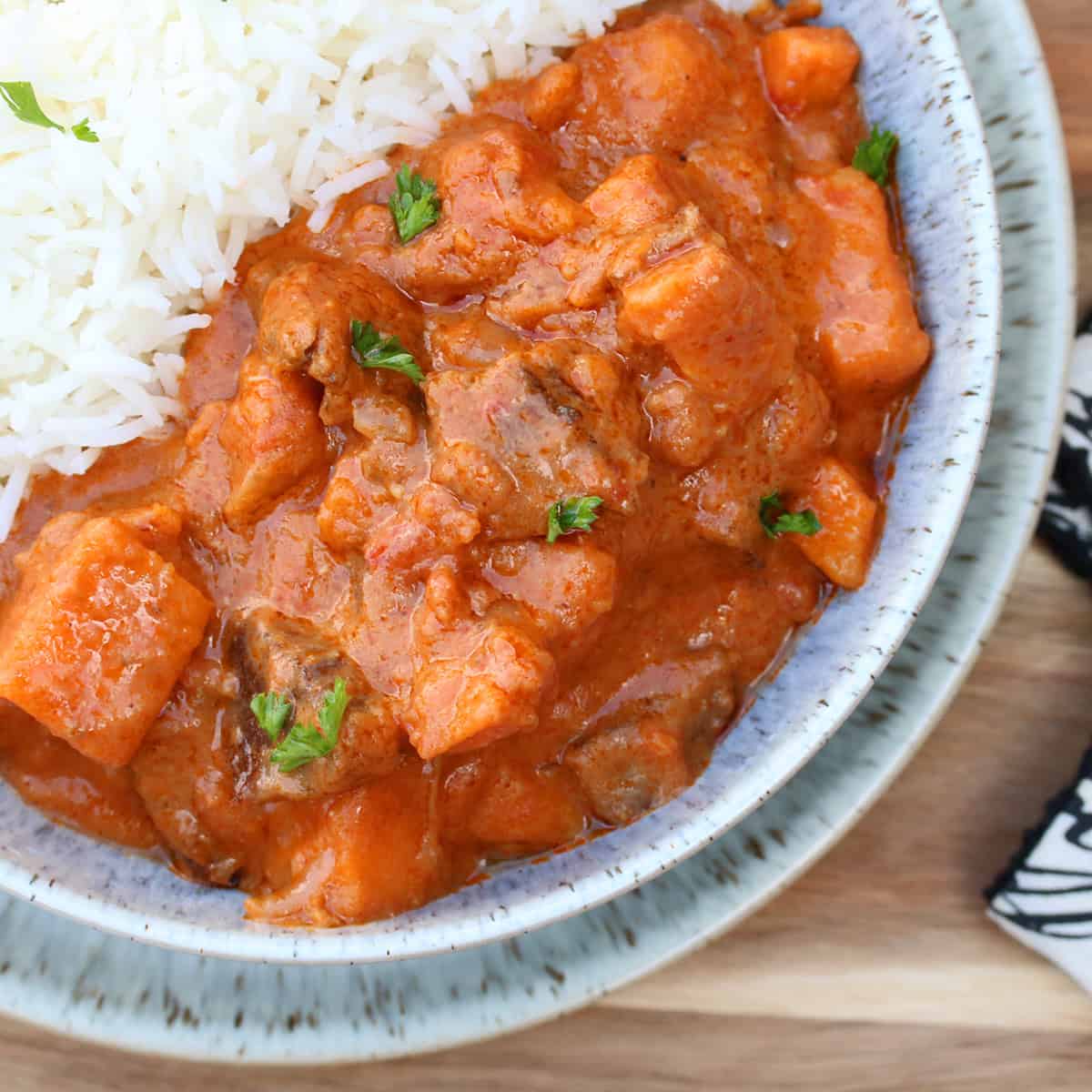
A thick, creamy peanut butter stew with beef, tomatoes, and vegetables served over fluffy white rice. Gambia's national dish.
Nutrition & Info
Allergen Warnings
Equipment Needed
Presentation Guide
Vessel: deep bowl over rice
Garnishes: chopped peanuts
Accompaniments: steamed white rice
Instructions
-
1
Season the beef chunks with salt and one crushed Maggi cube. Heat the vegetable oil in a large heavy pot over medium-high heat and brown the beef on all sides for six to eight minutes until a deep seared crust forms. Remove the meat and set aside.
-
2
In the same pot, saute the diced onions for five minutes until softened and translucent. Add the garlic and cook for one minute. Add the diced tomatoes and tomato paste, cooking for eight minutes until the tomatoes break down into a thick, concentrated sauce.
-
3
Dissolve the peanut butter in three cups of warm water, whisking until completely smooth with no lumps. Pour this peanut mixture into the pot with the tomato base and stir well to combine into a uniform, creamy, orange-brown sauce.
-
4
Return the browned beef to the pot and add the remaining Maggi cube and whole scotch bonnet peppers. Bring to a gentle boil, then reduce heat to low, cover, and simmer for forty-five minutes, stirring every fifteen minutes to prevent the peanut sauce from sticking.
-
5
Add the cubed sweet potato and pumpkin to the simmering stew. Cook for an additional twenty minutes until the vegetables are completely tender and the sauce has thickened considerably. The natural starch from the sweet potato helps thicken the groundnut sauce further.
-
6
The finished domoda should have a thick, rich, creamy peanut sauce that coats the back of a spoon. The beef should be fork-tender and the vegetables soft. Remove the whole peppers, taste, and adjust seasoning with salt as needed.
-
7
Serve the domoda over steamed white rice, ladling the thick peanut stew generously over the mound of rice. This groundnut stew is the national dish of The Gambia and is considered the ultimate comfort food across West Africa.
Did You Know?
Domoda is served at virtually every Gambian celebration and is the ultimate comfort food.
Chef's Notes
Equipment Tips
- heavy pot
- wooden spoon
- sharp knife
Garnishing
chopped peanuts
Accompaniments
steamed white rice
The Story Behind Domoda
The Story: Domoda is The Gambia's signature groundnut (peanut) stew, a thick, creamy sauce made from ground roasted peanuts cooked with tomatoes, onions, garlic, and scotch bonnet peppers, combined with chicken, fish, or beef and served over white rice. The groundnut, native to South America but naturalized in West Africa since the sixteenth century, found its highest culinary expression in the Gambian kitchen, where it is transformed into a sauce of remarkable richness and depth. Domoda is a Mandinka dish at its core, reflecting the agricultural traditions of the Gambia River valley.
On the Calendar: Domoda is a weekday staple served at lunch throughout The Gambia, rotating with benachin and other rice dishes. It is also prepared for celebrations and family gatherings, where its richness signals generosity and welcome.
Then & Now: The recipe remains consistent, with the main evolution being the availability of commercially processed peanut butter alongside hand-ground peanuts. Purists insist that freshly ground roasted peanuts produce a superior sauce. Gambian diaspora communities maintain domoda as a cornerstone of cultural food identity.
Legacy: Domoda demonstrates the transformative power of the groundnut in West African hands, turning a simple legume into a sauce so rich and satisfying that it anchors an entire nation's daily table.
More Gambian Dishes
 Easy
📜 Story
Easy
📜 Story
Afra
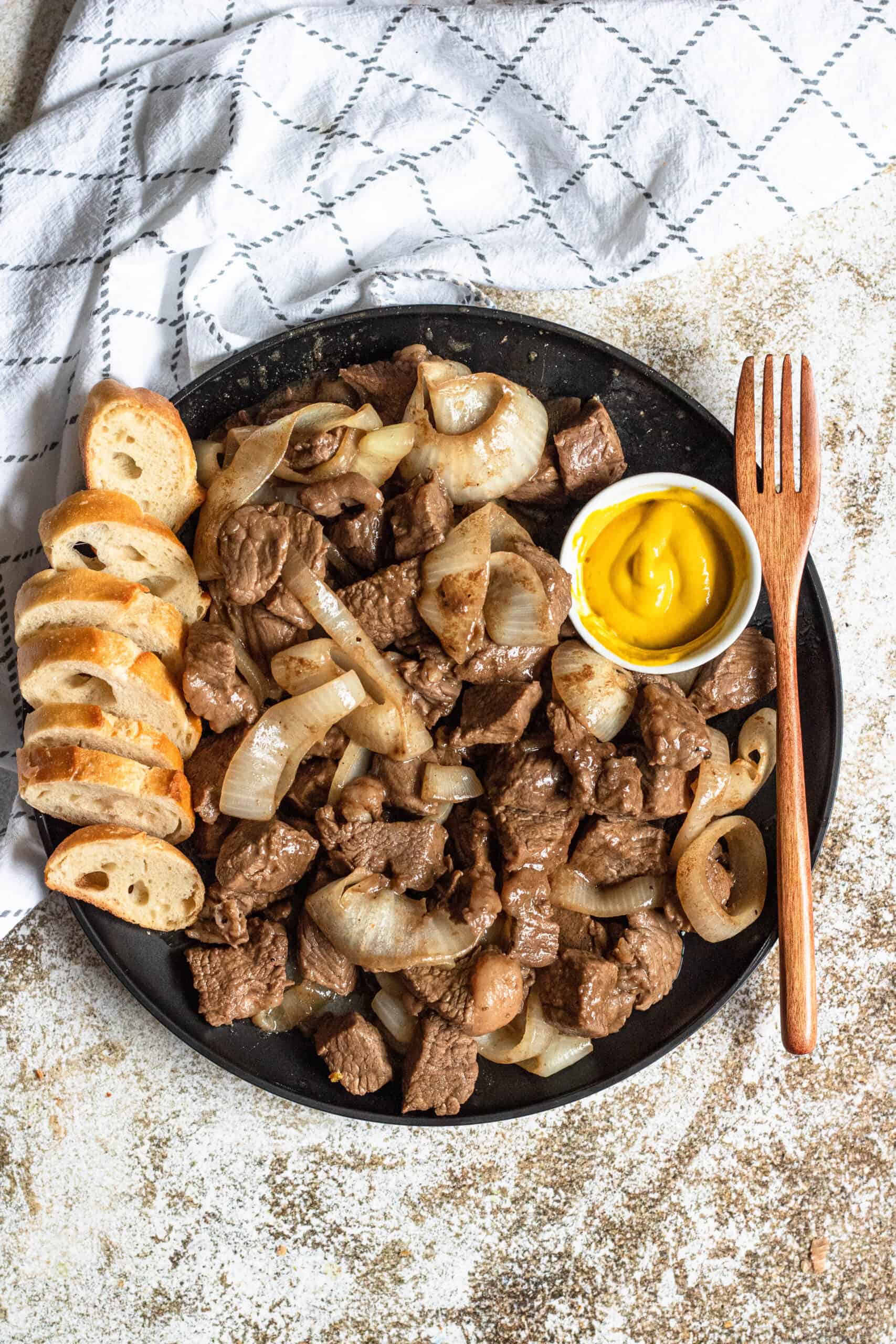
Grilled Spiced Meat
Evening street food Easy
📜 Story
Easy
📜 Story
Akara
Black-Eyed Bean Fritters
Breakfast and street snack Medium
📜 Story
Medium
📜 Story
Attaya
Gambian Green Tea Ceremony
Throughout the day, social gatherings Easy
📜 Story
Easy
📜 Story
Base Nyebeh
Bean and Grain Porridge
Breakfast or postpartum recovery food
Comments (0)
Log in to leave a comment.
No comments yet. Be the first to share your thoughts!