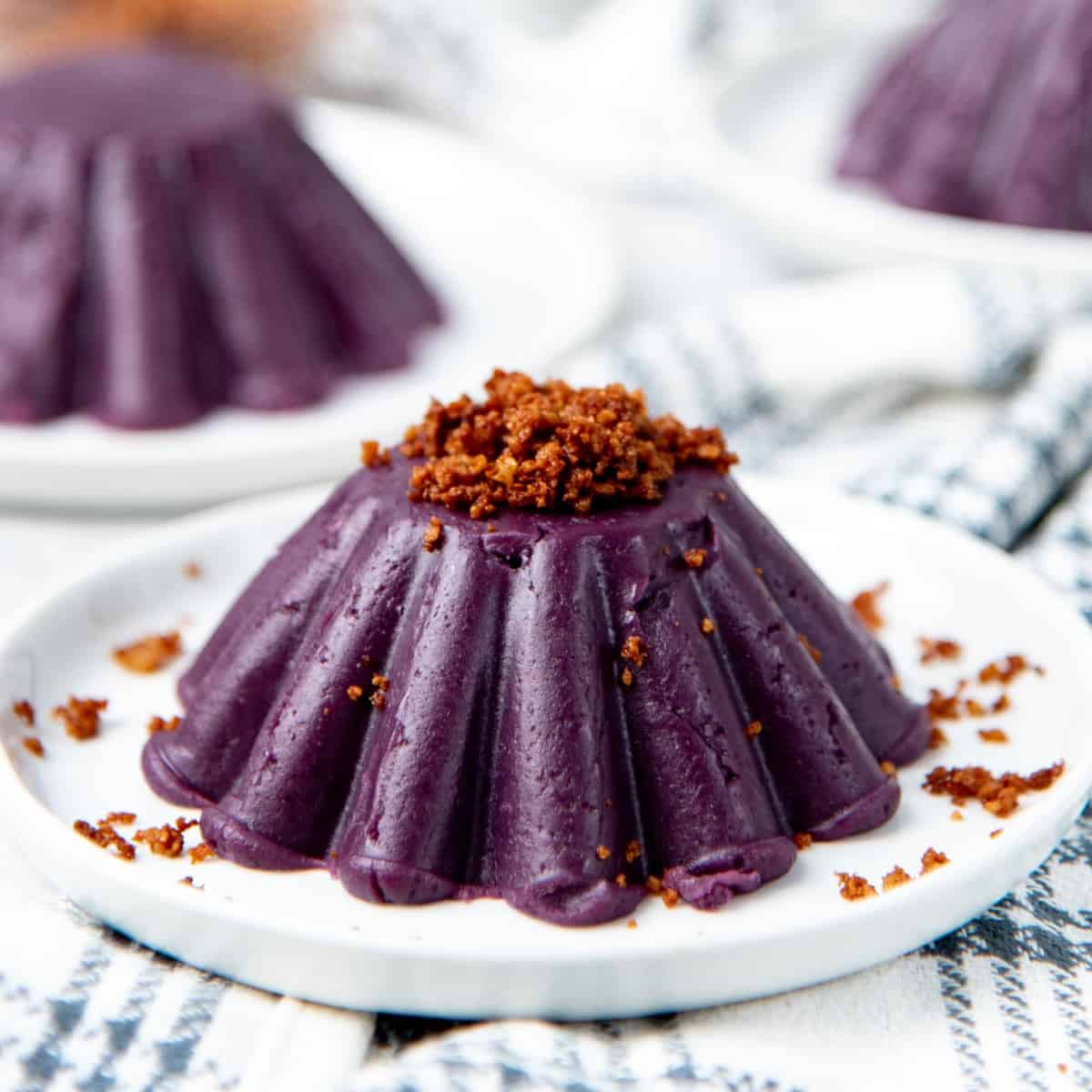
A vibrant, jewel-purple dessert made from mashed ube (purple yam) slow-cooked with coconut milk, condensed milk, and butter until thick and spreadable — the soul of Filipino dessert.
Nutrition & Info
Allergen Warnings
Equipment Needed
Presentation Guide
Vessel: oval serving dish or individual cups
Garnishes: toasted coconut, ube slices
Accompaniments: vanilla ice cream
Instructions
-
1
Boil whole ube until fork-tender, about 30 minutes. Peel and mash until smooth.
-
2
In a heavy pot over low heat, combine mashed ube, coconut milk, condensed milk, butter, and sugar.
-
3
Stir continuously with a wooden spoon for 25-30 minutes. The mixture will thicken and pull away from the sides.
-
4
Add vanilla extract and continue stirring until the halaya is very thick and glossy.
-
5
Transfer to a greased mold or serving dish. Smooth the top and sprinkle with toasted coconut.
-
6
Cool to room temperature, then refrigerate. Serve chilled, sliced or scooped.
Did You Know?
Ube has become a global sensation, appearing in ice cream, donuts, and lattes worldwide — but Filipinos have been cooking with this purple yam for centuries before it became a Western trend.
Chef's Notes
Equipment Tips
- heavy pot
- potato masher
- wooden spoon
Garnishing
toasted coconut, ube slices
Accompaniments
vanilla ice cream
The Story Behind Ube Halaya
Ube (Dioscorea alata) is native to Southeast Asia and has been cultivated in the Philippines since pre-colonial times. The striking purple color comes from anthocyanins, the same pigments found in blueberries. Ube halaya is the foundation of Filipino purple yam cuisine, used as a filling for hopia pastries, a layer in halo-halo, and a flavor for ice cream and cakes. The recent global popularity of ube has brought international attention to this ancient Filipino ingredient.
More Filipino Dishes
 Easy
📜 Story
Easy
📜 Story
Adobong Manok
Chicken Adobo
Any meal, year-round (the everyday Filipino dish)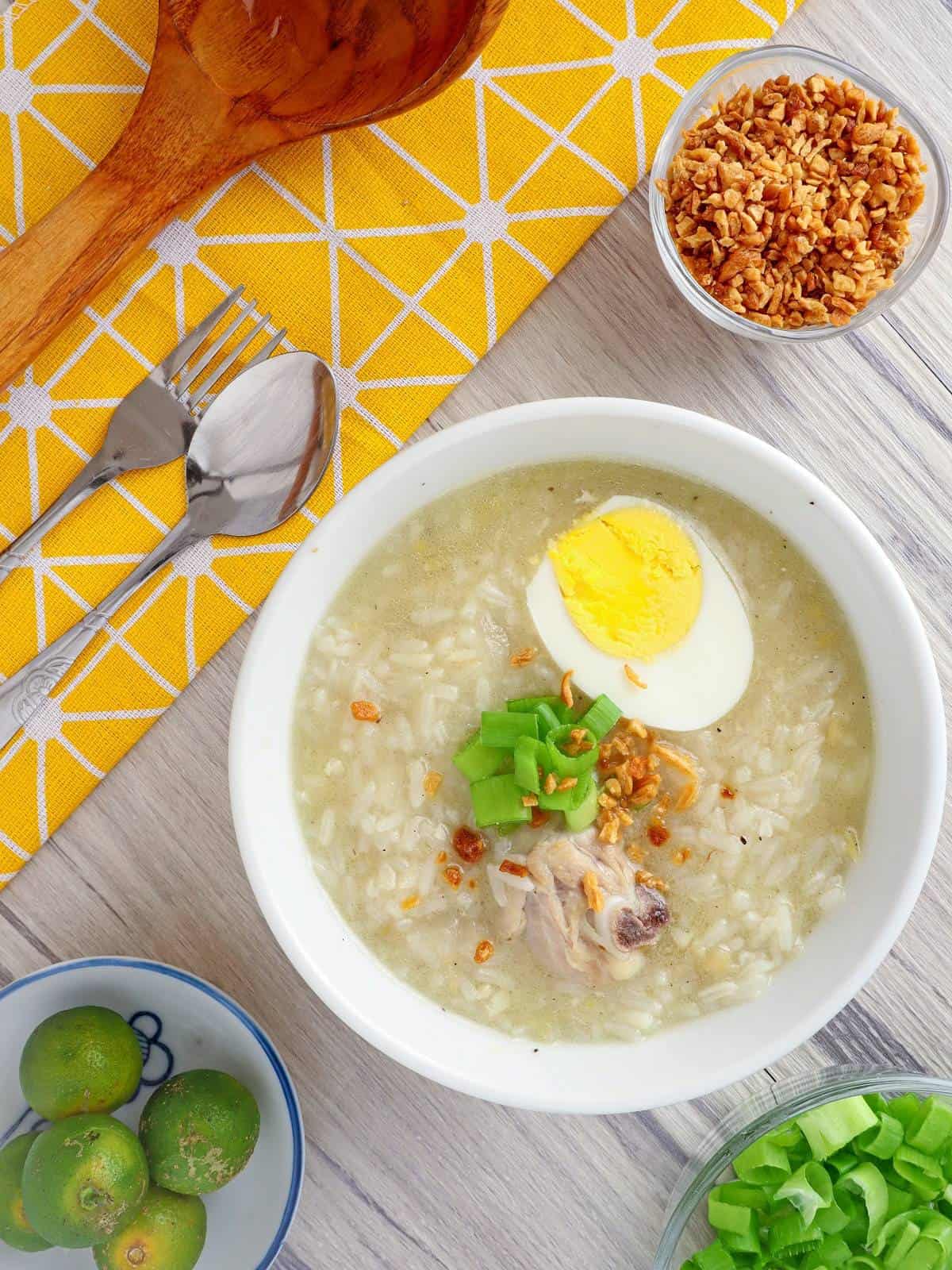 Easy
📜 Story
Easy
📜 Story
Arroz Caldo
Filipino Chicken Rice Porridge
Breakfast, rainy days, when feeling unwell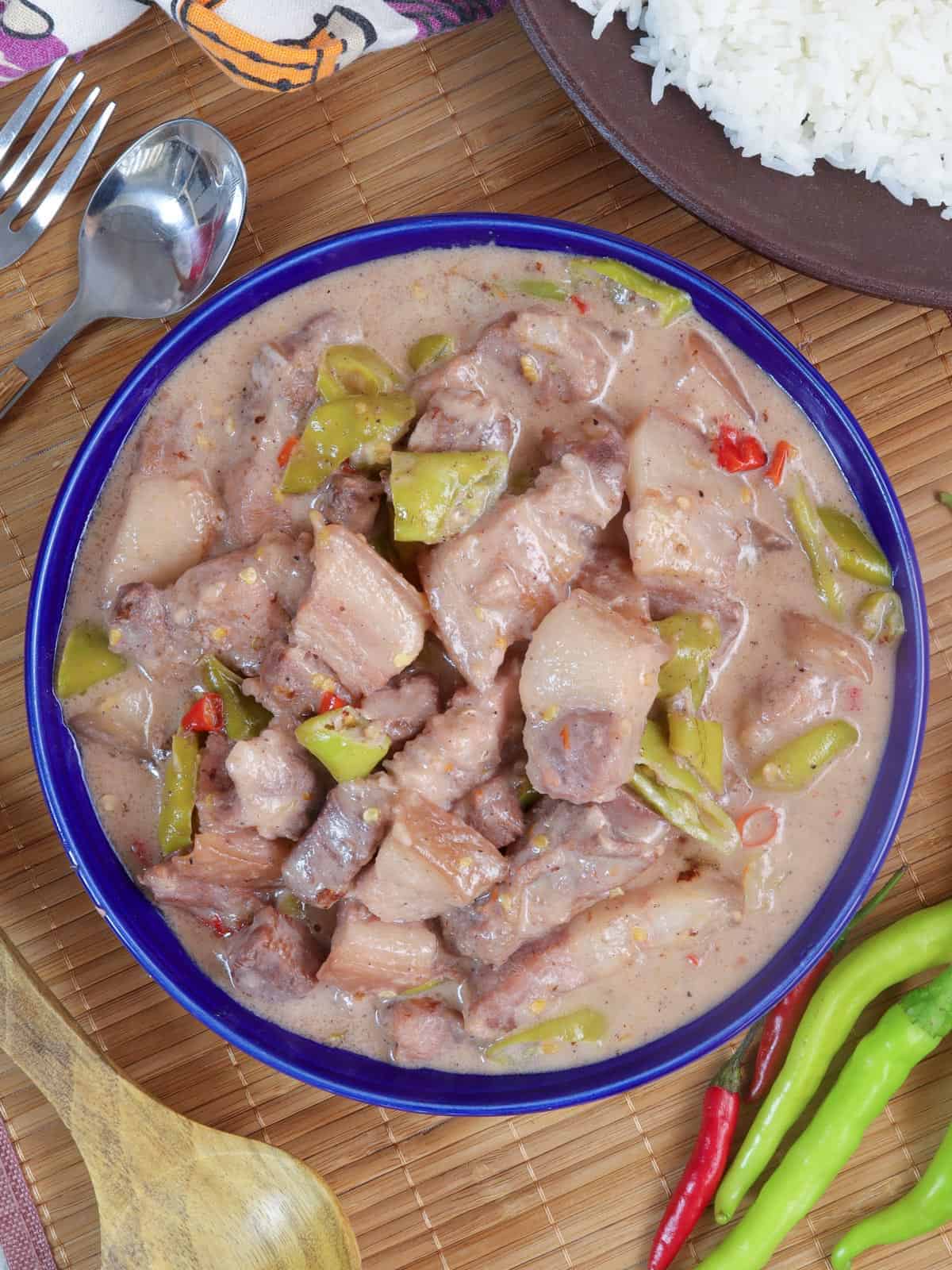 Easy
📜 Story
Easy
📜 Story
Bicol Express
Spicy Coconut Cream Stew
Lunch or dinner with lots of rice Easy
📜 Story
Easy
📜 Story
Bistek Tagalog
Filipino Beef Steak
Lunch or dinner with steamed rice
Comments (0)
Log in to leave a comment.
No comments yet. Be the first to share your thoughts!