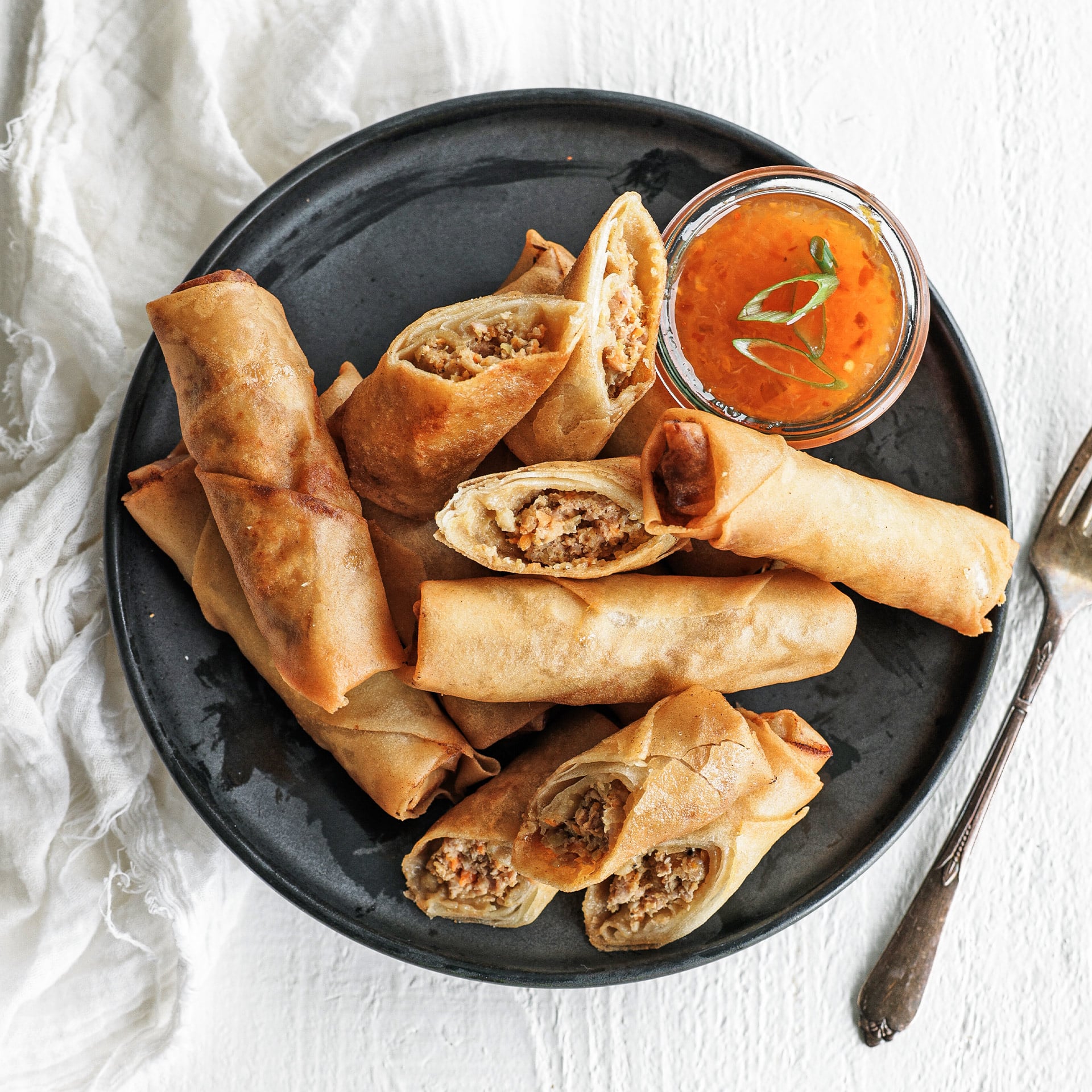
Crispy, golden spring rolls filled with savory ground chicken and vegetables, wrapped in delicate crepe-thin wrappers. These addictive rolls vanish from party tables within minutes.
Nutrition & Info
Allergen Warnings
Equipment Needed
Presentation Guide
Vessel: plate lined with paper
Garnishes: sweet chili dipping sauce
Accompaniments: vinegar with garlic dip
Instructions
-
1
Heat one tablespoon of oil in a large skillet over medium-high heat. Cook the ground chicken, breaking it into fine crumbles, for five minutes until browned. Add the chopped shrimp and cook for two minutes until pink. Transfer to a large bowl and let cool.
-
2
In the same skillet, saute the diced onion and garlic for two minutes until fragrant. Add the julienned carrots and diced jicama, cooking for three minutes until slightly softened but still crunchy. Add bean sprouts and toss for one minute. Add to the bowl with the meat.
-
3
Season the filling with soy sauce, sesame oil, and black pepper. Toss everything together until well combined. Spread the filling on a plate and refrigerate for fifteen minutes. Cold filling is easier to roll and prevents the wrappers from becoming soggy.
-
4
Place a lumpia wrapper on a clean surface with one corner pointing toward you. Place two tablespoons of filling in a narrow log shape across the lower third of the wrapper. Fold the bottom corner up tightly over the filling, then fold in both side corners.
-
5
Roll the wrapper away from you into a tight, compact cylinder. Brush the final corner with beaten egg and press to seal. The finished lumpia should be about twelve centimetres long and two centimetres thick with no air pockets inside.
-
6
Heat vegetable oil in a deep pot to 175C. Fry the lumpia in batches of five or six for three to four minutes, turning once, until the wrappers are deeply golden brown, blistered, and shatteringly crispy on all sides. Drain on a wire rack.
-
7
Serve the lumpia immediately while piping hot and crispy, arranged standing upright on a plate. Provide sweet chili sauce and a vinegar-garlic dipping sauce on the side. These are the most popular appetizer in Filipino cuisine, served at every party and celebration.
Did You Know?
In Filipino parties, lumpia always runs out first. Guests have been known to take them home in bags.
Chef's Notes
Equipment Tips
- deep fryer or wok
- mixing bowl
- tongs
Garnishing
sweet chili dipping sauce
Accompaniments
vinegar with garlic dip
The Story Behind Lumpia
### The Story
Lumpia is the Filipino spring roll, a cornerstone of Filipino cuisine that traces its origins to the Chinese spring roll (chun juan) brought by Hokkien Chinese traders and immigrants who settled in the Philippines from the 10th century onward. Over centuries, Filipinos adapted the dish using local ingredients and developed two major versions: lumpiang shanghai (small, tightly rolled fried spring rolls filled with ground meat and vegetables) and lumpiang sariwa (fresh, unfried spring rolls wrapped in a thin crepe-like wrapper with a filling of sauteed vegetables, topped with a sweet garlic sauce and crushed peanuts). The word lumpia derives from the Hokkien lunpia, a cognate that appears across Southeast Asia in various spring roll traditions.
### On the Calendar
Lumpia is present at virtually every Filipino gathering -- fiestas, birthday parties, weddings, Christmas celebrations, and family reunions. Lumpiang shanghai in particular is considered an essential party food, and no Filipino celebration is complete without it.
### Then & Now
Lumpiang shanghai is the party version -- dozens are prepared in advance and fried to golden perfection, served with a sweet chili dipping sauce. Lumpiang sariwa is a more refined preparation, often associated with Chinese-Filipino (Chinoy) families and the Kapampangan tradition. Regional variations abound: lumpiang ubod (heart of palm filling) is a Tagalog specialty, while lumpiang gulay emphasizes vegetables. Filipino families abroad have made lumpia an ambassador of Filipino cuisine, a dish that invariably disappears first at any multicultural potluck.
### Legacy
Lumpia is the ultimate Filipino party food, a dish of Chinese origin so thoroughly adopted and adapted that it has become inseparable from Filipino celebration and community.
More Filipino Dishes
 Easy
📜 Story
Easy
📜 Story
Adobong Manok
Chicken Adobo
Any meal, year-round (the everyday Filipino dish)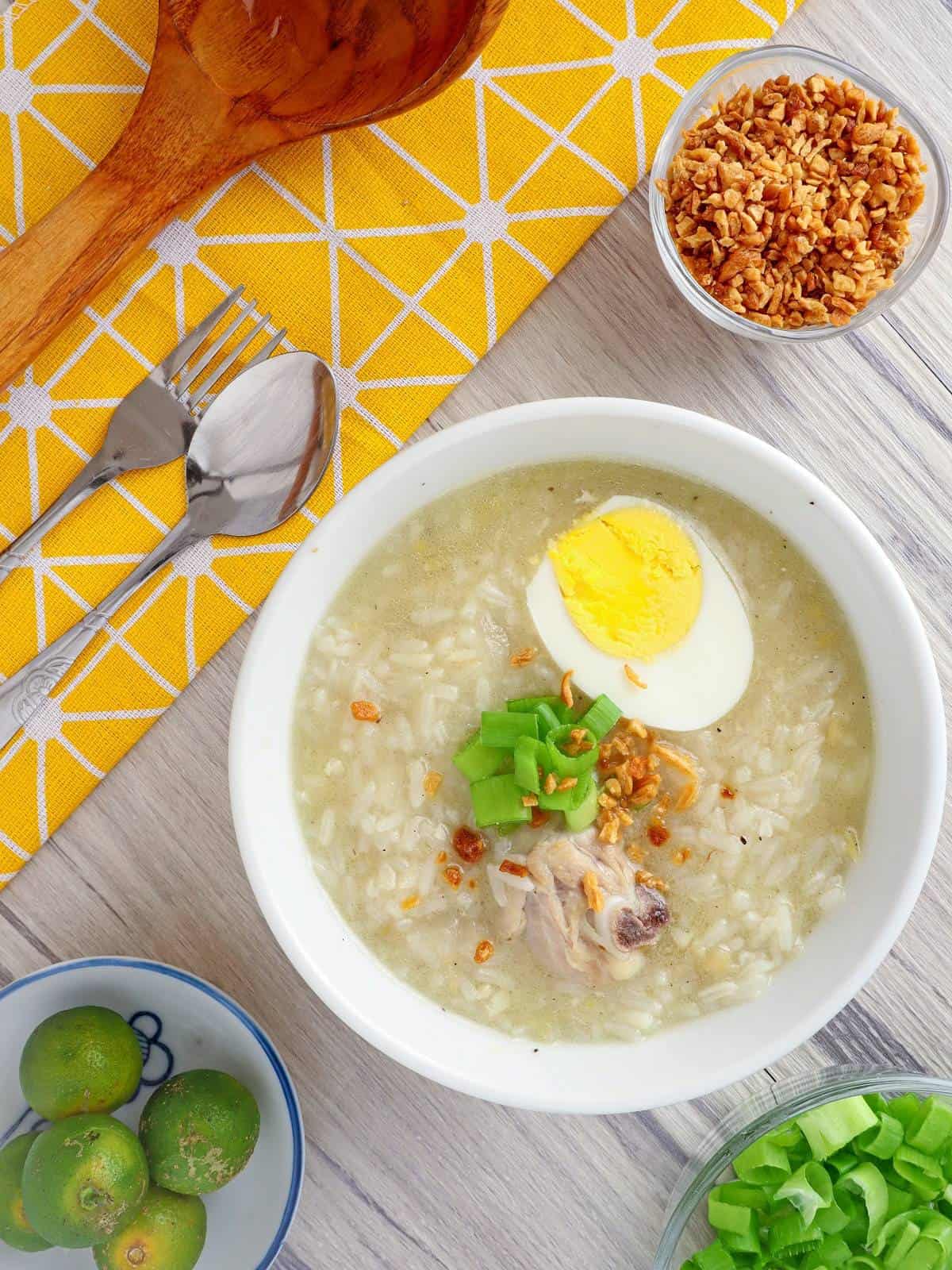 Easy
📜 Story
Easy
📜 Story
Arroz Caldo
Filipino Chicken Rice Porridge
Breakfast, rainy days, when feeling unwell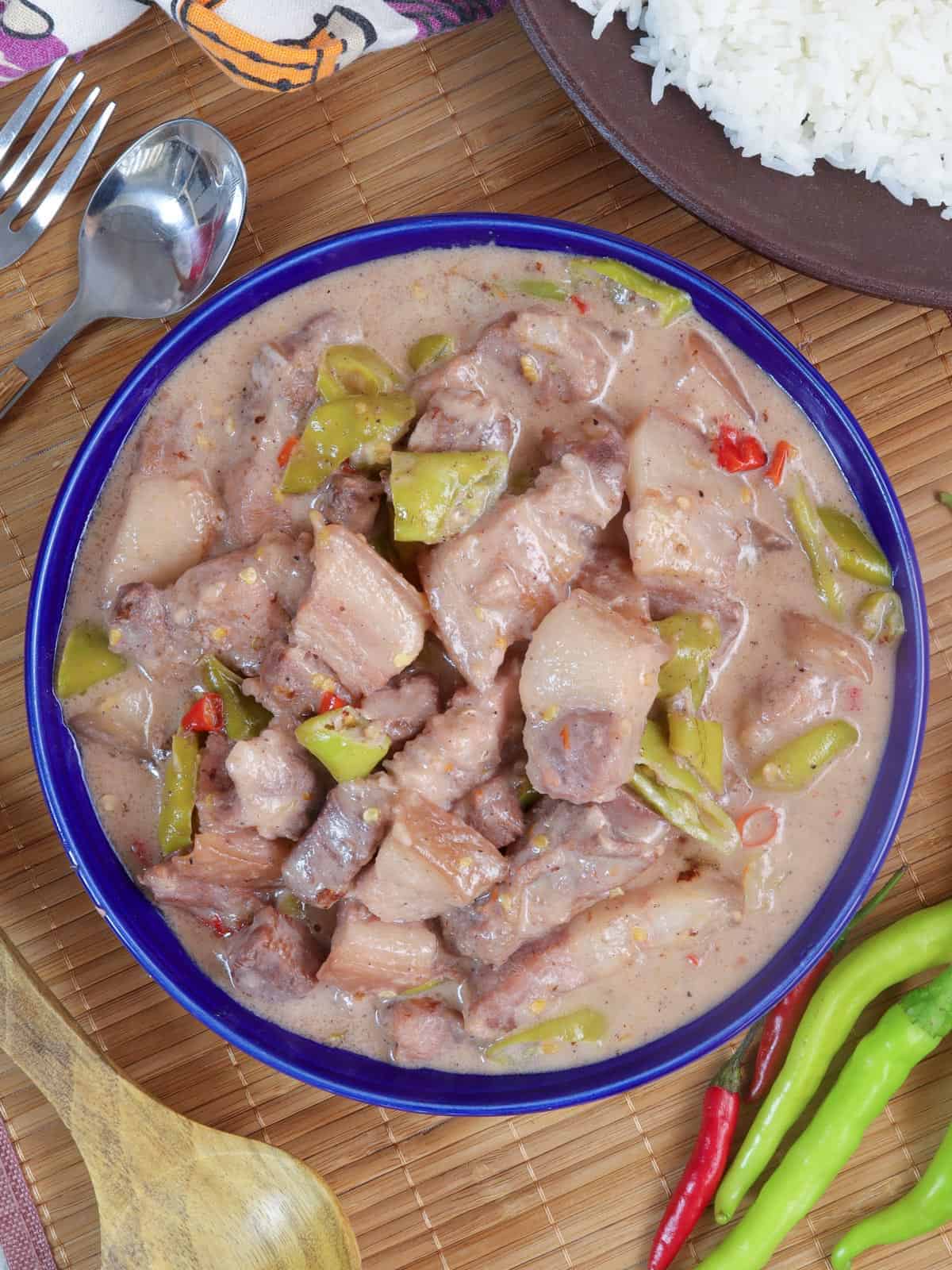 Easy
📜 Story
Easy
📜 Story
Bicol Express
Spicy Coconut Cream Stew
Lunch or dinner with lots of rice Easy
📜 Story
Easy
📜 Story
Bistek Tagalog
Filipino Beef Steak
Lunch or dinner with steamed rice
Comments (0)
Log in to leave a comment.
No comments yet. Be the first to share your thoughts!