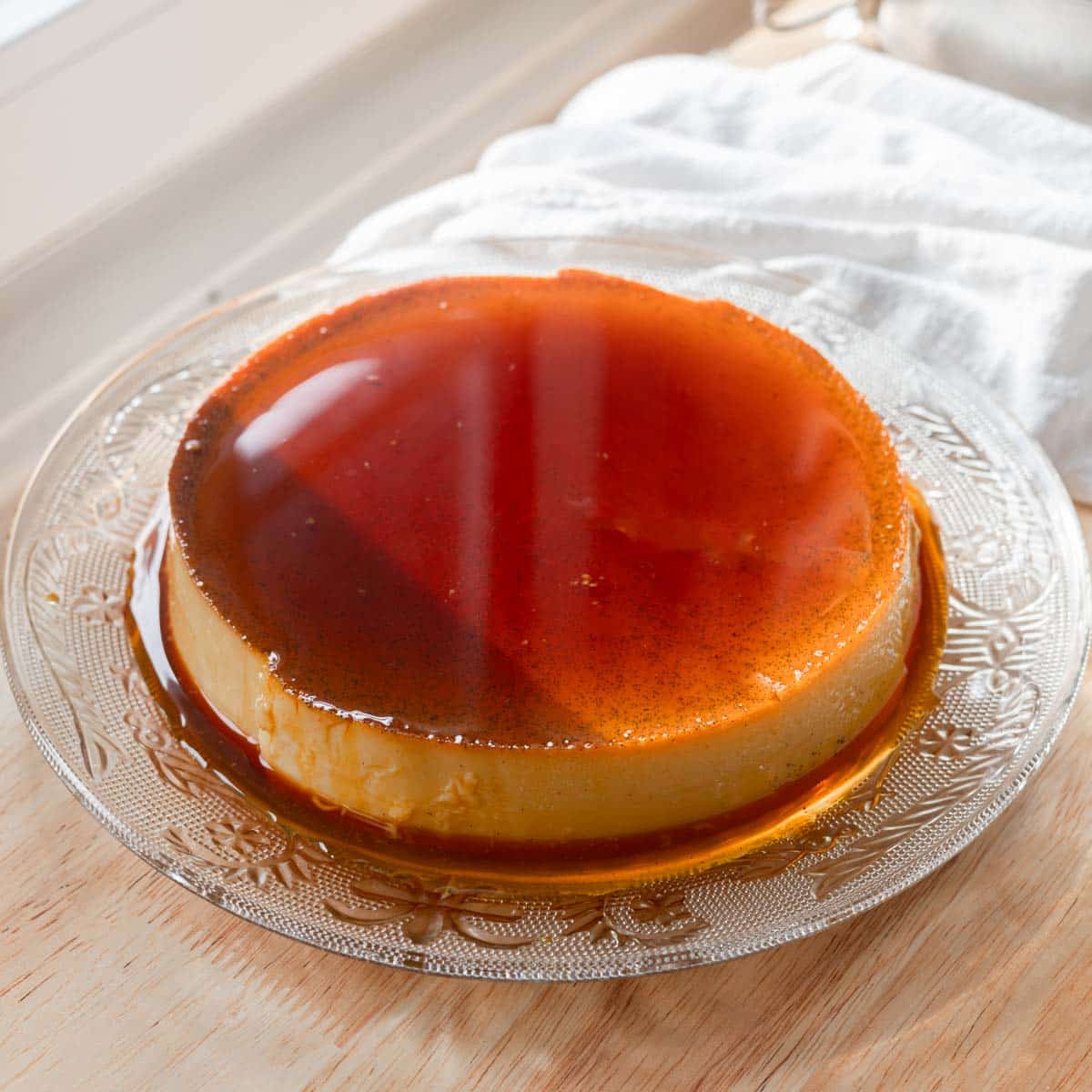
An impossibly rich, dense, and silky egg custard made with condensed milk and egg yolks, topped with a layer of amber caramel — denser and more luscious than any Spanish flan.
Nutrition & Info
Allergen Warnings
Equipment Needed
Presentation Guide
Vessel: oval platter (unmolded from llanera)
Garnishes: caramel sauce, calamansi zest
Accompaniments: whipped cream (optional)
Instructions
-
1
Make caramel: heat sugar and water in a saucepan, swirling until amber. Pour into llanera mold, tilting to coat the bottom.
-
2
Whisk egg yolks gently (avoid creating bubbles). Add condensed milk, evaporated milk, vanilla, and calamansi zest.
-
3
Strain the custard mixture through a fine sieve twice to ensure perfect smoothness.
-
4
Pour custard into the caramel-lined mold. Cover tightly with foil.
-
5
Steam over medium heat for 40-50 minutes until set. A knife inserted should come out clean.
-
6
Cool completely, then refrigerate for at least 4 hours. Invert onto a plate to unmold — caramel will cascade over the flan.
Did You Know?
Filipino leche flan uses only egg yolks (no whole eggs) and condensed milk, making it far denser and richer than Spanish flan — it can be sliced like cake rather than scooped like pudding.
Chef's Notes
Equipment Tips
- oval llanera mold
- steamer
- strainer
Garnishing
caramel sauce, calamansi zest
Accompaniments
whipped cream (optional)
The Story Behind Leche Flan
Leche flan arrived in the Philippines with Spanish colonizers but was transformed into something much richer than the original. Spanish churches in the Philippines used egg whites to seal mortar between bricks, leaving massive quantities of egg yolks that Filipino cooks turned into leche flan. This ingenious use of surplus egg yolks created a custard denser and more decadent than anything found in Spain.
More Filipino Dishes
 Easy
📜 Story
Easy
📜 Story
Adobong Manok
Chicken Adobo
Any meal, year-round (the everyday Filipino dish)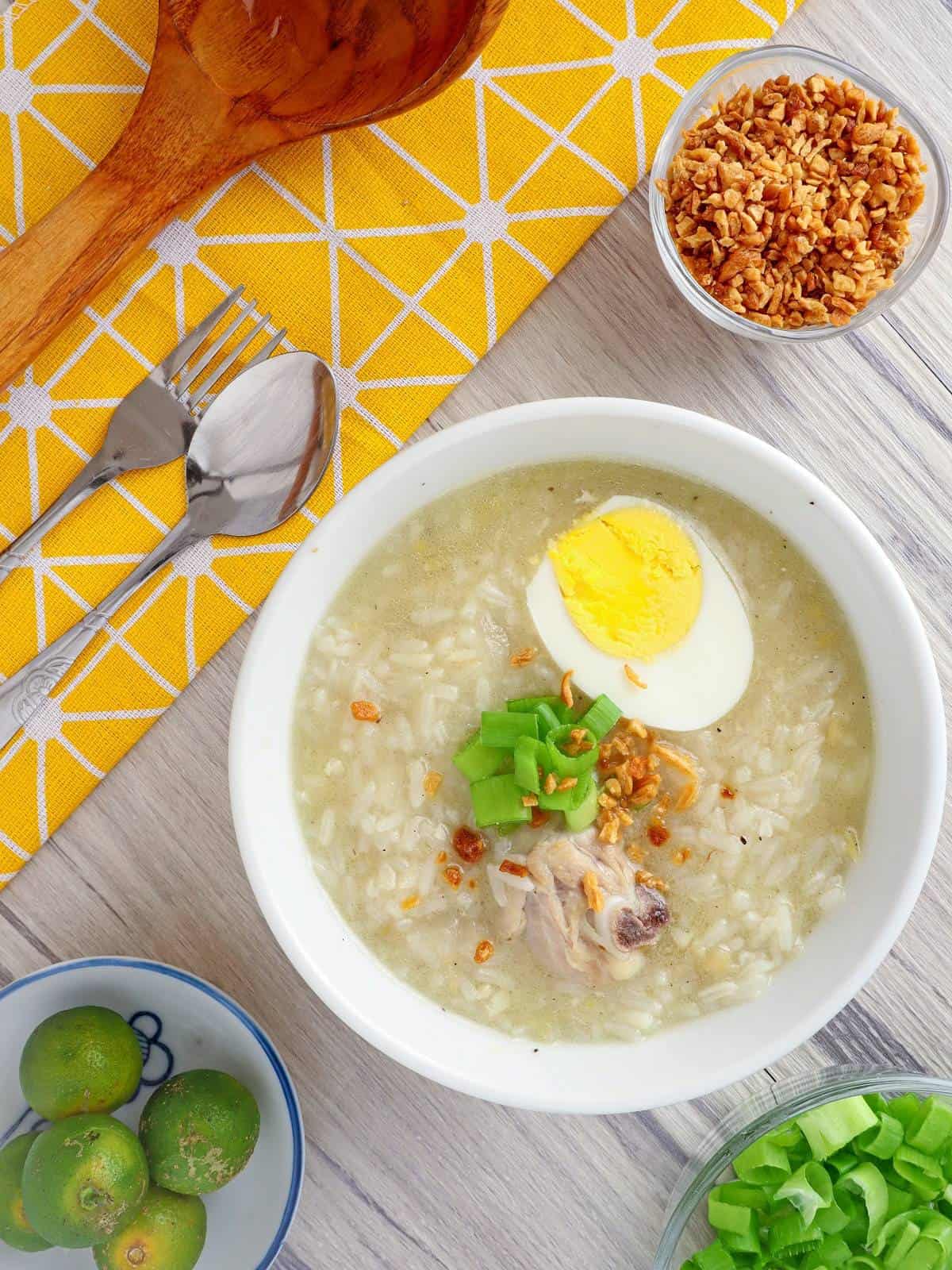 Easy
📜 Story
Easy
📜 Story
Arroz Caldo
Filipino Chicken Rice Porridge
Breakfast, rainy days, when feeling unwell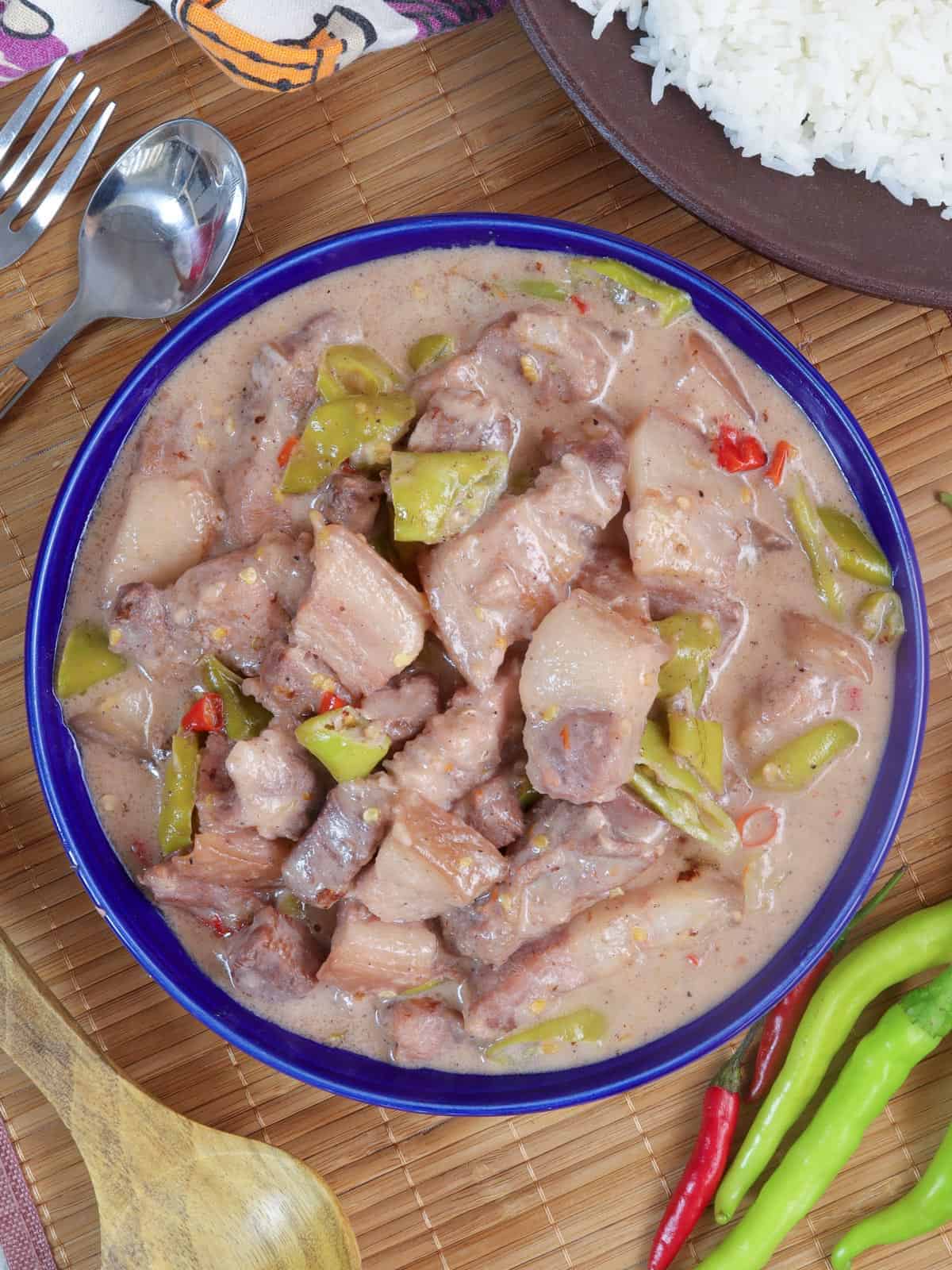 Easy
📜 Story
Easy
📜 Story
Bicol Express
Spicy Coconut Cream Stew
Lunch or dinner with lots of rice Easy
📜 Story
Easy
📜 Story
Bistek Tagalog
Filipino Beef Steak
Lunch or dinner with steamed rice
Comments (0)
Log in to leave a comment.
No comments yet. Be the first to share your thoughts!