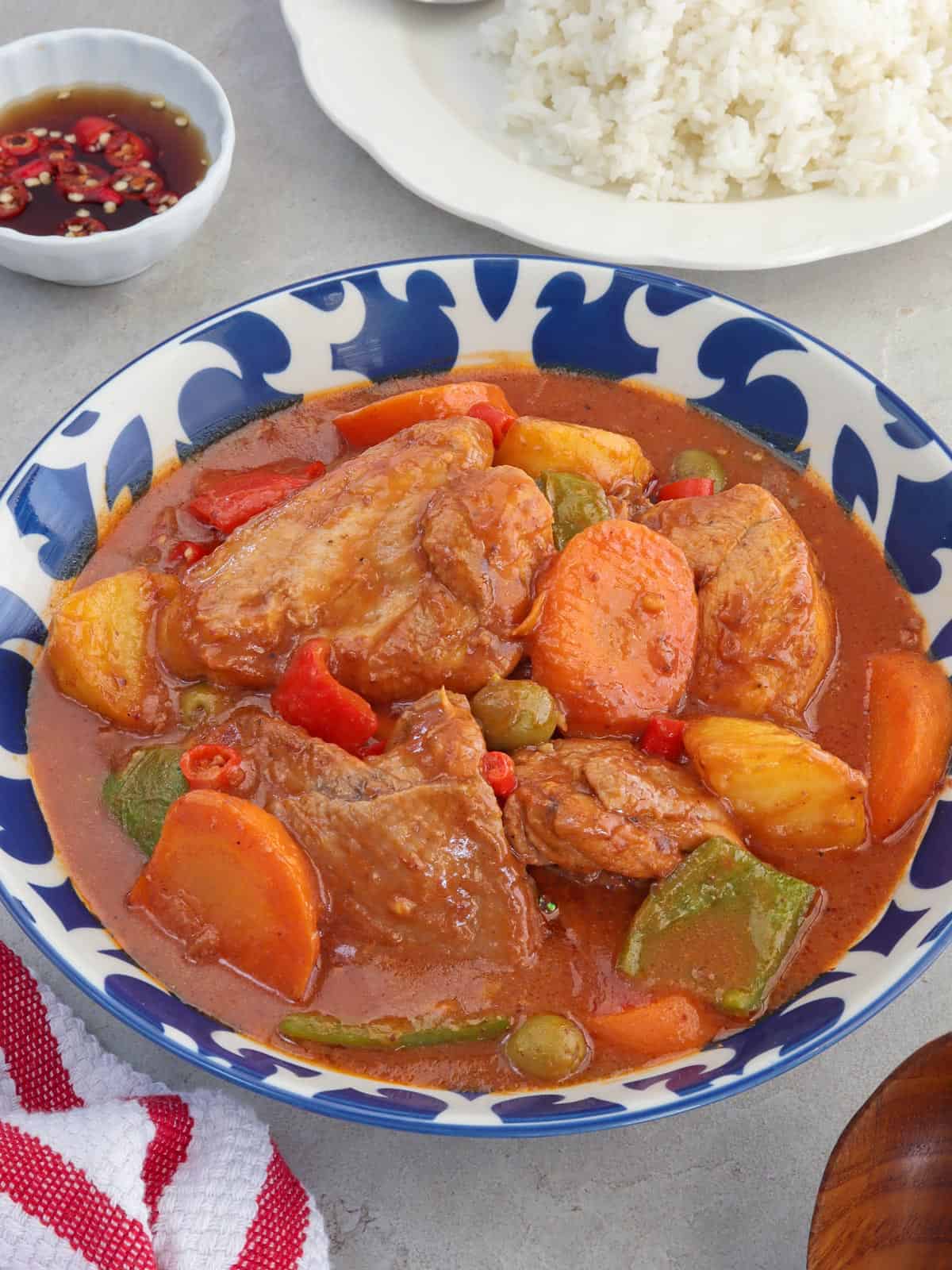
Chicken Caldereta
Kalderetang Manok (kal-deh-REH-tah)
Chicken Stew with Liver Sauce
Chicken pieces braised in a rich tomato-liver sauce with potatoes, carrots, bell peppers, olives, and cheese — a hearty Filipino fiesta stew with bold, layered flavors.
Nutrition & Info
Allergen Warnings
Equipment Needed
Presentation Guide
Vessel: deep serving bowl
Garnishes: grated cheese, bell pepper strips
Accompaniments: steamed rice, pan de sal bread
Instructions
-
1
Heat oil in a heavy pot. Brown chicken pieces on all sides. Remove and set aside.
-
2
Sauté garlic and onion until softened. Add tomato sauce and cook 3 minutes.
-
3
Return chicken, add soy sauce, chicken broth, and bay leaves. Simmer 20 minutes.
-
4
Add potatoes and carrots, cook 10 minutes.
-
5
Stir in liver paste, bell peppers, and olives. Simmer 5 more minutes.
-
6
Stir in grated cheese until melted into the sauce. Season with salt and pepper. Serve over rice.
Did You Know?
The addition of cheese and liver spread to caldereta is a uniquely Filipino innovation — no Spanish caldereta uses these ingredients, making it a true Filipino original.
Chef's Notes
Equipment Tips
- heavy pot
- wooden spoon
Garnishing
grated cheese, bell pepper strips
Accompaniments
steamed rice, pan de sal bread
The Story Behind Chicken Caldereta
Caldereta takes its name from the Spanish "caldereta," a stew originally made in a "caldero" (cauldron). Filipino cooks transformed the Spanish original beyond recognition by adding liver paste for richness and cheese for creaminess — ingredients that would be unthinkable in the Spanish version. This creative adaptation is emblematic of Filipino culinary ingenuity, turning colonial recipes into entirely new dishes.
More Filipino Dishes
 Easy
📜 Story
Easy
📜 Story
Adobong Manok
Chicken Adobo
Any meal, year-round (the everyday Filipino dish)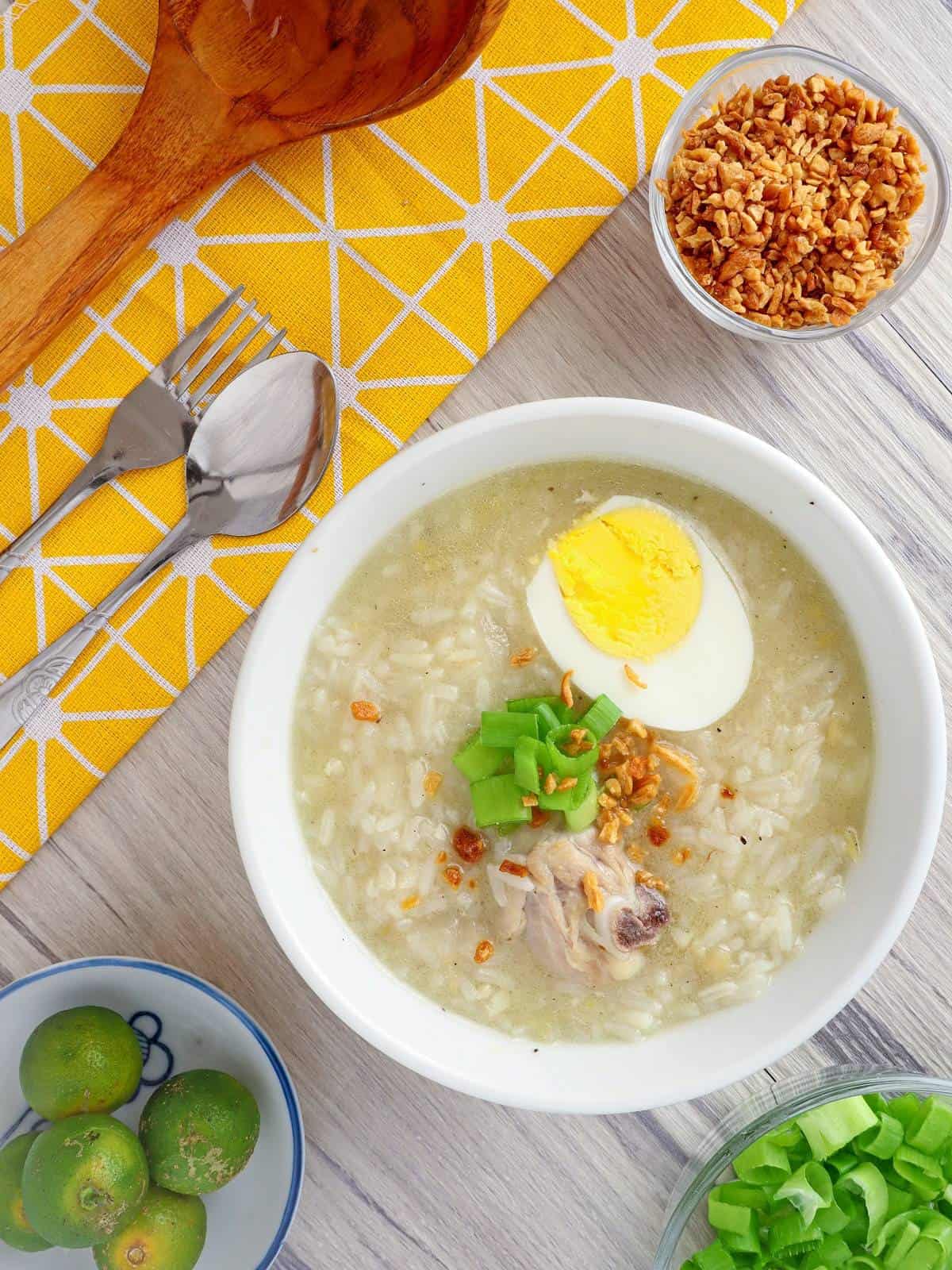 Easy
📜 Story
Easy
📜 Story
Arroz Caldo
Filipino Chicken Rice Porridge
Breakfast, rainy days, when feeling unwell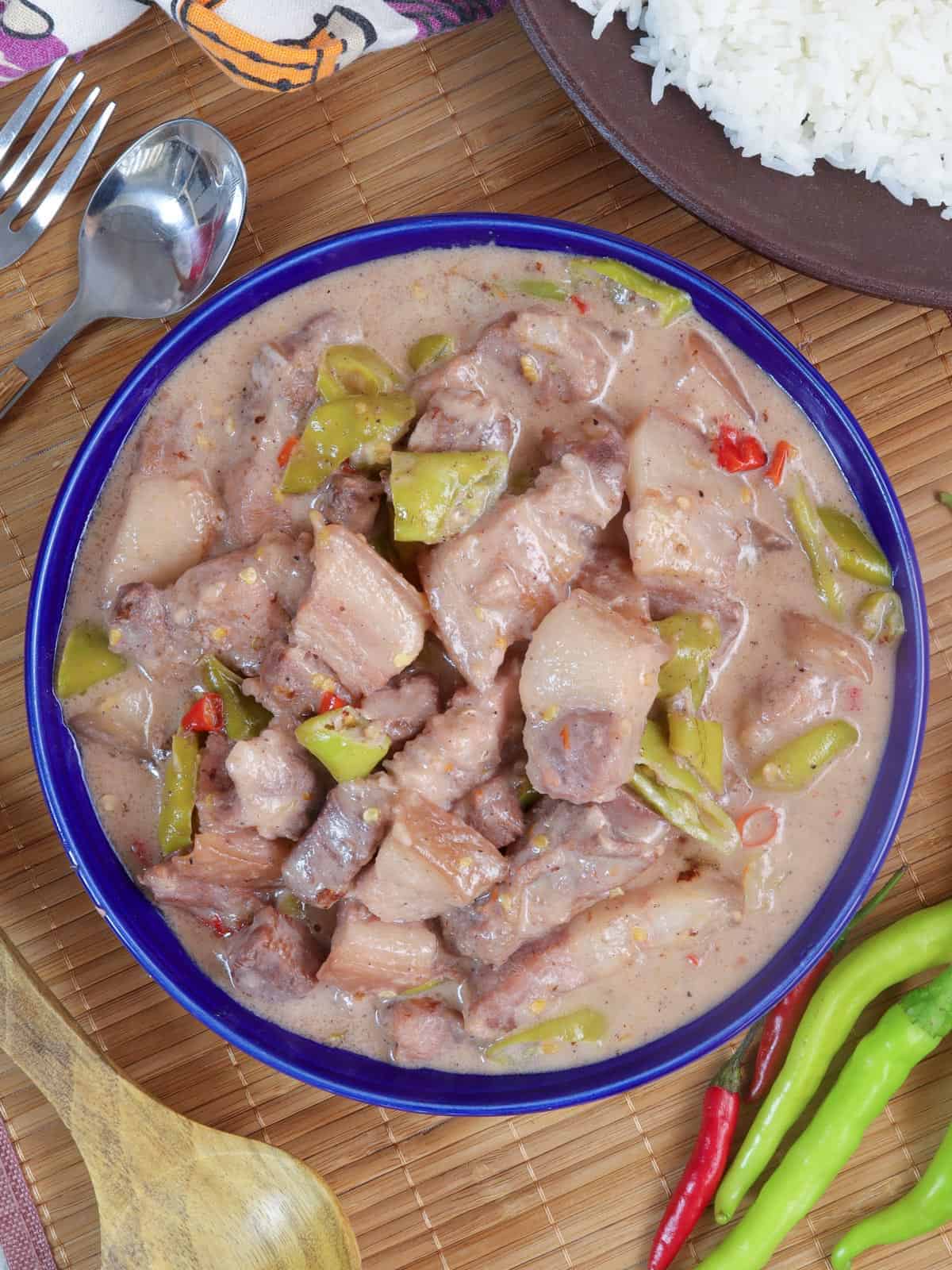 Easy
📜 Story
Easy
📜 Story
Bicol Express
Spicy Coconut Cream Stew
Lunch or dinner with lots of rice Easy
📜 Story
Easy
📜 Story
Bistek Tagalog
Filipino Beef Steak
Lunch or dinner with steamed rice
Comments (0)
Log in to leave a comment.
No comments yet. Be the first to share your thoughts!