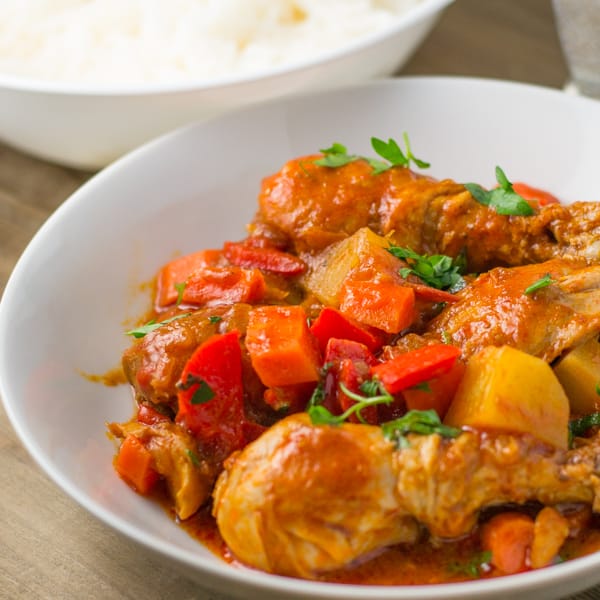
Chicken Afritada
Afritadang Manok (ah-free-TAH-dah)
Chicken in Tomato Sauce
Tender chicken pieces braised in a rich tomato sauce with potatoes, carrots, bell peppers, and green peas — a Spanish-influenced Filipino home-cooking classic.
Nutrition & Info
Allergen Warnings
Equipment Needed
Presentation Guide
Vessel: deep serving dish
Garnishes: bell pepper strips, bay leaves
Accompaniments: steamed rice
Instructions
-
1
Heat oil in a heavy pot. Brown chicken pieces on all sides, about 8 minutes. Remove and set aside.
-
2
Sauté garlic and onion until softened. Add tomato sauce and cook 3 minutes.
-
3
Return chicken to the pot, add soy sauce, chicken broth, and bay leaves. Simmer 20 minutes.
-
4
Add potatoes and carrots, cook 10 minutes until vegetables begin to soften.
-
5
Add bell peppers and green peas, cook 5 more minutes until everything is tender.
-
6
Season with salt and pepper. Serve hot over steamed rice.
Did You Know?
Afritada comes from the Spanish word "fritada," but the Filipino version is entirely different from any Spanish dish — it is a purely Filipino creation inspired by Spanish cooking techniques.
Chef's Notes
Equipment Tips
- heavy pot or Dutch oven
- wooden spoon
Garnishing
bell pepper strips, bay leaves
Accompaniments
steamed rice
The Story Behind Chicken Afritada
Afritada is one of several Filipino dishes born from the fusion of Spanish colonial cooking methods with indigenous Filipino ingredients and tastes. During over 300 years of Spanish rule, Filipino cooks working in colonial households adapted European braising and stewing techniques, substituting local ingredients and adjusting flavors to Filipino palates. The tomato-based sauce reflects the Spanish influence, while the combination with soy sauce and rice is distinctly Filipino.
More Filipino Dishes
 Easy
📜 Story
Easy
📜 Story
Adobong Manok
Chicken Adobo
Any meal, year-round (the everyday Filipino dish)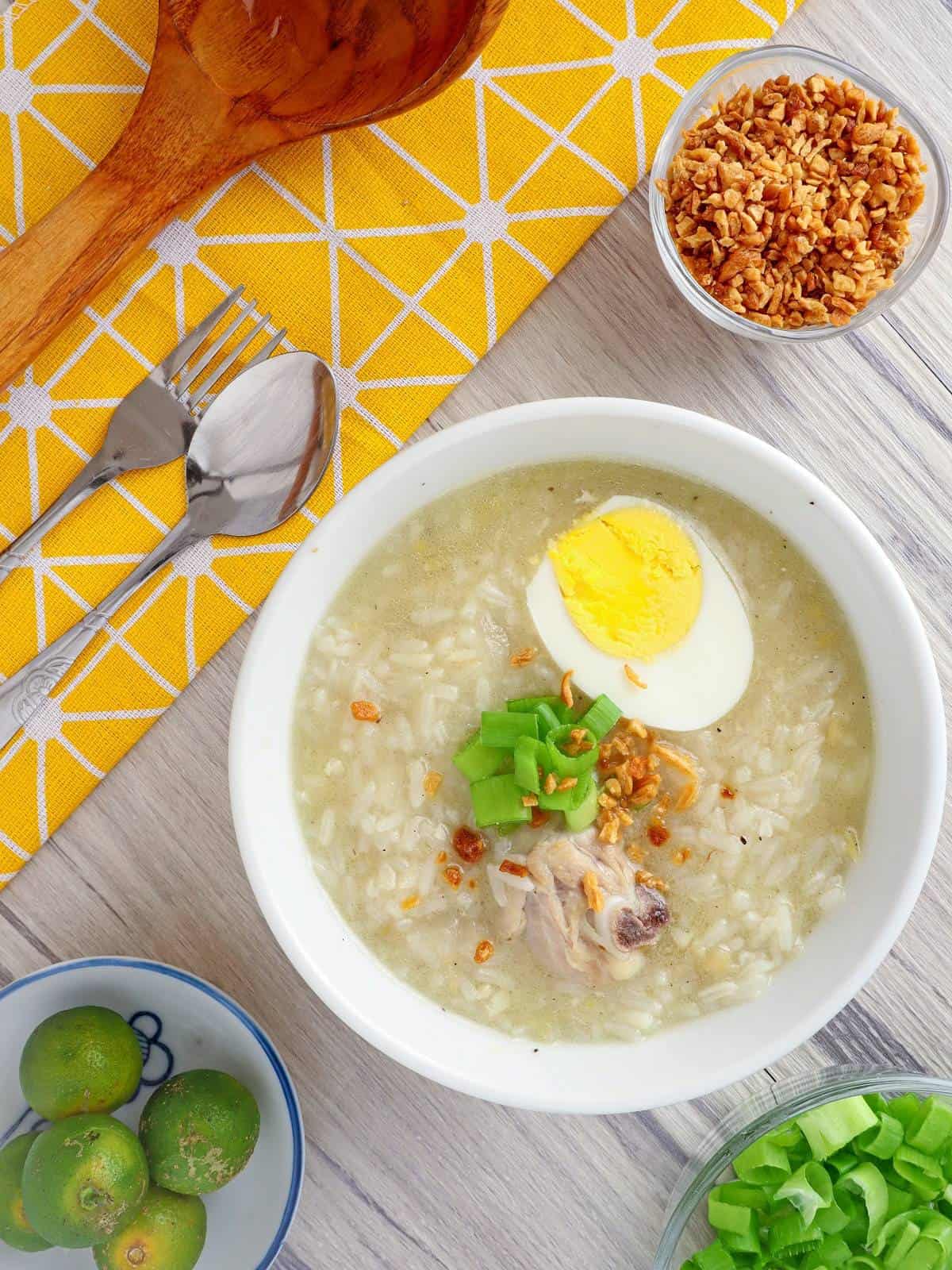 Easy
📜 Story
Easy
📜 Story
Arroz Caldo
Filipino Chicken Rice Porridge
Breakfast, rainy days, when feeling unwell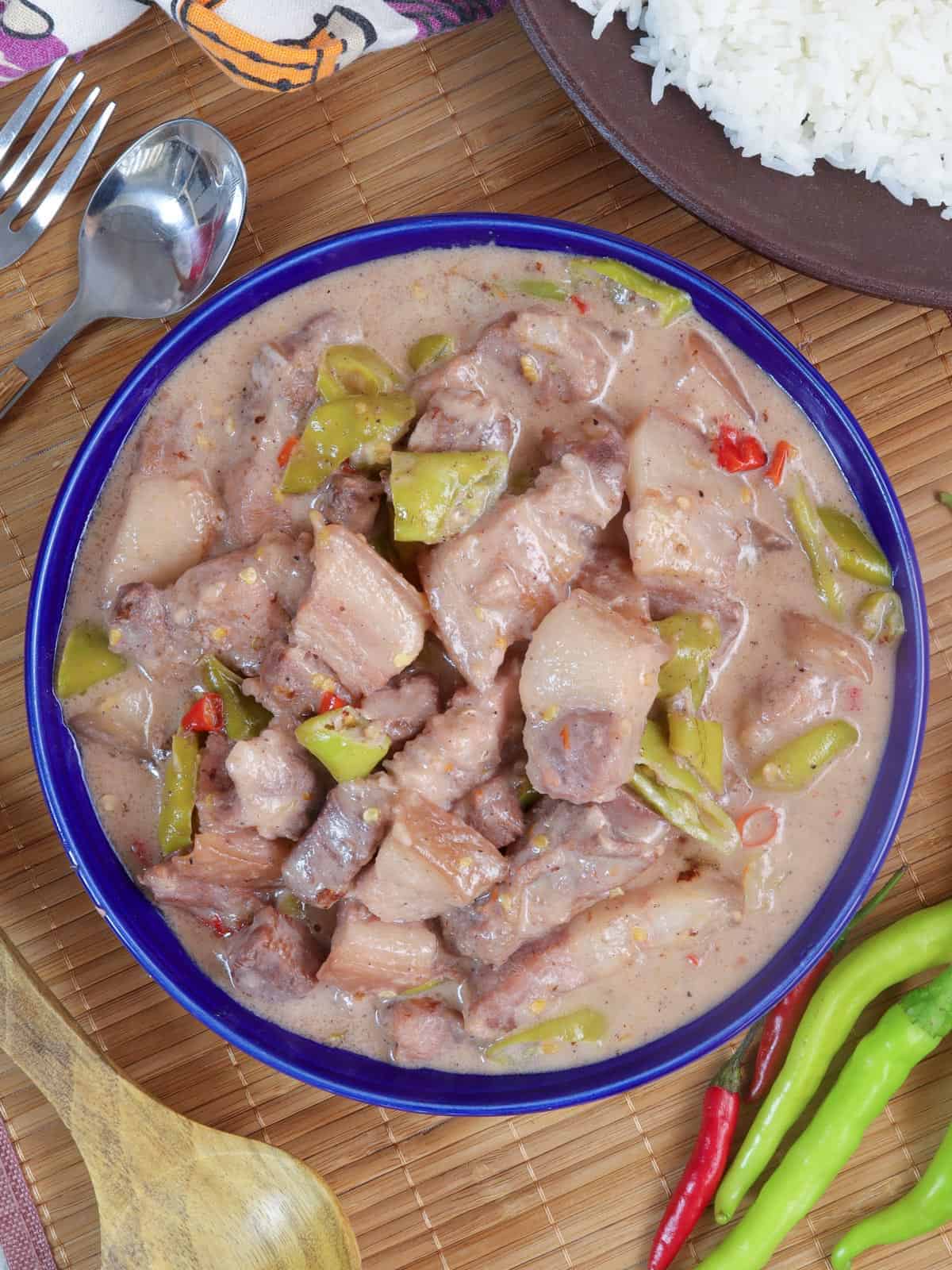 Easy
📜 Story
Easy
📜 Story
Bicol Express
Spicy Coconut Cream Stew
Lunch or dinner with lots of rice Easy
📜 Story
Easy
📜 Story
Bistek Tagalog
Filipino Beef Steak
Lunch or dinner with steamed rice
Comments (0)
Log in to leave a comment.
No comments yet. Be the first to share your thoughts!