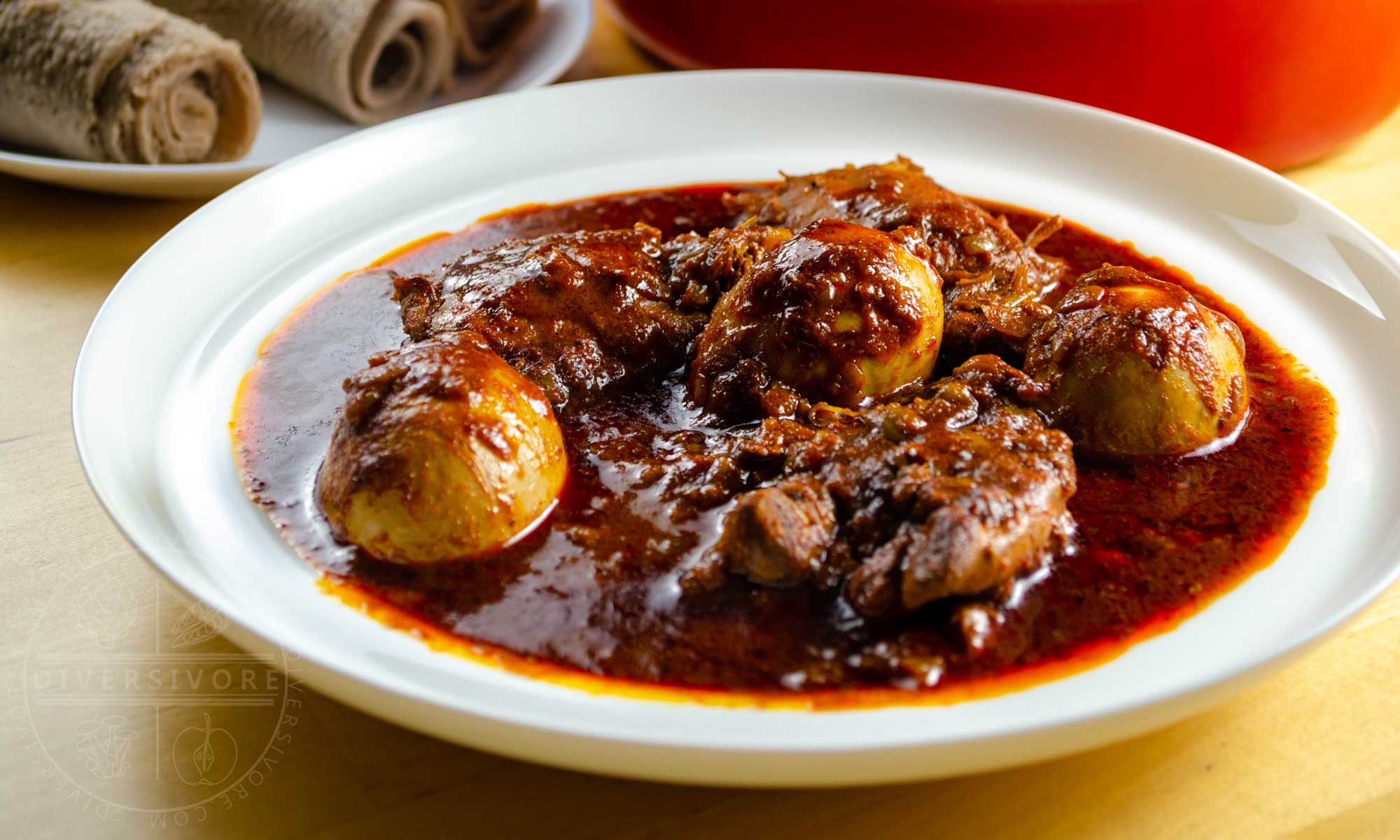
Ethiopia's celebratory chicken stew — chicken legs simmered in a deep-red berbere-spiced sauce with boiled eggs, served on tangy injera. The layers of spice build into a warm, complex heat.
Nutrition & Info
Allergen Warnings
Equipment Needed
Presentation Guide
Vessel: large round mesob tray with injera
Garnishes: hard-boiled eggs, fresh herbs
Accompaniments: injera, cottage cheese (ayib)
Instructions
-
1
Score the chicken pieces with a knife and rub with lemon juice and salt. Let marinate for thirty minutes. This step removes any gamey flavour and allows the berbere spices to penetrate deeply into the meat during the long braising process.
-
2
Place the finely diced onions in a large dry heavy pot over medium heat. Cook without any oil for fifteen to twenty minutes, stirring constantly, until the onions are completely dry, shrunken, and deeply browned. This slow, dry caramelization is the foundation of the wat.
-
3
Add the niter kibbeh to the browned onions and stir until melted. Add the berbere spice blend and cook for five minutes, stirring constantly, until the spice mixture darkens and the oil begins to separate at the edges, indicating the spices are fully toasted.
-
4
Stir in the tomato paste, garlic, ginger, and cardamom. Cook for five minutes until the paste turns very dark and concentrated. Add the cup of water and stir to create a smooth, thick sauce with a rich, deep red-brown colour.
-
5
Nestle the marinated chicken pieces into the sauce, spooning the sauce over each piece to coat completely. Cover the pot tightly and simmer over very low heat for forty-five minutes, turning the chicken once, until the meat is tender and pulls from the bone.
-
6
Score each peeled hard-boiled egg with four shallow cuts lengthwise. Add the eggs to the stew during the last fifteen minutes of cooking, nestling them between the chicken pieces and spooning sauce over them so they absorb colour and flavour.
-
7
Taste the sauce and adjust seasoning with salt. The finished doro wat should have a thick, complex sauce clinging to the chicken with no excess liquid. Serve on a large platter of injera with the eggs arranged around the chicken pieces.
Did You Know?
Doro wat is reserved for special occasions and holidays. Tradition says each person should receive exactly one chicken leg and one egg.
Chef's Notes
Equipment Tips
- large heavy pot
- wooden spoon
- sharp knife
Garnishing
hard-boiled eggs, fresh herbs
Accompaniments
injera, cottage cheese (ayib)
The Story Behind Doro Wat
Doro wat's origins are intertwined with the Ethiopian Orthodox Church. The Christianization of Ethiopia in the 4th century under King Ezana established a religious calendar with extensive fasting periods requiring abstinence from all animal products. On feast days breaking these fasts, particularly Genna (Ethiopian Christmas) and Fasika (Easter), elaborate meat dishes became a grand reward for months of deprivation. Doro wat evolved as the most celebratory of these dishes, its labor-intensive preparation reflecting the significance of the occasion.
Doro wat is widely considered the national dish of Ethiopia and carries deep religious and cultural symbolism. The hard-boiled egg in each serving represents blessings, abundance, and new life, connecting the dish to religious renewal after fasting. Preparing doro wat is an act of devotion: the onions alone require hours of slow cooking without oil or fat until they reach a deep brown paste. The generous use of berbere and niter kibbeh transforms simple chicken into something transcendent. The dish is always eaten communally from a shared injera platter, reinforcing the Ethiopian belief that eating together strengthens bonds.
More Ethiopian Dishes
 Easy
📜 Story
Easy
📜 Story
Awaze
Ethiopian Hot Sauce
Served with any meal as condiment Easy
📜 Story
Easy
📜 Story
Ayib
Ethiopian Fresh Cheese
Served as part of beyaynetu platter Easy
📜 Story
Easy
📜 Story
Azifa
Ethiopian Green Lentil Salad
Fasting days, cold appetizer Medium
📜 Story
Medium
📜 Story
Berbere
Ethiopian Signature Spice Blend
Prepared in bulk, used daily
Comments (1)
Log in to leave a comment.
Made this last weekend and my family loved it. Will definitely make again!