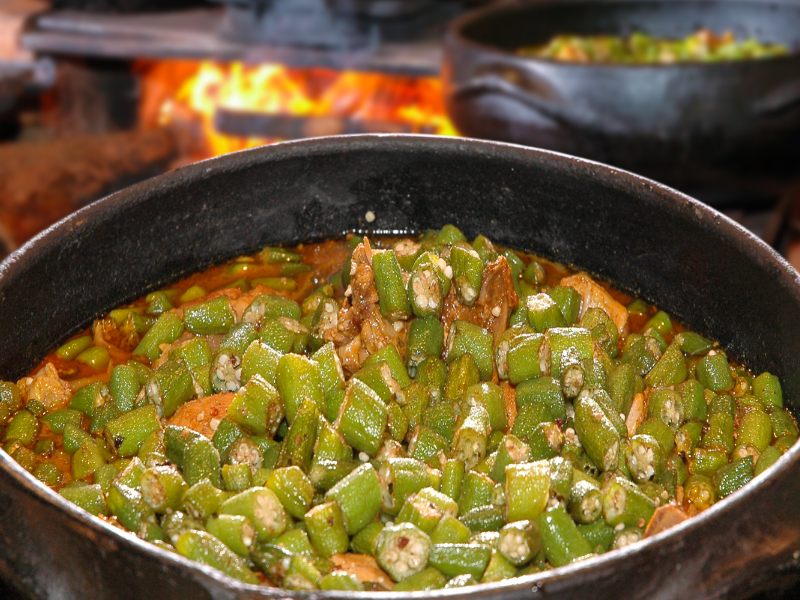
Umbidvo Wetintsanga
Umbidvo Wetintsanga (oom-BID-voh weh-tin-TSAHN-gah)
Pumpkin Leaf Stew
Tender young pumpkin leaves cooked with groundnuts and tomatoes into a rich, earthy stew that is one of the most beloved vegetable dishes in Eswatini.
Nutrition & Info
Allergen Warnings
Equipment Needed
Presentation Guide
Instructions
-
1
Wash pumpkin leaves thoroughly and chop them into small pieces. Remove any tough stems or veins from older leaves.
-
2
Heat oil in a large pot and sauté onion until translucent. Add diced tomatoes and cook until they break down into a sauce.
-
3
Add the chopped pumpkin leaves and one cup of water. Cover and cook for fifteen minutes until leaves are wilted and tender.
-
4
Crush roasted groundnuts using a mortar and pestle until they form a coarse paste. Add to the pot and stir well.
-
5
Simmer uncovered for ten more minutes until the sauce thickens and the groundnut flavor permeates the dish. Season with salt.
Did You Know?
Pumpkin leaves are so valued in Eswatini that families plant pumpkins primarily for the leaves rather than the fruit itself.
Chef's Notes
Equipment Tips
- large pot
- wooden spoon
- mortar and pestle
Garnishing
crushed groundnuts on top
Accompaniments
sishwala, steamed rice
The Story Behind Umbidvo Wetintsanga
Umbidvo wetintsanga is a dish that showcases the Swazi philosophy of using every part of what the land provides. Pumpkin leaves, considered waste in many Western cuisines, are a prized vegetable in Eswatini. The addition of groundnuts provides protein and creates a creamy, satisfying sauce. This dish has sustained rural Swazi communities for centuries, representing the ingenious use of locally available ingredients that defines traditional African cooking.
More Eswatini Dishes
 Easy
📜 Story
Easy
📜 Story
Buganu
Marula Fruit Drink
Marula season ceremony in February Medium
📜 Story
Medium
📜 Story
Chicken Dust
Grilled Roadside Chicken
Lunch or evening street food Medium
📜 Story
Medium
📜 Story
Emakhowe
Wild Mushroom Stew
Rainy season when mushrooms are available Medium
📜 Story
Medium
📜 Story
Emancotsho
Chicken Feet Stew
Lunch or street food snack
Comments (0)
Log in to leave a comment.
No comments yet. Be the first to share your thoughts!