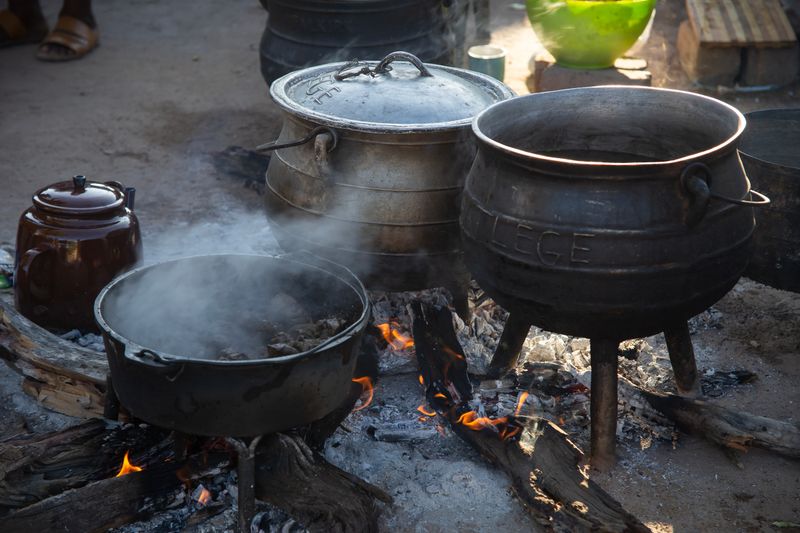
Thick maize porridge cooked down into a rich, smooth stew often served with sour milk or meat relish. The Swazi everyday staple.
Nutrition & Info
Allergen Warnings
Equipment Needed
Presentation Guide
Vessel: deep bowl
Garnishes: none
Accompaniments: sishwala (maize porridge), leafy greens
Instructions
-
1
Season the beef cubes with salt, pepper, cumin, paprika, and coriander. Heat the vegetable oil in a large heavy pot over medium-high heat. Brown the beef in batches for six minutes, turning to sear all sides until a deep caramelized crust forms. Avoid crowding the pot so the meat sears rather than steams.
-
2
Remove the browned beef and reduce heat to medium. Add the diced onion and cook for five minutes until softened. Add the minced garlic and cayenne pepper, stirring for one minute until fragrant. Add the tomato paste and cook for two minutes, stirring constantly, until it darkens and becomes aromatic.
-
3
Add the chopped tomatoes and cook for five minutes until they collapse into a thick sauce. Return the browned beef to the pot along with the beef broth. Stir well, bring to a boil, then reduce heat to low. Cover and simmer gently for one and a half hours until the beef is fork-tender.
-
4
Add the drained chickpeas to the stew and cook for ten minutes to allow them to absorb the flavours of the sauce. The chickpeas add heartiness and protein to the stew while maintaining a pleasant texture contrast to the tender braised beef.
-
5
Add the chopped spinach to the pot, stirring it into the stew. Cook for five minutes until the spinach wilts completely and turns dark green. The spinach adds essential nutrients and a subtle earthy flavour that balances the richness of the braised beef and tomato sauce.
-
6
Taste and adjust the seasoning with salt and pepper. The stew should be thick and rich with tender beef, creamy chickpeas, and wilted spinach in a deeply flavoured tomato sauce. Serve in deep bowls over a generous mound of cooked maize meal, allowing the stew juices to soak into the pap.
Did You Know?
Siphuphe eaten with sour milk (emasi) is considered the most traditional Swazi breakfast.
Chef's Notes
Equipment Tips
- heavy pot
- wooden spoon
Garnishing
none
Accompaniments
sishwala (maize porridge), leafy greens
The Story Behind Siphuphe
The Story: Siphuphe is a traditional Swazi stew of slow-cooked vegetables, beans, and groundnuts, often enriched with dried fish or chicken, served over thick maize porridge. The dish represents the everyday home cooking of rural Eswatini, where available garden vegetables, foraged greens, and stored legumes are combined into a nourishing one-pot meal. Groundnuts (peanuts), introduced from the Americas but long since naturalized in southern Africa, provide protein richness and a creamy texture that distinguishes Swazi stews from those of neighboring cuisines.
On the Calendar: Siphuphe is everyday fare, prepared for the main evening meal throughout the year. The specific vegetables and protein additions vary by season and household resources, making it a flexible and practical dish that adapts to availability.
Then & Now: While the basic preparation remains traditional, modern Swazi cooks have access to a wider variety of vegetables and seasonings. Urban households may simplify the preparation, but rural homesteads maintain the slow-cooking methods and traditional ingredient combinations.
Legacy: Siphuphe embodies the Swazi principle of making the most of what the land provides, a dish of quiet abundance that nourishes families through every season.
More Eswatini Dishes
 Easy
📜 Story
Easy
📜 Story
Buganu
Marula Fruit Drink
Marula season ceremony in February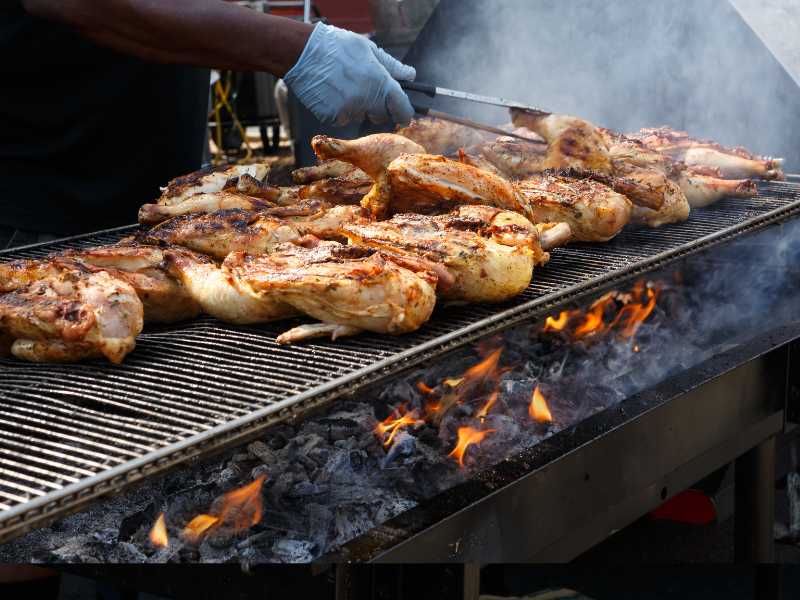 Medium
📜 Story
Medium
📜 Story
Chicken Dust
Grilled Roadside Chicken
Lunch or evening street food Medium
📜 Story
Medium
📜 Story
Emakhowe
Wild Mushroom Stew
Rainy season when mushrooms are available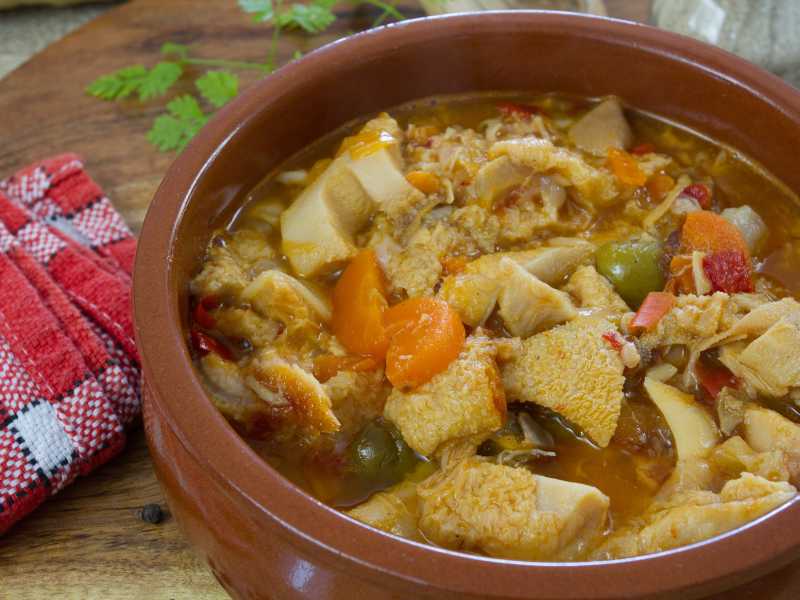 Medium
📜 Story
Medium
📜 Story
Emancotsho
Chicken Feet Stew
Lunch or street food snack
Comments (0)
Log in to leave a comment.
No comments yet. Be the first to share your thoughts!