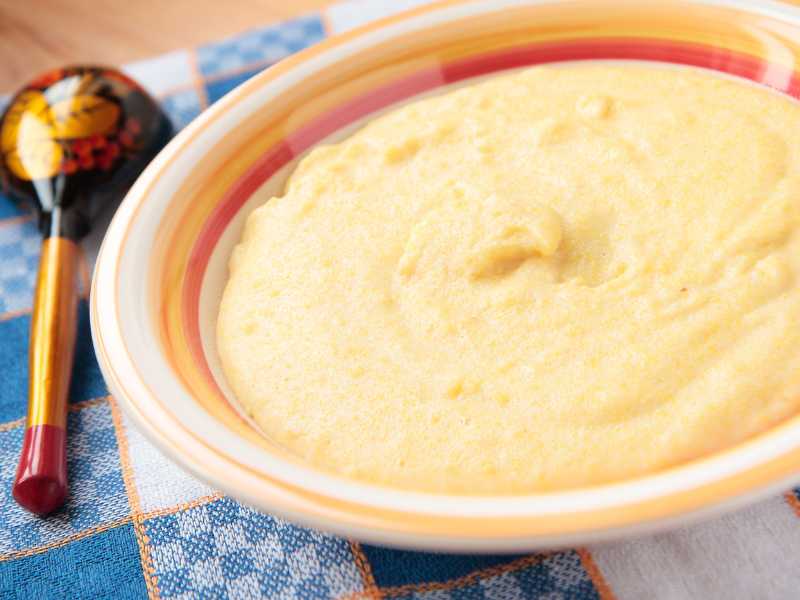
Emasi with Phuthu
Emasi ne Phuthu (eh-MAH-see neh POO-too)
Sour Milk with Crumbly Pap
Crumbly dry maize pap served with thick sour milk poured over the top, a traditional pairing that is the quintessential Swazi comfort meal.
Nutrition & Info
Allergen Warnings
Equipment Needed
Presentation Guide
Vessel: deep bowl
Garnishes: none traditionally
Accompaniments: eaten as a complete meal
Instructions
-
1
Bring water to a boil in a pot. Add salt and reduce heat to medium-low.
-
2
Add maize meal all at once and immediately begin stirring with a wooden spoon or fork to create a crumbly texture.
-
3
Unlike smooth porridge, phuthu should be dry and granular. Cook for fifteen minutes, breaking up any clumps constantly.
-
4
The phuthu is ready when each grain is cooked through but the overall texture remains loose and crumbly like couscous.
-
5
Spoon phuthu into bowls and pour generous amounts of cold sour milk over the top. Eat by mixing each spoonful together.
Did You Know?
In Eswatini, the quality of a homestead's amasi is a source of pride, and families compete informally over who produces the best sour milk.
Chef's Notes
Equipment Tips
- pot
- wooden spoon
- serving bowl
Garnishing
none traditionally
Accompaniments
eaten as a complete meal
The Story Behind Emasi with Phuthu
Emasi with phuthu is perhaps the most iconic food pairing in Swazi culture, combining the two pillars of traditional life: cattle herding and maize farming. The crumbly texture of phuthu is intentionally different from smooth sishwala porridge, designed specifically to absorb the tangy sour milk. This dish has been eaten daily in Swazi homesteads for generations and remains a powerful symbol of cultural identity, especially among communities that maintain traditional cattle-keeping practices.
More Eswatini Dishes
 Easy
📜 Story
Easy
📜 Story
Buganu
Marula Fruit Drink
Marula season ceremony in February Medium
📜 Story
Medium
📜 Story
Chicken Dust
Grilled Roadside Chicken
Lunch or evening street food Medium
📜 Story
Medium
📜 Story
Emakhowe
Wild Mushroom Stew
Rainy season when mushrooms are available Medium
📜 Story
Medium
📜 Story
Emancotsho
Chicken Feet Stew
Lunch or street food snack
Comments (0)
Log in to leave a comment.
No comments yet. Be the first to share your thoughts!