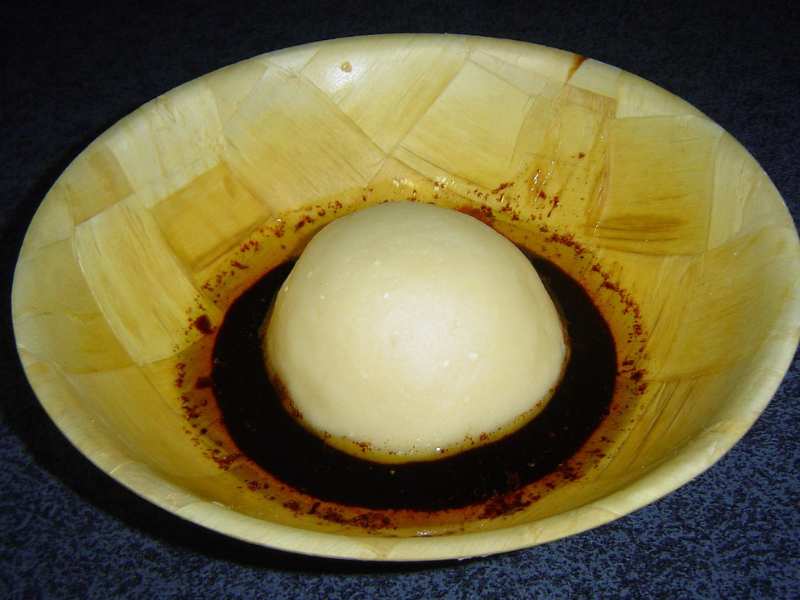
Emasi Emabele
Emasi Emabele (eh-MAH-see eh-mah-BEH-leh)
Sour Milk with Sorghum
A traditional Swazi dish of thick cultured sour milk mixed with cooked sorghum grain, combining tangy dairy with nutty whole grain for a hearty meal.
Nutrition & Info
Allergen Warnings
Equipment Needed
Presentation Guide
Vessel: traditional clay pot or bowl
Garnishes: none
Accompaniments: fresh fruit
Instructions
-
1
Rinse sorghum grain thoroughly under running water. Soak in cold water for one hour to soften.
-
2
Drain sorghum and place in a pot with four cups of fresh water. Bring to a boil over high heat.
-
3
Reduce heat to low, cover, and simmer for forty-five minutes until the sorghum is tender but still has a slight bite.
-
4
Drain any excess water and let the cooked sorghum cool to room temperature. Transfer to a large serving bowl.
-
5
Pour thick sour milk generously over the sorghum and stir gently to combine. Serve immediately at room temperature.
Did You Know?
Emasi is so culturally important in Eswatini that it is used in royal ceremonies and is considered a food fit for the king.
Chef's Notes
Equipment Tips
- large pot
- wooden spoon
- clay bowl
Garnishing
none
Accompaniments
fresh fruit
The Story Behind Emasi Emabele
Emasi emabele represents the intersection of Eswatini's pastoral and agricultural traditions. The Swazi people have long been cattle keepers, and sour milk holds deep cultural significance as a symbol of wealth and nourishment. Combined with sorghum, one of Africa's oldest cultivated grains, this dish connects modern Swazi families to their ancient roots. It remains a daily staple in rural homesteads where cattle herding continues.
More Eswatini Dishes
 Easy
📜 Story
Easy
📜 Story
Buganu
Marula Fruit Drink
Marula season ceremony in February Medium
📜 Story
Medium
📜 Story
Chicken Dust
Grilled Roadside Chicken
Lunch or evening street food Medium
📜 Story
Medium
📜 Story
Emakhowe
Wild Mushroom Stew
Rainy season when mushrooms are available Medium
📜 Story
Medium
📜 Story
Emancotsho
Chicken Feet Stew
Lunch or street food snack
Comments (0)
Log in to leave a comment.
No comments yet. Be the first to share your thoughts!