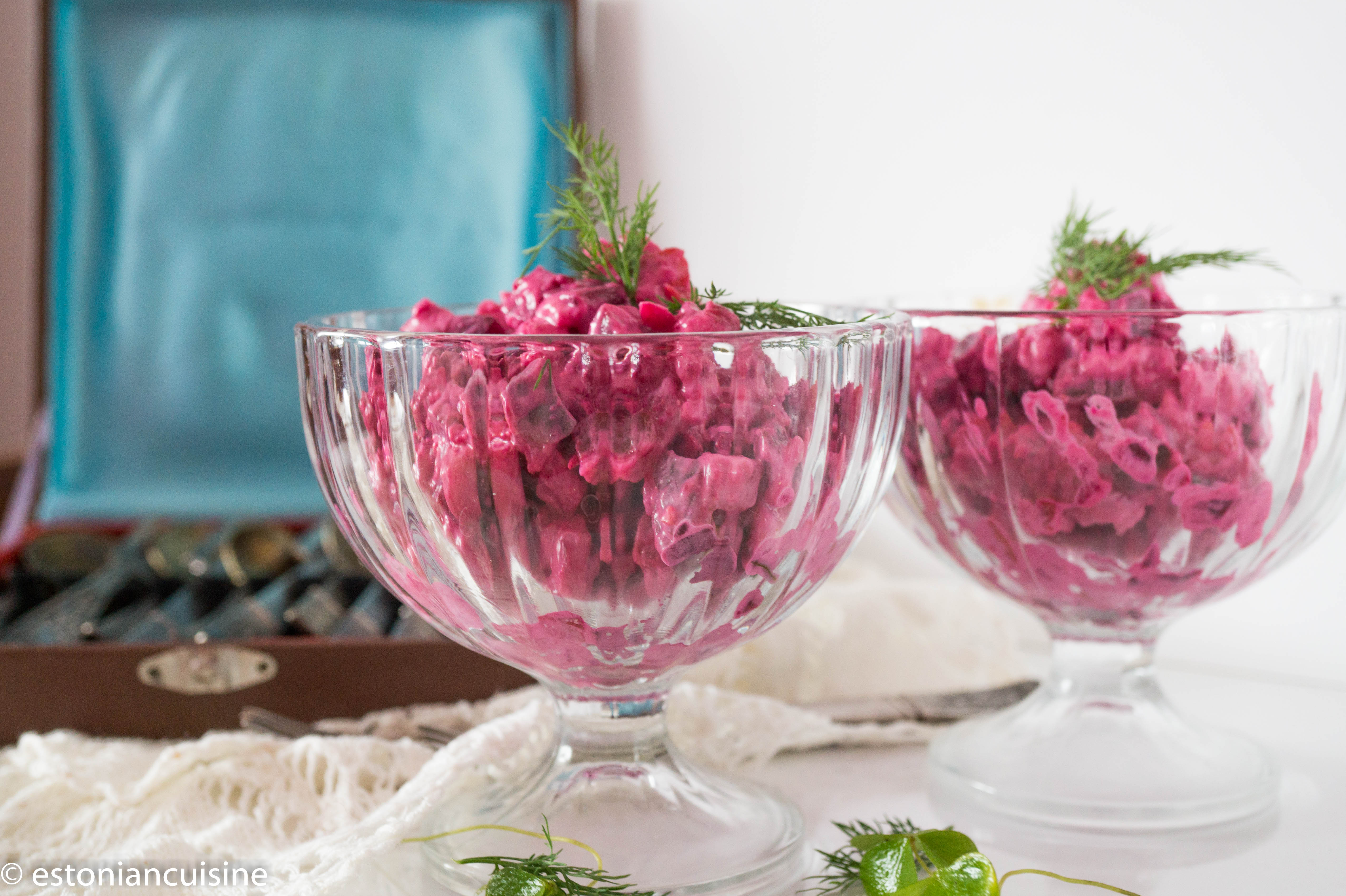
A vibrant pink Estonian salad of diced beets, potatoes, pickled herring, and eggs bound in a rosy sour cream dressing — a Christmas table essential.
Nutrition & Info
Allergen Warnings
Equipment Needed
Presentation Guide
Vessel: large oval platter
Garnishes: sieved egg yolk, fresh dill, herring pieces
Accompaniments: dark rye bread
Instructions
-
1
Dice beets, potatoes, herring, pickled cucumbers, and apple into small uniform cubes.
-
2
Dice hard-boiled eggs, reserving some yolk for garnish.
-
3
Combine all diced ingredients and onion in a large bowl.
-
4
Whisk sour cream, mayonnaise, mustard, salt, and pepper. Some of the beet juice will turn the dressing pink.
-
5
Pour dressing over salad and fold gently. Refrigerate at least 2 hours to let flavors meld.
-
6
Garnish with sieved egg yolk and serve cold.
Did You Know?
The striking pink color of rosolje comes entirely from the beets bleeding into the sour cream dressing — no artificial coloring needed.
Chef's Notes
Equipment Tips
- large pot
- mixing bowl
- sharp knife
Garnishing
sieved egg yolk, fresh dill, herring pieces
Accompaniments
dark rye bread
The Story Behind Rosolje
Rosolje came to Estonia through Russian and German Baltic culinary influence in the 19th century, evolving from the Russian vinaigrette salad tradition. The addition of pickled herring gives it a distinctly Baltic character. It became an indispensable part of the Estonian Christmas table, where its vibrant pink hue provides a festive pop of color alongside the darker meats and breads. Every Estonian family has their own recipe variation, and the salad is considered incomplete without quality pickled herring.




Comments (0)
Log in to leave a comment.
No comments yet. Be the first to share your thoughts!