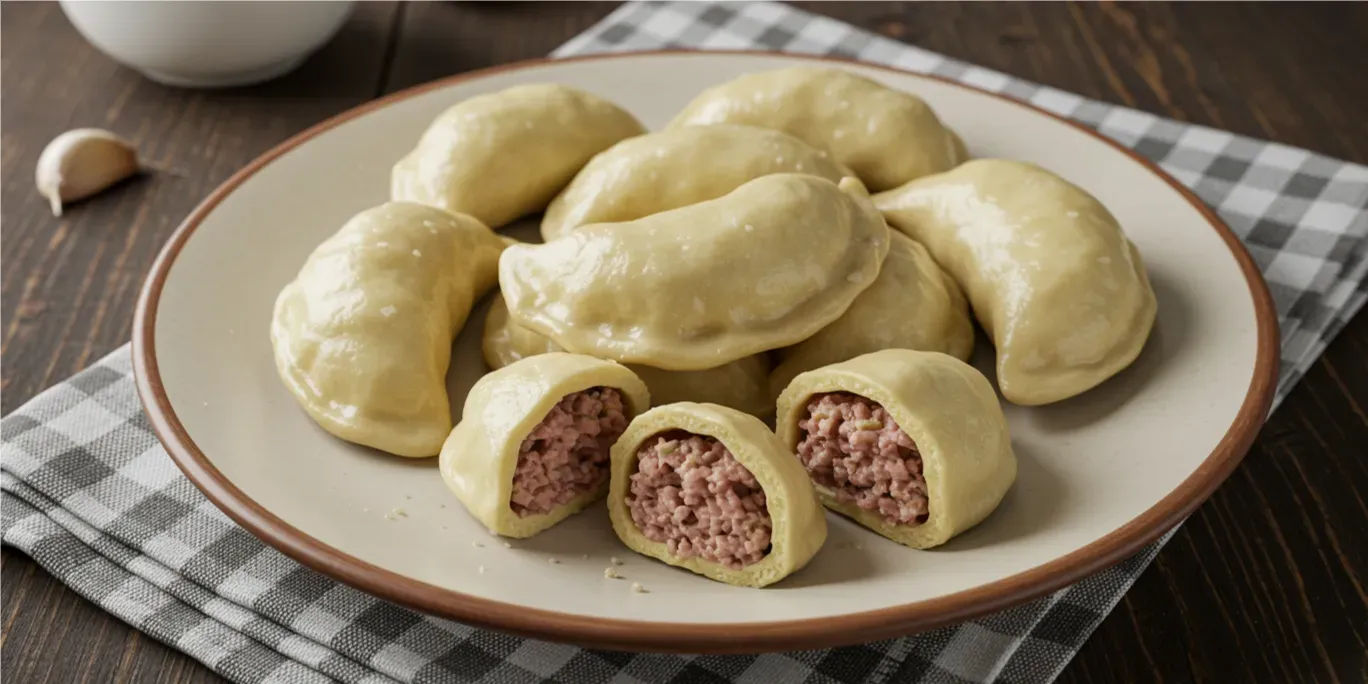
Small, plump Estonian dumplings filled with seasoned beef and onion, boiled until tender and served with sour cream and butter.
Nutrition & Info
Allergen Warnings
Equipment Needed
Presentation Guide
Vessel: deep plate
Garnishes: butter pat, sour cream, fresh dill
Accompaniments: pickled cucumbers
Instructions
-
1
Make dough: mix flour and salt, add egg and water, knead until smooth and elastic. Rest 30 min covered.
-
2
Make filling: combine ground beef, grated onion, garlic, salt, and pepper.
-
3
Roll dough very thin (2mm). Cut circles with a round cutter.
-
4
Place a teaspoon of filling on each circle, fold in half, and pinch edges tightly to seal.
-
5
Boil dumplings in salted water for 5-7 min until they float and the dough is tender.
-
6
Serve immediately tossed with butter, topped with sour cream and fresh dill.
Did You Know?
Estonian families traditionally make pelmeenid together as a social activity, producing hundreds of dumplings that are frozen for quick meals throughout winter.
Chef's Notes
Equipment Tips
- rolling pin
- large pot
- cutting board
- round cutter
Garnishing
butter pat, sour cream, fresh dill
Accompaniments
pickled cucumbers
The Story Behind Pelmeenid
Pelmeenid came to Estonia through Russian influence in the 19th century, but Estonians adapted the recipe to their own tastes, often using beef or a combination of meats. The tradition of making large batches and freezing them reflects the practical Estonian approach to winter food preparation. During the Soviet era, factory-made pelmeenid became a staple convenience food, but homemade versions remain cherished for their superior taste and the social ritual of their preparation.




Comments (0)
Log in to leave a comment.
No comments yet. Be the first to share your thoughts!