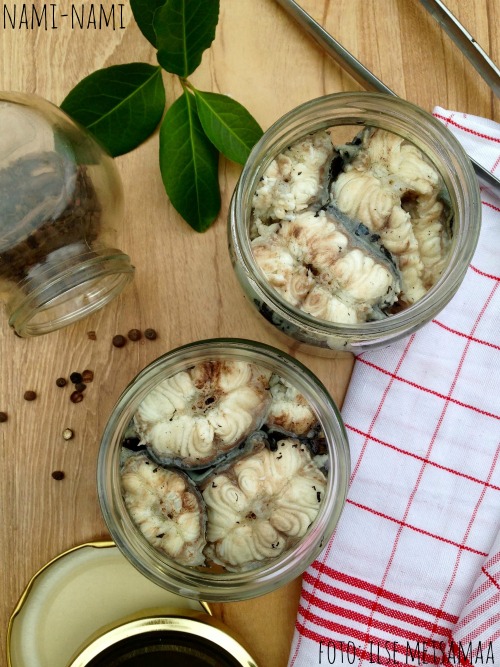
Marineeritud Angerjas
Marineeritud angerjas (MAH-ree-NEE-ree-tud AHN-ger-yahs)
Marinated Eel
Tender chunks of eel marinated in vinegar, bay leaves, and spices, served cold as a prized Estonian delicacy.
Nutrition & Info
Allergen Warnings
Equipment Needed
Presentation Guide
Vessel: glass dish
Garnishes: dill sprigs, onion rings, lemon
Accompaniments: dark rye bread, butter
Instructions
-
1
Bring a pot of salted water to a simmer. Poach eel pieces gently for 8-10 min until firm and cooked through. Remove and cool.
-
2
Make the marinade: combine vinegar, water, sugar, salt, bay leaves, peppercorns, and allspice. Bring to a boil, then cool completely.
-
3
Layer eel pieces, onion rings, carrot slices, and dill in a glass container.
-
4
Pour cooled marinade over the eel, ensuring all pieces are submerged.
-
5
Cover and refrigerate for at least 24 hours, up to 5 days.
-
6
Serve cold with dark rye bread and butter.
Did You Know?
Lake Peipus eel was once so prized that it served as a form of currency in medieval Estonian trade.
Chef's Notes
Equipment Tips
- saucepan
- glass jar or container
- sharp knife
Garnishing
dill sprigs, onion rings, lemon
Accompaniments
dark rye bread, butter
The Story Behind Marineeritud Angerjas
Eel fishing in Estonia's lakes and rivers dates back millennia, with Lake Peipus and Lake Võrtsjärv being the most famous eel habitats. Marinating eel in vinegar and spices was the traditional preservation method, and the resulting delicacy became associated with celebrations and special occasions. Estonian eel preparations reflect the broader Baltic tradition of vinegar-preserved fish, connecting Estonian food culture with Scandinavian and German Baltic culinary heritage.




Comments (0)
Log in to leave a comment.
No comments yet. Be the first to share your thoughts!