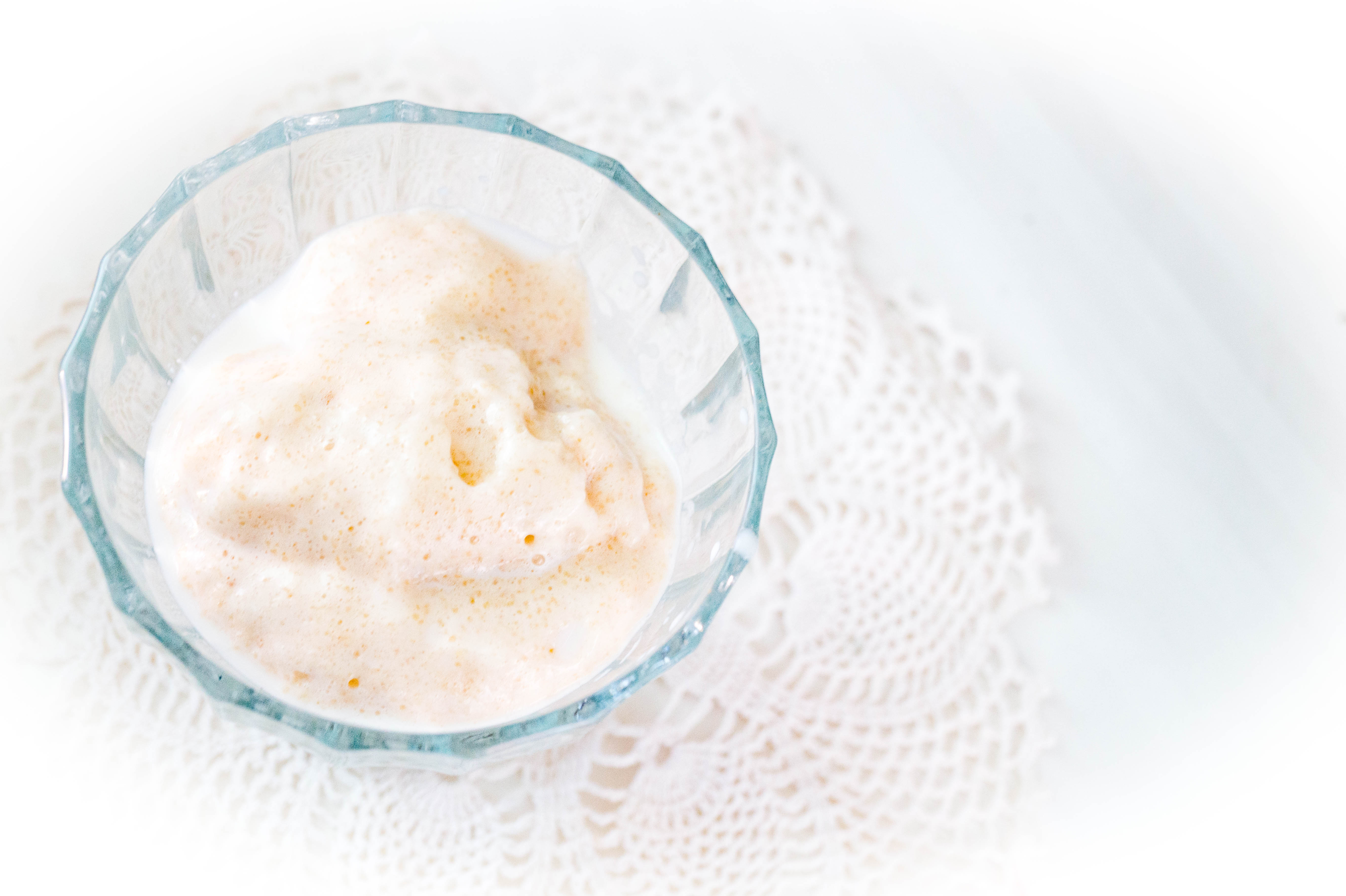
A light, airy Estonian dessert of semolina whisked with berry juice into a fluffy, mousse-like foam — pink, sweet, and cloud-light.
Nutrition & Info
Allergen Warnings
Equipment Needed
Presentation Guide
Vessel: glass dessert bowl
Garnishes: fresh lingonberries, mint leaf
Accompaniments: cold milk
Instructions
-
1
Bring berry juice to a boil in a saucepan.
-
2
Gradually whisk in semolina, stirring constantly to prevent lumps.
-
3
Add sugar and salt. Cook on low heat, stirring, for 5 min until thick like porridge.
-
4
Remove from heat and let cool to lukewarm.
-
5
Beat with an electric mixer on high speed for 8-10 min until the mixture triples in volume and becomes a fluffy, light pink foam.
-
6
Spoon into serving bowls and chill. Serve with cold milk poured around the foam.
Did You Know?
The key to perfect mannavaht is patience during beating — it must triple in volume, transforming from a humble porridge into an impossibly light cloud.
Chef's Notes
Equipment Tips
- saucepan
- electric mixer or stand mixer
- serving bowls
Garnishing
fresh lingonberries, mint leaf
Accompaniments
cold milk
The Story Behind Mannavaht
Mannavaht is a beloved Nordic dessert shared across Estonia, Finland, and Scandinavia. In Estonia, it is most often made with cranberry or lingonberry juice, giving it a beautiful rose-pink color. The magical transformation from thick semolina porridge to airy foam through vigorous beating has delighted Estonian children for generations. It represents the Estonian tradition of creating something extraordinary from the simplest pantry ingredients — just grain, berries, and sugar.




Comments (0)
Log in to leave a comment.
No comments yet. Be the first to share your thoughts!