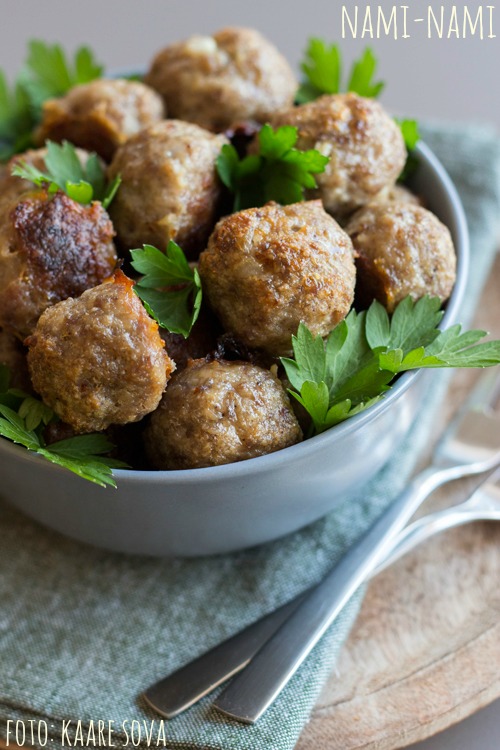
Tender Estonian beef meatballs in a creamy gravy, flavored with allspice and served over mashed potatoes — hearty home cooking.
Nutrition & Info
Allergen Warnings
Equipment Needed
Presentation Guide
Vessel: deep plate
Garnishes: fresh parsley, lingonberry jam
Accompaniments: mashed potatoes, pickled cucumbers
Instructions
-
1
Soak breadcrumbs in milk for 5 min.
-
2
Mix ground beef, egg, soaked breadcrumbs, grated onion, allspice, salt, and pepper. Shape into walnut-sized balls.
-
3
Brown meatballs in butter in a skillet on all sides, about 8 min. Remove and set aside.
-
4
In the same skillet, sprinkle flour over the drippings. Cook 1 min, stirring.
-
5
Gradually whisk in beef broth and cream. Simmer until thickened.
-
6
Return meatballs to the gravy, simmer 15 min until cooked through. Serve over mashed potatoes with lingonberry jam.
Did You Know?
The Estonian school lunch program has served lihapallid with gravy since the 1960s, making it one of the most nostalgic dishes for every Estonian generation.
Chef's Notes
Equipment Tips
- mixing bowl
- large skillet
- saucepan
Garnishing
fresh parsley, lingonberry jam
Accompaniments
mashed potatoes, pickled cucumbers
The Story Behind Lihapallid
Estonian meatballs reflect the Scandinavian and German Baltic culinary influence that shaped Estonian home cooking. The use of allspice is distinctly Nordic, and the cream gravy connects to Estonia's dairy-rich food culture. Lihapallid became a cornerstone of Estonian institutional cooking — served in schools, military canteens, and hospitals — making them perhaps the most universally shared food memory among Estonians. The combination with lingonberry jam follows the Nordic tradition of pairing meat with tart berry preserves.




Comments (0)
Log in to leave a comment.
No comments yet. Be the first to share your thoughts!