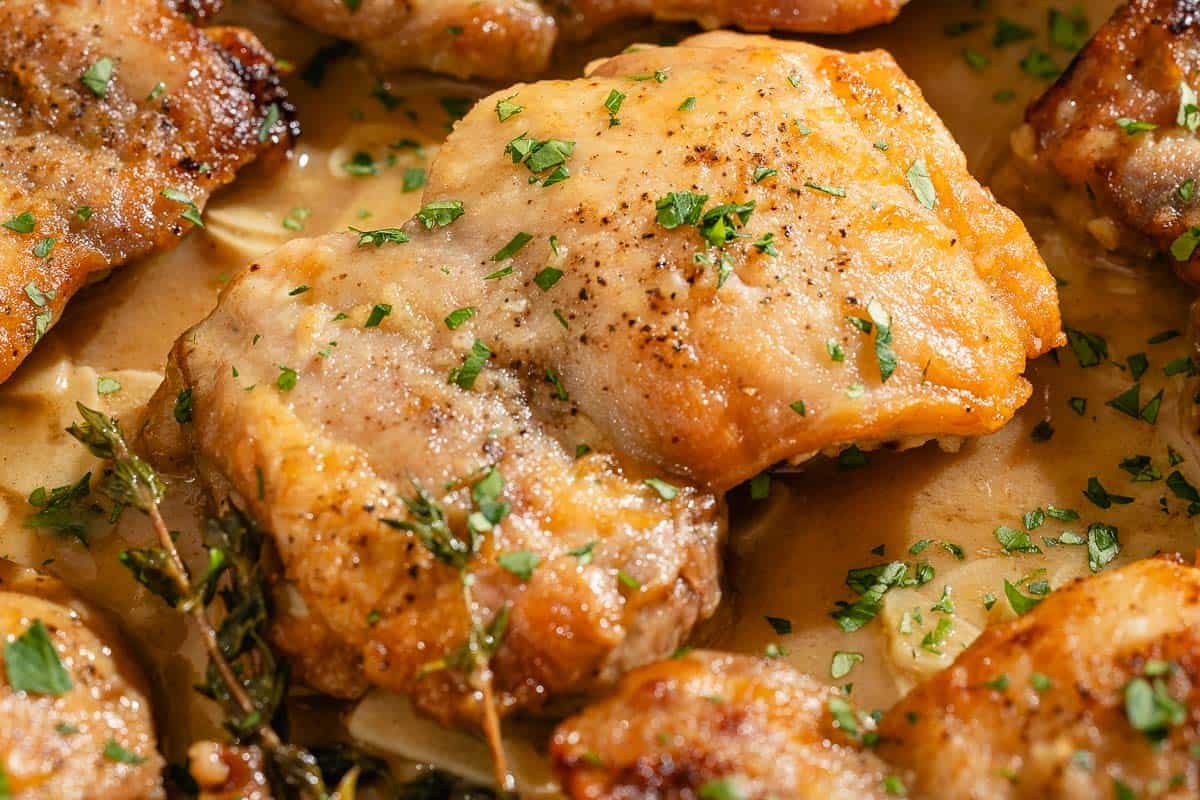
Pollo al Ajillo
Pollo al Ajillo (POH-yoh ahl ah-HEE-yoh)
Garlic Chicken Equatorial Style
Chicken pieces braised with an extravagant amount of garlic, lime, and a touch of scotch bonnet heat. The garlic softens into sweet, mellow cloves while the sauce reduces to a glossy, intensely flavored coating.
Nutrition & Info
Equipment Needed
Instructions
-
1
Season the chicken pieces with salt, pepper, paprika, cumin, and half the lime juice. Marinate for twenty minutes.
-
2
Heat olive oil in a large skillet over medium-high heat. Brown the chicken pieces on all sides, about ten minutes total. Remove and set aside.
-
3
Reduce heat to medium. Add the sliced and whole garlic cloves to the pan and cook for three minutes until fragrant and just beginning to turn golden.
-
4
Return the chicken to the pan, add the whole scotch bonnet pepper and chicken broth. Cover and braise on low heat for thirty minutes until the chicken is cooked through and tender.
-
5
Remove the lid, increase heat to medium, and cook for five more minutes to reduce the sauce to a glossy coating. Add the remaining lime juice.
-
6
Remove the scotch bonnet, garnish with parsley, and serve with coconut rice or fried plantains.
Did You Know?
The Spanish Pollo al Ajillo traditionally uses white wine, but the Equatorial Guinean version substitutes lime juice, creating a brighter, more tropical flavor profile.
Chef's Notes
Equipment Tips
- large skillet with lid
- tongs
- sharp knife
The Story Behind Pollo al Ajillo
Pollo al Ajillo is one of the most recognizable Spanish dishes adapted by Equatorial Guinean cooks. The original recipe traveled from Spain to its only African colony, where it underwent a transformation. The addition of scotch bonnet peppers and lime juice in place of white wine reflects the local ingredient landscape, while the generous use of garlic remains faithful to the Spanish original. This dish represents the colonial culinary exchange that makes Equatorial Guinean cuisine unique in Africa.


Comments (0)
Log in to leave a comment.
No comments yet. Be the first to share your thoughts!