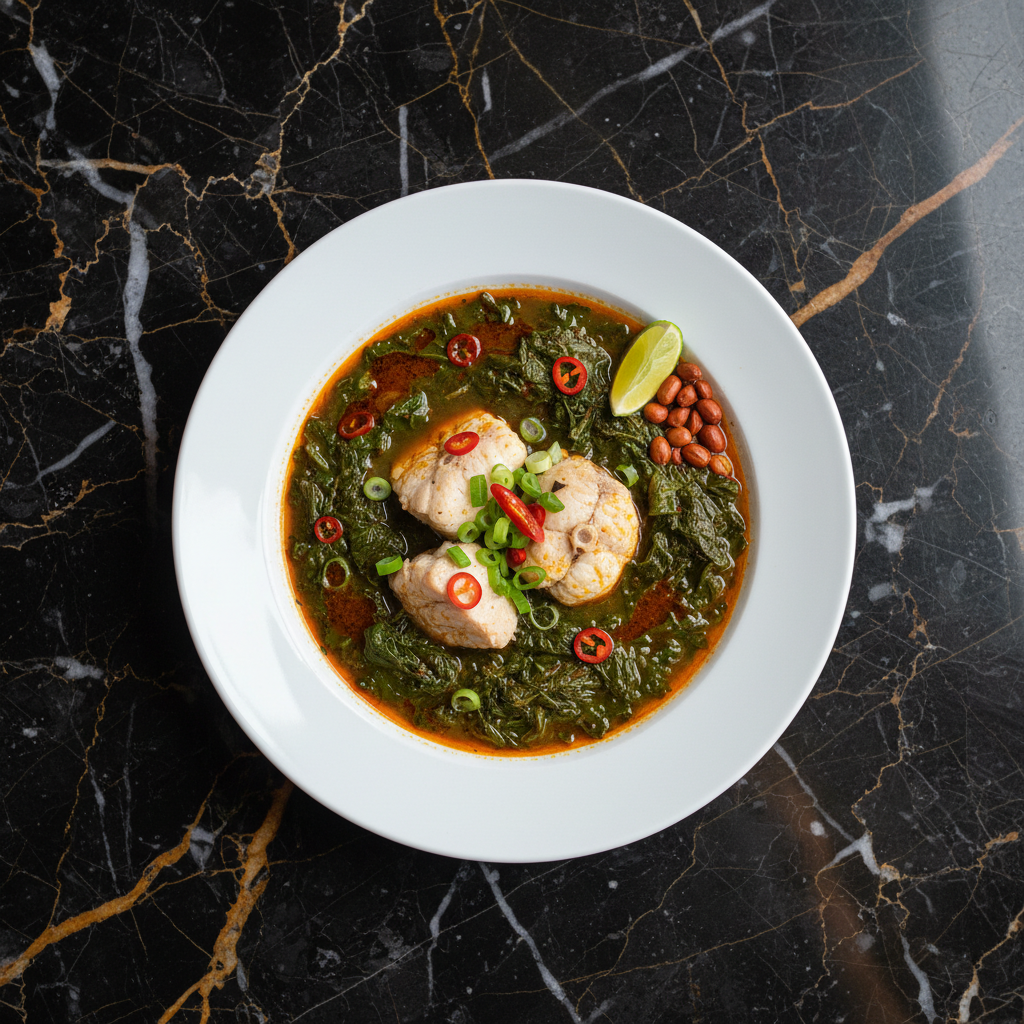
A potent traditional spirit distilled from fermented sugarcane juice. Clear and fiery, malamba is sipped slowly during celebrations and ceremonies across Equatorial Guinea.
Nutrition & Info
Equipment Needed
Instructions
-
1
Extract fresh juice from sugarcane stalks by pressing them through a manual or mechanical press. Strain to remove any fiber.
-
2
Pour the fresh sugarcane juice into a large, clean fermentation vessel. Cover loosely with a cloth to allow airflow while keeping out insects.
-
3
Allow the juice to ferment naturally for five to seven days in a warm location. The natural yeasts will begin fermentation, producing bubbles and a sour, alcoholic aroma.
-
4
Once fermentation is complete, strain the liquid through a fine cloth to remove any sediment.
-
5
For a stronger spirit, the fermented liquid is traditionally distilled using a simple pot still, concentrating the alcohol and clarifying the liquid.
-
6
Bottle the finished malamba and allow it to rest for a day before serving. Serve at room temperature in small glasses.
Did You Know?
Malamba is so important in Fang culture that no traditional marriage ceremony is considered valid without it being offered and shared between the families.
Chef's Notes
Equipment Tips
- large fermentation vessel
- distillation apparatus or pot still
- strainer
- bottles for storage
The Story Behind Malamba
Malamba is the traditional spirit of the Fang people, the largest ethnic group in Equatorial Guinea. Made from fermented and often distilled sugarcane juice, it plays a central role in cultural ceremonies, dispute resolutions, and community bonding. The production of malamba is a skilled craft, with certain families and villages known for producing superior batches. During traditional ceremonies, the sharing of malamba signifies agreement, peace, and the blessing of ancestors.


Comments (0)
Log in to leave a comment.
No comments yet. Be the first to share your thoughts!